
Why Teaching Kids About Money Matters More Than Ever
Financial literacy games are interactive tools that teach money management skills through gameplay, simulations, and real-world scenarios. These games cover essential topics like budgeting, saving, investing, credit management, and debt avoidance for learners from elementary age through adulthood.
Top financial literacy games include:
| Age Group | Popular Games | Key Skills Taught |
|---|---|---|
| K-5 | Peter Pig’s Money Counter, Wise Pockets, Money Magic | Counting money, saving, basic budgeting |
| 6-12 | Financial Football, Banzai, STAX, Stock Market Game | Investing, credit scores, student debt management |
| Adults | SPENT, The Uber Game, FDIC Money Smart | Paycheck-to-paycheck survival, gig economy, empathy |
Sometimes pulling kids away from their tablets feels impossible. But what if screen time could actually teach them skills they’ll use for life?
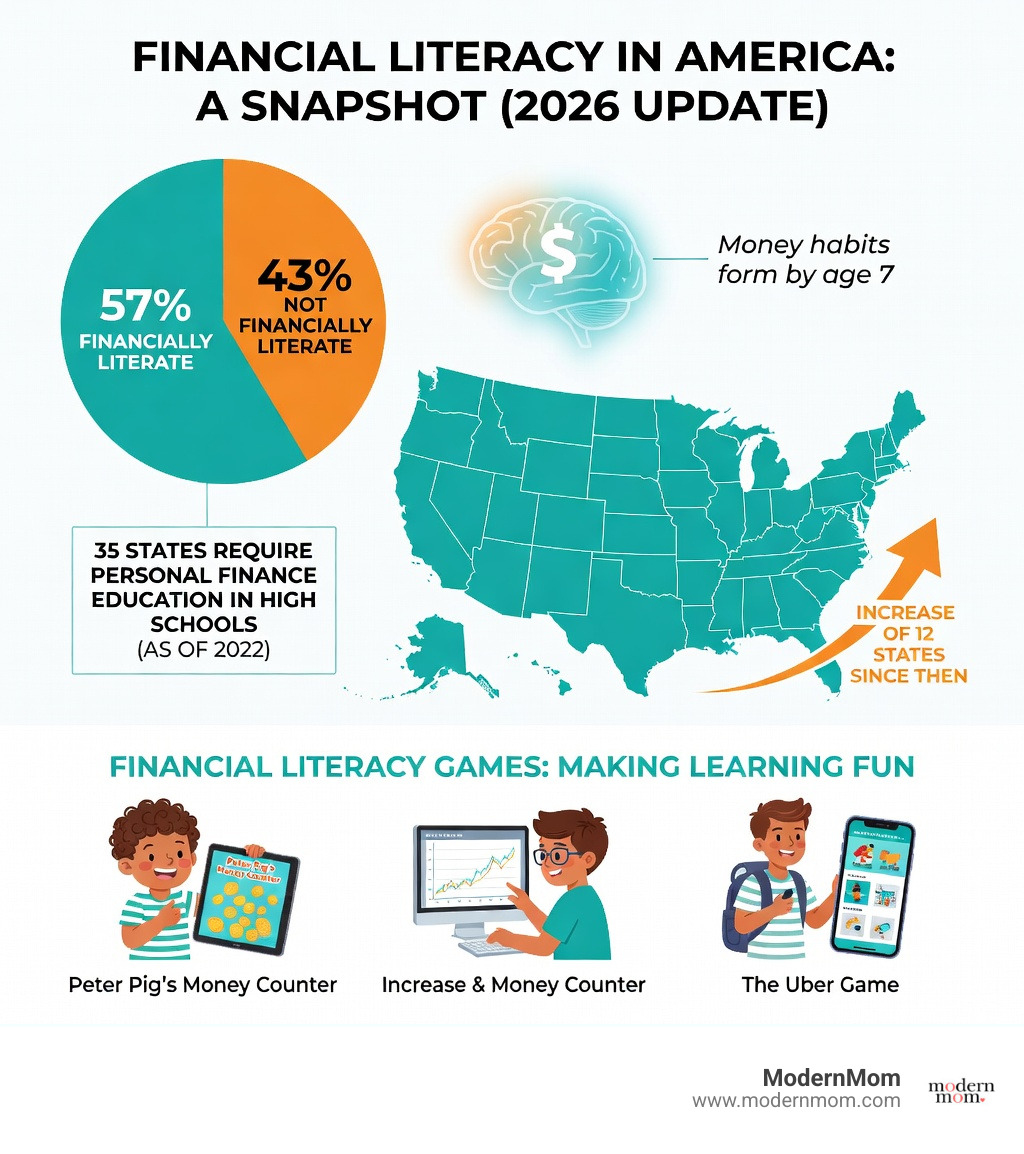
Here’s the reality: only 57% of Americans are financially literate. That means nearly half of us struggle with basic money decisions—budgeting, saving, understanding credit, or planning for the future. And those patterns? They start forming by age 7.
The good news is that 35 states have introduced legislation to bring personal finance into required high school curriculum as of 2022, with 12 more states joining since then. Schools are catching on, and families can too.
Financial literacy games turn money lessons into something kids actually want to do. Instead of lectures about compound interest, they’re managing a budget to help a character reach Las Vegas. Instead of warning about debt, they’re experiencing the consequences of poor credit scores in real time. They learn by doing—and they remember it.
As a mom, you’re already teaching your kids more than you realize. Every grocery trip, every “Can I have this?” conversation, every allowance decision is a chance to build their financial confidence. These games just make it easier—and a lot more fun.
At Modern Mom, we’ve gathered the best financial literacy games and resources to help you raise money-smart kids without the stress. Whether you’re starting with a preschooler counting coins or helping a teen navigate student loans, there’s a game designed to meet them where they are.
Why Financial Literacy Games are a Game-Changer for Families

We all know that lecturing our kids about “the value of a dollar” usually results in glazed-over eyes. That’s where financial literacy games save the day. Experiential learning—the fancy term for “learning by doing”—is incredibly effective because it allows kids to make mistakes in a safe, digital environment before they make them with real money.
By using gamification, these tools turn complex concepts like interest rates and inflation into puzzles to be solved or levels to be cleared. This approach builds essential habit formation. When a child sees their virtual “savings” grow after choosing a generic brand over a name brand in a game, they’re more likely to understand that logic when you’re standing in the grocery aisle together.
The educational landscape is shifting, too. Since 35 states have introduced legislation to mandate personal finance courses, more teachers are using these digital tools to boost student engagement. These games teach critical decision-making skills, asking kids to weigh “wants” vs. “needs” and see the immediate consequences of their choices.
Top Picks for Little Learners (Grades K-5)
For our youngest learners, the focus is on “money basics”—recognizing coins, counting change, and understanding that money is a finite resource. Here are some of our favorite free resources for the K-5 crowd:
- Peter Pig’s Money Counter: Developed by Visa, this is a fantastic starter game. Kids practice identifying and counting U.S. currency. The best part? They get rewarded with a virtual trip to a store to buy accessories for Peter Pig, teaching them to shop within a budget.
- Money Magic: This game features a character named Enzo who wants to be a magician. It’s designed to teach basic budgeting. Enzo represents our human tendency to want instant gratification, and kids must help him balance short-term “fun” spending with long-term savings goals to reach his big show in Vegas.
- Wise Pockets: This is a classic resource that offers stories and games about managing money. It’s great for parents because it includes guides to help you explain the concepts as your child plays.
- H.I.P. Pocket Change: Straight from the U.S. Mint, this site is packed with games that teach the history of coins and basic money management.
Elementary Money Activities to Try at Home
- Coin Tracing: For toddlers, trace different coins and have them match the real coin to the drawing.
- Pretend Store: Use empty cereal boxes and play money to “sell” groceries to each other.
- The “Potatoes and Gravy” Rule: Explain that potatoes are “needs” (rent, food) and gravy is “wants” (toys, candy). You can’t have the gravy if you don’t have the potatoes first!
Navigating the Teen Years with Interactive Tools
As kids move into middle and high school, the stakes get higher. They’re starting to think about first jobs, cars, and college. Financial literacy games for this age group move away from simple counting and into complex simulations.
One of the gold standards is Banzai. It’s a research-backed program used in thousands of schools that puts teens in real-life scenarios. They have to navigate things like paying rent, handling car breakdowns, and managing taxes. It’s “life on training wheels,” and it’s incredibly effective.
For the sports fans, Financial Football is a must. Created by Visa, this game requires players to answer personal finance questions to move the ball down the field. It’s competitive, fun, and covers everything from credit scores to identity theft.
| Game | Play Time | Key Skills Taught |
|---|---|---|
| STAX | 20 Minutes | 20 years of investing simulation, index funds |
| The Stock Market Game | Full Semester | Real-time market investing, diversification |
| Credit Clash | 10-15 Minutes | Credit scores, loan interest rates |
| Hit the Road | 15 Minutes | Budgeting for a road trip, unexpected costs |
Why financial literacy games work for teens
Teenagers crave independence, and these games give them a taste of it. Games like Payback are eye-opening for high schoolers. It challenges them to get through college while balancing work, social life, and academics—all while trying to keep their student debt low.
We also love Shady Sam, where the player actually takes on the role of a loan shark. By seeing how high interest rates and “fine print” benefit the lender, teens quickly learn why they should be cautious about debt in the real world. This “reverse” perspective is a powerful way to teach social responsibility and self-protection.
Leveling Up: Financial Literacy for Adults and College Students
Let’s be honest—many of us could use a refresher too! Since only 57% of Americans are financially literate, these games are just as valuable for adults and college students looking to improve their money habits.
Some of the most impactful games for adults are “empathy builders.” SPENT is a powerful online game that challenges you to survive one month living paycheck-to-paycheck. You start with $1,000 and have to make agonizing choices: Do you pay for medicine or the electric bill? It’s a sobering look at the financial challenges many families face.
Similarly, The Uber Game puts you in the driver’s seat of the gig economy. You have to navigate the stresses of being a full-time driver while trying to pay a mortgage and care for two kids. These games are excellent for starting conversations about lifestyle changes and the importance of an emergency fund.
Free financial literacy games from trusted sources
You don’t have to spend a dime to access high-quality financial education. Many government and non-profit organizations offer free, browser-compatible tools:
- FDIC Money Smart: A comprehensive program with games and quizzes for all ages to gauge financial awareness.
- NGPF Arcade: Next Gen Personal Finance offers a whole “arcade” of games covering everything from insurance (The Floor is Lava!) to cryptocurrency.
- Practical Money Skills: This Visa-backed site is a treasure trove of classroom modules and interactive games like “Financial Soccer.”
- Federal Reserve Resources: The Fed provides structured programs like “Financial Foundations” for grades 3-5, blending money lessons with entrepreneurship.
Practical Ways to Integrate Money Lessons at Home
While digital financial literacy games are great, the best lessons often happen in the “real world.” As moms, we can bridge the gap between the screen and the wallet with a few simple activities:
- Yard Sales and Thrift Stores: Give your child $5 and let them see how far they can stretch it. This teaches value, recycling, and the art of the “find.”
- The Family Savings Jar: Pick a goal—like a trip to the zoo or a new board game—and have everyone contribute loose change. It makes saving a team effort!
- Bill Paying Assistant: Next time you pay the electric or water bill, show your kids. Explain that leaving the lights on actually costs money. It demystifies where the money goes.
- Comparison Shopping: At the grocery store, ask your child to find the cheapest box of pasta or the best deal on apples.
- Charity Giving: Involve your kids in choosing a charity to support. It teaches them that money isn’t just for “stuff”—it’s a tool for doing good in the world.
Frequently Asked Questions about Financial Literacy Games
What are the best free financial literacy games?
For younger kids, Peter Pig’s Money Counter and Money Magic are fantastic. For teens, Banzai, STAX, and Financial Football offer the most depth. All of these are free and accessible online.
How do games teach money management?
Games use “gamification”—points, levels, and rewards—to keep kids engaged. More importantly, they provide a simulation where kids can see the long-term consequences of their decisions (like debt or low savings) in a matter of minutes.
At what age should I start teaching my child about money?
Experts say you can start as early as age 2 or 3 with simple coin identification. By age 7, most children have already formed basic money habits, so the earlier you start, the better!
Conclusion
Raising financially responsible humans is one of the biggest challenges we face as parents, but it doesn’t have to be a chore. By incorporating financial literacy games into your family’s routine, you’re giving your kids a head start on a secure future.
Whether you’re playing a quick round of Financial Football or setting up a real-life lemonade stand, these moments of connection build confidence and lifelong skills. At Modern Mom, we’re here to support you every step of the way—from the first piggy bank to the first college loan.
For more tips on helping your students succeed, check out our guide on how to stay organized in high school. Happy gaming!
The post Play Your Way to Smarter Finances: A Guide to Financial Literacy Games appeared first on ModernMom.