
You’re Already Stronger Than You Think — Here’s How to Make It Last
To cultivate inner strength, start with these core daily practices:
- Practice mindfulness – Even 5 minutes of quiet reflection each morning builds emotional steadiness over time.
- Name your emotions – Labeling what you feel reduces its intensity and helps you respond instead of react.
- Anchor to your values – Knowing what matters most helps you make decisions from a place of calm, not chaos.
- Celebrate small wins – Your brain releases feel-good chemicals when you complete even tiny goals. Use that.
- Lean on your people – Supportive relationships aren’t a luxury. They’re a core ingredient of resilience.
- Move your body – Studies show that combining movement with mindfulness sharpens thinking and lowers stress.
- Let good moments sink in – Staying with a positive experience for just 12 seconds helps rewire your brain for strength.
You’re already doing so much. You wake up, show up, and somehow hold it all together — often before anyone else in the house is even awake. But holding it together and actually feeling strong on the inside? Those aren’t always the same thing.
The truth is, inner strength isn’t something you either have or you don’t. Research shows that roughly two-thirds of our personal strengths are developed over time through intentional practice — not born into us. That means resilience, emotional steadiness, and mental fortitude are skills you can actually build, one small habit at a time.
This guide is for the mom who’s running on determination but craving something deeper — a kind of quiet, unshakeable groundedness that holds even on the hard days.
Other wasy sto cultivate inner strength:
What is Inner Strength and Why It Matters for Moms
When we talk about inner strength, we aren’t talking about being a “supermom” who never cries or feels overwhelmed. In fact, true inner strength is quite the opposite. According to experts, inner strength is a collection of mental and emotional resources—like willpower, self-discipline, and resilience—that allow us to stay stable and adaptable when life gets messy.
For us moms, this strength is the engine that helps us handle a toddler’s tantrum and a work deadline in the same hour without losing our cool. It involves several core components:
- Resilience: Your ability to “bounce back” after a setback.
- Emotional Intelligence: Recognizing your feelings and managing them effectively.
- Self-Discipline: The grit to stick to your goals even when you’re exhausted.
- Confidence: A deep-seated belief in your ability to handle whatever comes your way.
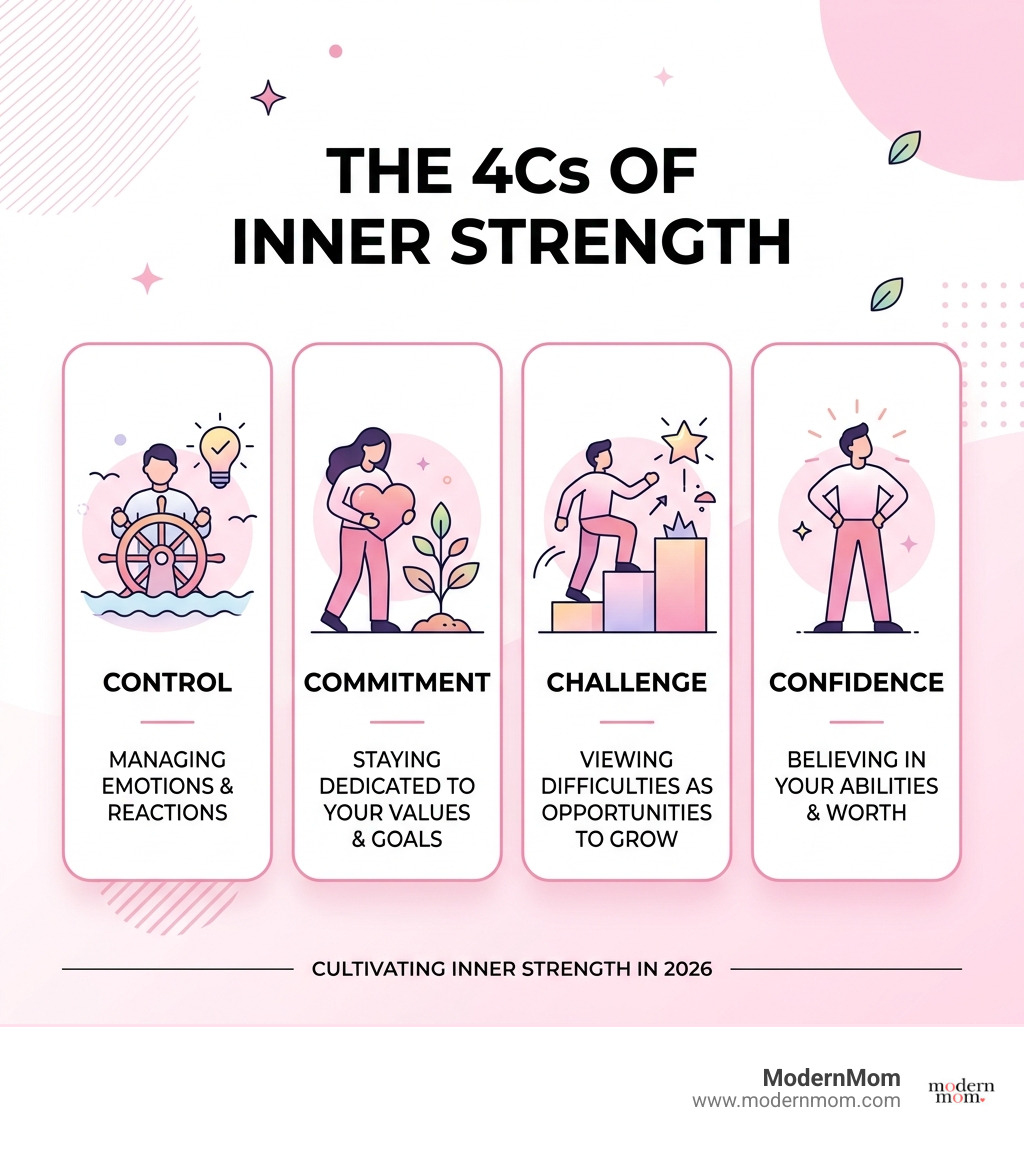
A widely accepted framework for this is the 4Cs: individuals with high mental fortitude feel a sense of Control, keep their Commitments, embrace Challenges, and have Confidence in their skills.
While about one-third of our temperament is innate (thanks, genetics!), the other two-thirds are built through the choices we make every day. If you’re currently in the thick of it, check out these 9 Tips Thatll Help You Survive New Motherhood to find small ways to start building that foundation today.
The Science of Resilience: How to Cultivate Inner Strength Through Neuroplasticity
One of the most exciting things about the human brain is neuroplasticity. This is the brain’s ability to rewire itself based on our repeated experiences. Think of your brain like a garden; the thoughts and feelings you focus on are the ones that grow the deepest roots.
Psychologists like Rick Hanson, PhD explain that our brains have a “negativity bias.” We are evolved to notice the one thing that went wrong (the spilled milk) rather than the ten things that went right. To counter this, we have to intentionally “hardwire” positive experiences into our nervous system.
When we consciously focus on a feeling of being loved, capable, or calm, we are actually building new neural structures. It’s like adding supplies to a mental “backpack” that you carry through the journey of motherhood. If you’re looking back and wishing you’d known this sooner, take a moment to read A Letter To My Younger Self—it’s a great exercise in self-compassion, which is a cornerstone of inner strength.
Daily Habits to Cultivate Inner Strength
You don’t need a weekend at a spa to start this process. You just need a few minutes of consistency.
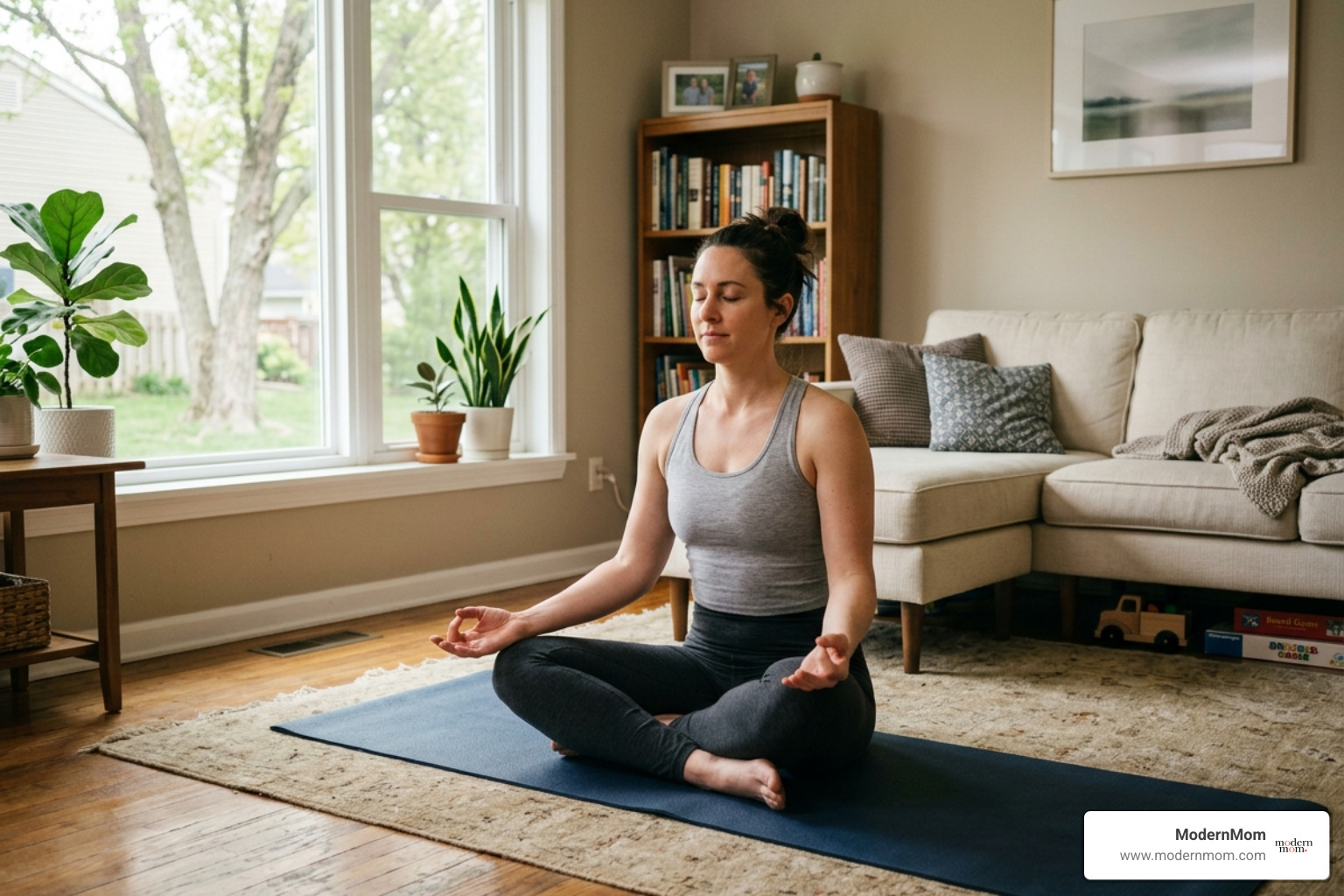
- The Morning Pivot: Studies show that starting your day with both movement and mindfulness gives your cognitive skills a lift while dialing down stress. Even if it’s just stretching while the coffee brews, it counts.
- Micro-Meditations: You don’t need 30 minutes. Five minutes of deep breathing in the car before you walk into the house can reset your nervous system.
- Intentional Routines: Consistent routines build discipline and confidence. When you keep a small promise to yourself—like drinking a glass of water first thing—you’re telling your brain that you are reliable.
If you’re a stay-at-home mom looking for a bigger transition, like re-entering the workforce, these daily habits are your secret weapon. For more on that specific journey, see our 11 Tips For Stay At Home Moms Who Want To Go Back To Work.
Rewiring Your Brain for Lasting Fortitude
To make these strengths stick, try the 12-second rule. When you have a “good” moment—your child gives you a spontaneous hug, or you finally finish that laundry pile—don’t just let it pass.
- Have the experience: Notice the positive feeling.
- Enrich it: Stay with it for at least 12 seconds. Let it fill your body.
- Absorb it: Visualize the feeling sinking into your brain like water into a sponge.
By doing this, you’re moving the experience from short-term memory into long-term neural structure. You are literally building a stronger you.
Practical Steps to Build Your Mental Muscle Every Day
Building inner strength is a lot like building physical muscle—it requires “reps.” One of the most important reps is moving from reactivity to responding.
| Emotional Reactivity | Calm Responding |
|---|---|
| Acting immediately on anger or fear | Taking a breath before speaking |
| Blaming yourself or others | Looking for a solution |
| Feeling “stuck” in the emotion | Observing the emotion without becoming it |
| Focus on what you can’t control | Focus on the “next right step” |
Self-awareness is the key here. We need to know our limits and our “triggers.” If you’re feeling like the weight is too much, asking for help isn’t a sign of weakness—it’s a high-level strategy for resilience. Don’t be afraid to reach out for help when the load gets too heavy.
Practical Exercises to Cultivate Inner Strength in Real-Time
When you’re in the middle of a “mom-down” (that’s our version of a meltdown), try these quick exercises:
- Labeling: Mentally say, “I am feeling overwhelmed right now.” Research shows that labeling an emotion reduces the activity in the “fear center” of your brain.
- Box Breathing: Inhale for 4 seconds, hold for 4, exhale for 4, and hold for 4. This tells your nervous system it’s safe to relax.
- The “Empowered Version” Question: Ask yourself, “What would the most empowered version of me do right now?” This shifts you out of a victim mindset and back into the driver’s seat.
- Mantras: Use a simple phrase like, “May I be kind to myself in this moment,” or “I can do hard things calmly,” or “this too shall pass.”
Overcoming Common Obstacles Like Fear and Self-Doubt
The biggest killers of inner strength are often self-doubt and the “perfectionism trap.” We think we have to do it all perfectly, or we’ve failed.
To overcome this, we have to reframe setbacks. Instead of seeing a bad day as evidence that you’re “not cut out for this,” see it as a data point. What can you learn? Maybe you need more sleep, or maybe you need better boundaries.
Also, be careful not to let your past dictate your present strength. As we often say at Modern Mom, when it comes to relationships let’s not take a tour of the past. Focus on who you are becoming today, not the mistakes you made yesterday.
Creating a Supportive Environment for Long-Term Growth
You don’t cultivate inner strength in a vacuum. Your environment matters.
- Physical Health: It’s hard to be mentally tough when you’re physically depleted. Prioritize sleep, nutrition, and movement. Even a 64-year-old can be stronger than they were at 20 with a consistent routine—it’s never too late to start.
- Your Tribe: Surround yourself with “energy-givers,” not “energy-drainers.” We need friends who remind us of our strength when we forget it.
- The Home Sanctuary: Decluttering one small corner of your home can provide a “zen” space that lowers your cortisol levels.
- Modeling for Kids: When you practice these skills, you’re teaching your children how to handle their own big emotions. It’s a powerful way to teach your kids empathy and resilience by example.
Frequently Asked Questions about Building Resilience
How long does it take to see results from these practices?
While you might feel a sense of calm immediately after a breathing exercise, building lasting inner strength is a journey. Consistency is key. Most people notice a significant shift in their ability to handle stress within a few weeks of daily practice. Think of it as a “slow build” rather than an overnight fix.
What are the most common mistakes to avoid when building inner strength?
The biggest mistake is trying to “tough it out” alone. True strength includes knowing when to ask for support. Another mistake is being too hard on yourself when you have a bad day. Self-criticism actually drains your inner resources, while self-compassion refills them.
Can I develop inner strength even if I feel naturally sensitive or anxious?
Absolutely! In fact, sensitive people often have high levels of emotional intelligence, which is a core component of inner strength. Your sensitivity allows you to be more aware of your needs, which is the first step in managing them. Inner strength isn’t about not feeling; it’s about what you do with those feelings.
Conclusion
At ModernMom, we know that your “to-do” list is never-ending, but your “to-be” list is just as important. You deserve to feel as strong on the inside as the world sees you on the outside.
To cultivate inner strength is a practice of self-love. It’s about giving yourself the same grace you give your children. Start small, stay consistent, and don’t forget to celebrate the fact that you are already doing an incredible job.
For more ways to find your calm in the chaos, check out our favorite mom stress relief tips. You’ve got this, mama!
The post Cultivating Inner Strength for Moms Who Are Currently Holding It All Together appeared first on ModernMom.