

Why Is Maintaining a Summer Sleep Schedule So Hard for Parents?
Summer is supposed to be the season of freedom, backyard barbecues, and late-night stargazing. But for many of us, the reality of summer break comes with a side of bedtime dread. We want to say “yes” to catching fireflies and staying late at the neighborhood block party, but we also dread the overtired meltdowns that inevitably follow the next day.
The struggle is entirely real, and it is not just in our heads. The combination of late sunsets, warmer bedroom temperatures, and a lack of daily school routines turns bedtime into a nightly negotiation. When the sun is still shining at 8:30 PM, our kids’ brains are literally receiving signals that it is still time to play.
According to pediatric sleep experts in a recent Cleveland Clinic report, while we can loosen the reins a bit during the summer, letting all structure crumble is a recipe for exhaustion. Our goal is to help you find that beautiful middle ground. By understanding how sleep works and implementing a few simple shifts, we can protect our kids’ rest while still soaking up every bit of summer magic.
How Much Sleep Do Kids Actually Need at Different Ages?
Even though the school calendar is on pause, our children’s developmental needs are not. Sleep remains a vital building block for their physical growth, immune health, and brain development. When kids do not get enough rest, their bodies and minds pay the price.
To keep our families on track, we look to the American Academy of Sleep Medicine (AASM) for baseline sleep recommendations. While every child is a unique individual, these age-specific guidelines give us a reliable target to aim for:
| Age Group | Recommended Sleep Duration |
|---|---|
| Infants (4–12 months) | 12–16 hours (including naps) |
| Toddlers (1–2 years) | 11–14 hours (including naps) |
| Preschoolers (3–5 years) | 10–13 hours (including naps) |
| School-Aged Children (6–12 years) | 9–12 hours |
| Teenagers (13–18 years) | 8–10 hours |
Of course, we know that sleep is not one-size-fits-all. Some children naturally thrive on slightly less sleep, while others need every single minute of the recommended range to function well. Rather than forcing a rigid, stressful rule, we want to watch our kids’ behavior. If they wake up naturally, seem happy, and have steady energy throughout the day, their sleep schedule is likely doing its job.
For a deeper dive into establishing age-appropriate routines that work for your family’s unique rhythm, check out this guide on setting up a healthy summer sleep routine.
Why Do Longer Summer Days and Lack of Structure Disrupt Kids’ Sleep?
If you have found yourself wondering why your normally great sleeper is suddenly fighting bedtime, the answer lies in biology. The summer solstice brings us the longest days of the year, and those extended daylight hours directly interfere with our kids’ internal clocks.
Our bodies rely on a natural circadian rhythm that is heavily regulated by light. When the eyes detect darkness, the brain releases melatonin, the hormone that makes us feel sleepy. In the summer, late sunsets delay this melatonin release. At the same time, cortisol—the hormone that keeps us awake and alert—remains elevated. Biologically speaking, our kids are not trying to be difficult; their bodies genuinely do not realize it is bedtime.

This biological shift is especially pronounced in teenagers, who already experience a natural “delayed sleep phase” that makes them want to stay up later and sleep in. When we combine these hormonal shifts with a complete lack of school-year structure—no early bus to catch, no strict sports schedules, and more relaxed travel days—our kids’ internal clocks can easily drift into an entirely different “time zone.”
To understand the science of light and sleep further, read this helpful article on how longer summer days impact sleep.
What Are the Real Consequences of Insufficient Summer Sleep?
It can be tempting to let sleep slide for a few months, thinking our kids will simply catch up later. However, chronic sleep deprivation during the summer carries real consequences for their physical and mental well-being.
First, let’s look at the numbers. Studies show that 25% to 50% of children and 40% of adolescents experience sleep problems on a regular basis. Furthermore, research shows that children are more likely to sleep less and gain weight during the summer than at any other time of the year. Without the structured routine of the school year, bedtime boundaries often dissolve, leading to late-night snacking and sedentary screen time.
We also have to talk about behavior. When children are sleep-deprived, they do not always look tired. Instead, they often reach a “special level of hyper” that mimics hyperactivity. You might notice more frequent tantrums, mood swings, and a general lack of cooperation.
Physically, a lack of rest wears down their immune systems, making them more susceptible to those pesky summer colds. Finally, letting sleep habits completely fall apart makes the back-to-school transition in the fall incredibly painful, leaving kids groggy and unfocused just when they need to be at their best.
How Can You Keep a Consistent Bedtime Without Losing Summer Flexibility?
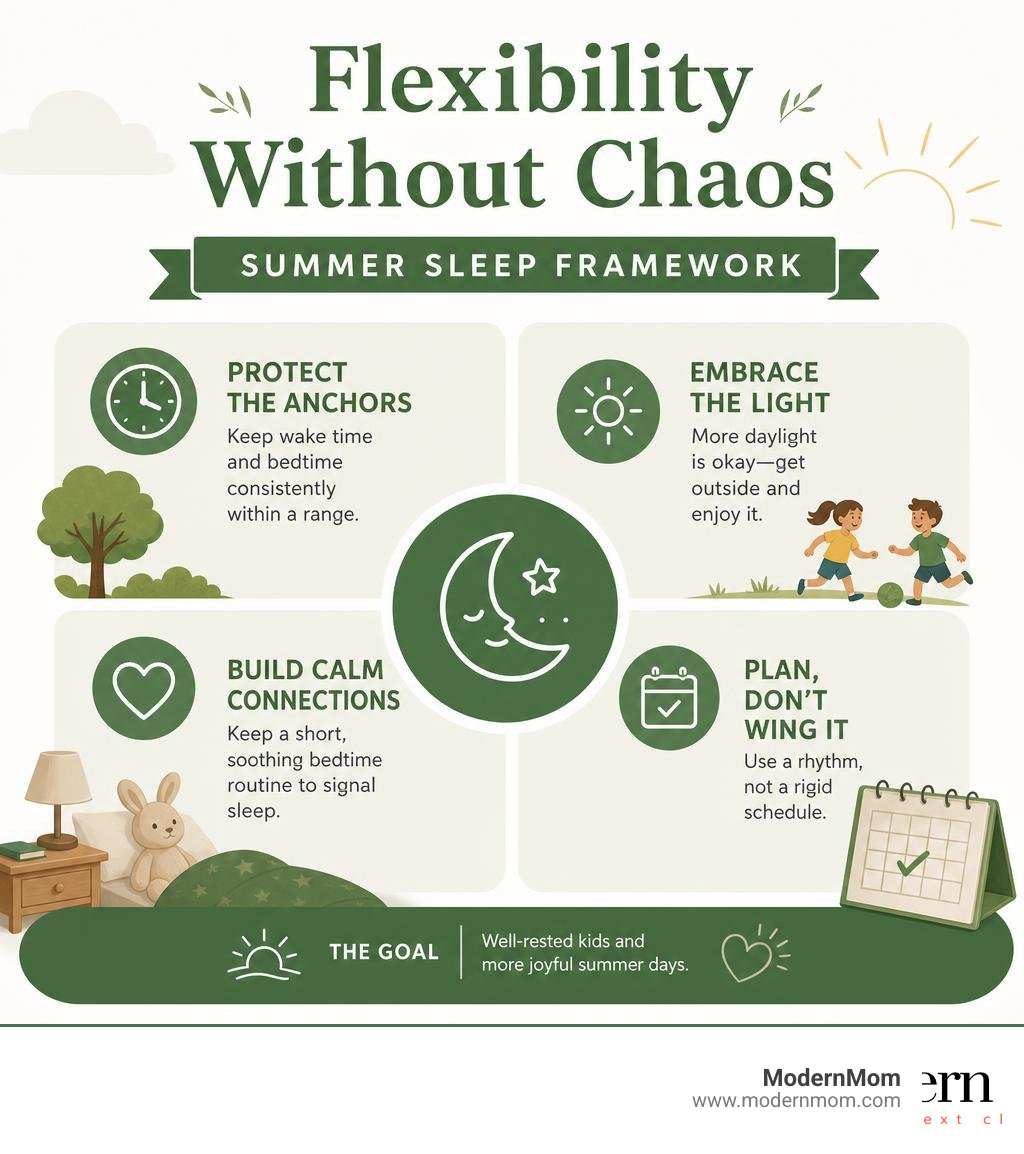
So, how do we protect our kids’ sleep without becoming the “bedtime police” and ruining the summer fun? We recommend an approach we call “flexibility without chaos.”
Instead of trying to control every single minute of the day, we focus on protecting our key “sleep anchors.” The most important anchor is a consistent wake-up time. Keeping your child’s wake-up time within an hour of their usual schedule—even on weekends and holidays—does wonders for keeping their internal clock steady.
If you decide to let bedtime slide by an hour for a special summer activity, that is perfectly fine! Just keep the sequence of your bedtime routine exactly the same. The familiar steps of brushing teeth, putting on pajamas, and reading a book act as powerful cues that tell the brain it is time to wind down, regardless of what time the clock says.
Managing sleep in a busy home can be extra tricky. If you are balancing multiple kids of different ages, you might notice unique challenges, especially when looking at the sleeping patterns of latter-born children, who often stay up later simply to keep up with their older siblings.

To reduce bedtime resistance, try giving your kids minor choices within the routine. Let them choose which pajamas to wear or which book to read. This gives them a sense of control and reduces power struggles.
For more tips on keeping your sanity and managing schedules with multiple kids, check out our guide on how to manage a large family’s summer schedule.
What Practical Steps Can You Take to Help Kids Fall Asleep When It’s Still Light Outside?
When the sun is still shining, we have to get creative to help our kids’ bodies transition into sleep mode. Here are the most effective, practical steps we can take right now:
- Create an “Indoor Sunset”: About an hour before bedtime, start dimming the lights in the house and drawing the curtains. This simple visual cue signals to your child’s brain that night is approaching, helping to kickstart melatonin production.
- Set a Device Curfew: Screens are a major sleep disruptor. Today, children spend up to 7.5 hours a day engaged in screen-based entertainment, and 1 in 3 internet users is under 18. The blue light from phones, tablets, and TVs tricks the brain into thinking it is still daytime. Turn off all screens at least one hour before bed, and charge devices outside of the bedroom overnight.
- Optimize the Bedroom Environment: Invest in high-quality blackout curtains that block out 99% of external light. Keep the bedroom cool (ideally between 65 and 70 degrees Fahrenheit) and use a fan or white noise machine to drown out the sounds of neighborhood kids playing outside.
- Watch the Evening Menu: Avoid caffeine, heavy meals, and sugary treats close to bedtime. That caffeine can hide in unexpected places, like chocolate or iced tea.
- Time Your Physical Activity: Regular exercise is fantastic for sleep, but timing is everything. Encourage outdoor play during the late afternoon (ideally between 2 PM and 5 PM), and avoid vigorous, high-energy games within two hours of bedtime.
For additional tips on optimizing your child’s sleep environment and managing seasonal challenges like allergies, read this guide on managing summertime sleep changes.
How Do You Transition Kids Back to a School Sleep Schedule?
We have all been there: the night before school starts, we try to force an early bedtime on a child who has been staying up until 10 PM all summer. It almost always results in frustration, sleeplessness, and a miserable first day of school.
To avoid this back-to-school shock, we need to start the transition early. We recommend beginning the process two to four weeks before the first day of school.
The safest and most effective method is to make gradual, daily adjustments. Shift your child’s bedtime and wake-up time earlier by 10 to 15 minutes every few days. This slow shift allows their circadian rhythm to adjust naturally without shocking their system.
At the same time, start re-establishing your school-year morning and mealtime routines. Eating breakfast and lunch at the times they will during the school year helps anchor their internal body clock.
As discussed in this ABC27 Mommy Minute segment, making gradual daily shifts is much easier on a child’s biological clock than a sudden, last-minute change.
When Should You Seek Professional Help for Your Child’s Sleep Issues?
While bedtime resistance and occasional late nights are a normal part of summer, sometimes sleep struggles point to a deeper issue. It is important to know the difference between normal summer boundary-testing and persistent sleep disorders.
For instance, did you know that 1 in 3 children will sleepwalk before the age of 13? While sleepwalking and sleep talking are often harmless and occur during light sleep phases, they can sometimes be triggered by extreme overtiredness or stress.
You should consider consulting your pediatrician or a pediatric sleep specialist if you notice any of the following warning signs:
- Loud, persistent snoring or gasping for air during sleep (which can indicate sleep apnea).
- Frequent, intense night terrors or nightmares that disrupt their rest.
- Extreme daytime sleepiness, even when they seem to be getting enough hours of sleep.
- Severe bedtime anxiety or restless legs that make it impossible for them to settle down.
If you decide to seek professional help, we highly recommend keeping a sleep diary for a week or two beforehand. Jotting down bedtime, wake times, night wakings, and daytime behavior will give your pediatrician invaluable data to help find a solution.
What Are Parents’ Most Common Questions About Summer Sleep?
Should I let my teenager sleep in during the summer?
Yes, but within reason. It is completely natural for teenagers to experience a biological shift that makes them stay up later and want to sleep in. However, allowing them to sleep past 9:00 AM or 10:00 AM can severely disrupt their circadian rhythm, making the eventual transition back to school incredibly difficult. Encourage a reasonable compromise that allows for some sleeping in without completely derailing their internal clock.
How do I handle naps for toddlers during summer travel?
When you are on the go, prioritize flexibility over perfection. If a nap has to happen in the stroller at the zoo or in the car on the way to the beach, that is perfectly okay! To keep vacation sleep on track, bring along familiar sleep cues from home, such as a portable white noise machine, their favorite sleep sack, or a familiar blanket.
What should I do if my child keeps getting out of bed because “it’s still light outside”?
First, ensure their room is genuinely dark by using blackout curtains to create a “false sunset.” If they still resist, maintain a calm, firm, and consistent “return to bed” policy. Gently guide them back to bed with minimal interaction, and explain that their growing body needs rest to have energy for tomorrow’s adventures, even if the sun is still awake.
How Can ModernMom Help You Simplify Your Family’s Summer Routine?
At ModernMom, we want to remind you that you do not have to choose between making magical summer memories and protecting your children’s sleep. Parenting is not about perfection; it is about finding a healthy balance that supports your entire family’s well-being.
We are here to walk alongside you through every stage of motherhood, offering practical, real-world advice that actually works for busy moms. Whether you are looking for quick weeknight recipes, home organization hacks, or developmental guides, we have got you covered.
Explore more parenting tips and home management guides on ModernMom.
The post All About Summer Sleep Schedules for Kids appeared first on ModernMom.