
The College Major Decision Doesn’t Have to Feel This Hard
Choosing a college major is one of the most talked-about decisions in a young person’s life — and if you’re a mom helping your teen navigate it, you already know the weight it carries.
But here’s the good news: it’s far more flexible than it feels right now.
Quick answers for choosing a college major:
- Start exploring early — most colleges don’t require a formal declaration until the end of sophomore year
- Consider three things: what your teen enjoys, what they’re good at, and what kind of life they want to build
- “Undecided” is a valid option — it won’t hurt college admissions and gives room to explore
- Majors don’t lock in careers — the average person changes career fields two or three times in their lifetime
- Earning potential matters, but so does satisfaction — balance both when weighing options
- Changing majors is normal — most students do it at least once
The pressure to pick the “perfect” major can feel enormous. But studies show that 3 in 5 college graduates say they’d change their major if they could go back. That’s not a reason to panic — it’s a reason to slow down, breathe, and approach this decision with a clear head.
This guide walks you through everything you need to know, from understanding what a major actually is, to practical ways to help your teen find a path that fits them right now — with room to grow.
Understanding the Role of a College Major
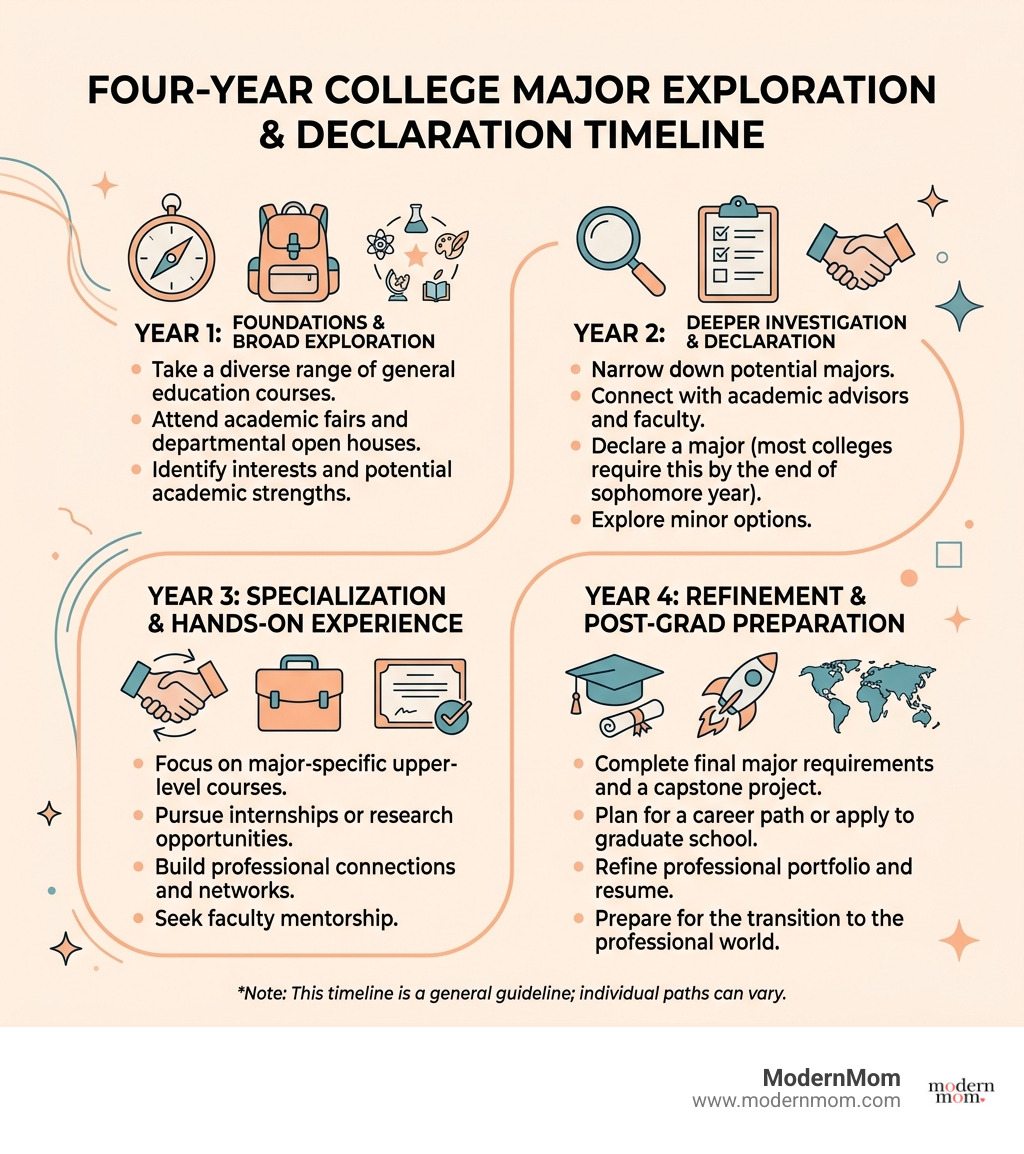
Think of a college major not as a life sentence, but as a launchpad. In its simplest form, a major is a specialized area of study. While a student takes general education classes to become a well-rounded citizen, about one-third to one-half of their total coursework will be dedicated to this specific subject.
As moms, we often worry that if our child picks “Philosophy,” they’ll never find a job, or if they pick “Biology,” they are 100% committed to being a doctor. A major provides focus and expertise, but it doesn’t strictly dictate a career.
In fact, the U.S. Department of Labor reports that the average twenty-something switches jobs every three years. Furthermore, the average person changes their entire career field two or three times in their life. This means the transferable skills learned in any major—like critical thinking, communication, and troubleshooting—are often more valuable than the specific subject matter on the diploma.
When your teen asks, should I earn a college degree?, the answer often lies in the discipline and networking opportunities the degree provides, regardless of the specific major.
Choosing College Major: When and How to Start
One of the biggest myths in college admissions is that you have to know exactly what you want to do the moment you step onto campus. In reality, most four-year colleges don’t require students to formally declare a major until the end of their sophomore year.
This “exploration phase” is a gift. It allows students to take general education courses in subjects they never encountered in high school. Starting college as “undecided” is not only acceptable; it’s often a smart move. It prevents students from rushing into a specialized program only to realize a year later that they actually hate the coursework.
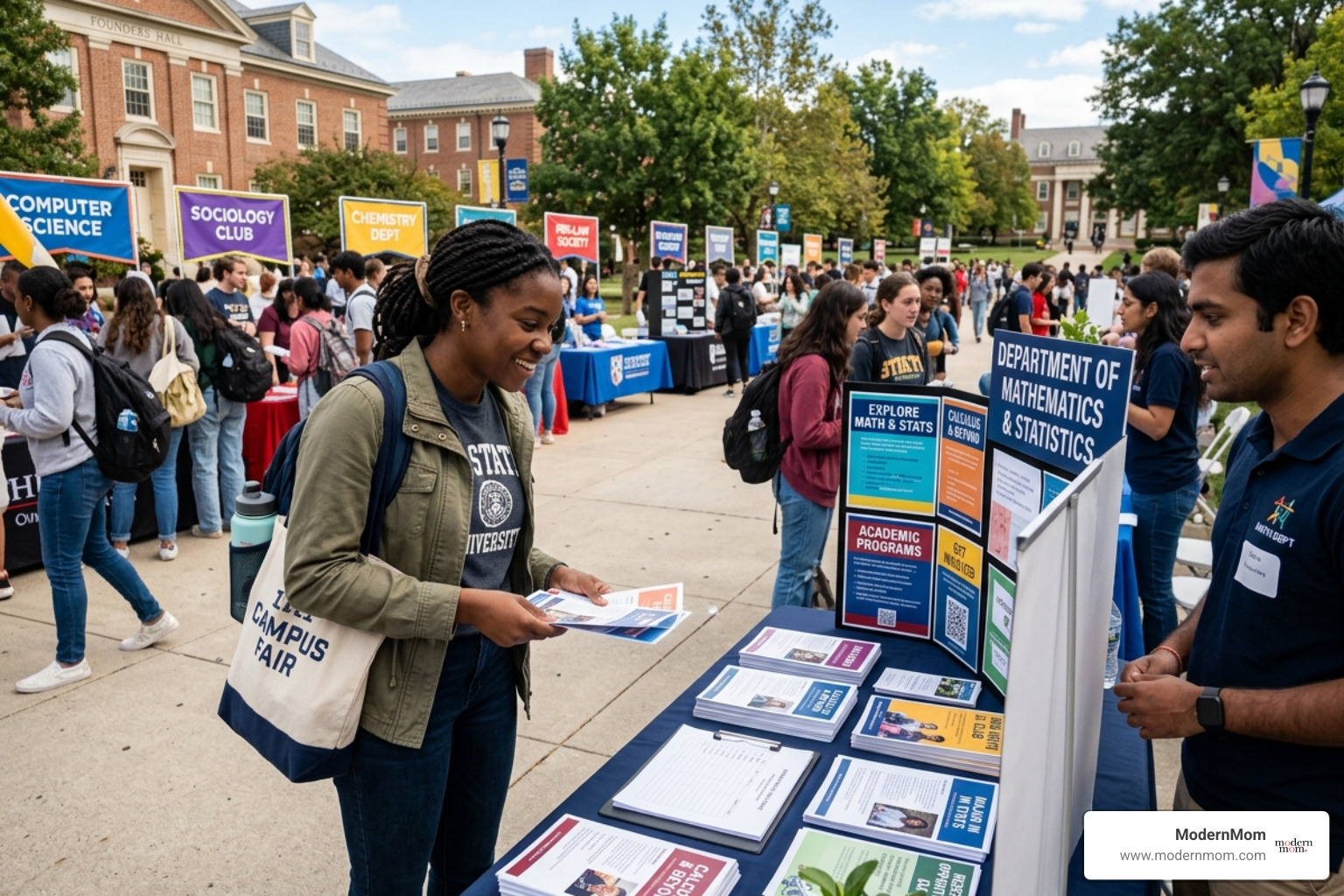
If your teen is unsure, encourage them to use their first two years to:
- Take introductory classes in three different departments.
- Join clubs related to potential interests.
- Talk to upperclassmen about their workload.
Practical Factors for Choosing College Major
When it comes down to the actual selection, experts suggest balancing three main pillars: interest, ability, and economic advantage.
- Curiosity and Interest: Does the subject keep them engaged? Studies show students perform better academically when they are genuinely interested in the material.
- Abilities and Strengths: What are they naturally good at? A student who struggles with basic algebra might find a Data Science major miserable, even if the “earning potential” is high.
- Future Goals: What kind of life do they want? As noted in What Should I Study in College? A Guide to Choosing Your Major, it’s important to look at the work environment. Do they want to be outdoors, in a lab, or in a corporate office?
Earning potential is a valid concern, especially when we consider the Career outlook for various fields. While STEM fields often lead the pack in starting salaries, liberal arts majors often catch up in mid-career earnings due to their strong leadership and communication skills.
| Major Category | Common Fields | Average Starting Salary | Key Benefit |
|---|---|---|---|
| STEM | Engineering, CS, Physics | High ($70k+) | Direct entry into high-demand roles |
| Business | Finance, Marketing, HR | Moderate ($55k+) | Versatile across almost any industry |
| Liberal Arts | History, English, Psych | Lower ($45k+) | Strong critical thinking/writing skills |
| Health | Nursing, Public Health | High ($65k+) | High job security and clear path |
Exploring Your Options: Minors, Double Majors, and Custom Paths
Sometimes, one subject isn’t enough to capture a student’s ambition. This is where minors and double majors come in.
- Minors: A secondary specialization that requires fewer classes. It’s a great way to keep a “passion project” alive (like Music) while majoring in something more “practical” (like Accounting).
- Double Majors: This involves fulfilling the requirements for two separate majors. It’s intensive and requires developing good study habits to manage the doubled workload.
- Interdisciplinary/Custom Majors: Many modern universities now allow students to design their own major. If your teen is interested in the “Psychology of Marketing” or “Environmental Law,” they might be able to combine departments to create a unique degree.

Navigating the Pivot: Changing Your Major Without Stress
If your child comes home for Thanksgiving during their sophomore year and says, “I want to switch from Pre-Med to Art History,” don’t panic! 3 in 5 grads would change their major if they could. Changing your major is a common part of the “redirection” process.
However, there are practical implications to consider. According to How to Choose Your College Major, a late-stage switch can sometimes extend the time to graduation. This is why it is so important to do well in school from the start—having a strong GPA and completed general education credits makes the transition much smoother.
Before they make the leap, have them:
- Meet with an Academic Advisor: See how many credits will transfer.
- Audit a Class: Have them sit in on a high-level seminar in the new major to see if they actually like the “hard” stuff.
- Check the Financials: Will an extra semester be required? How does this affect their financial aid?
Finding the Right Support System
Your teen doesn’t have to make this choice in a vacuum. Every campus has a network of professionals designed to help.
- Academic Advisors: They are the map-makers. They help ensure students hit their milestones.
- Career Counseling: Most colleges offer personality assessments (like the Myers-Briggs or Innate Assessment) to match traits with careers.
- Alumni Networks: Talking to someone who graduated with that degree ten years ago provides a realistic “real world” perspective.
For families navigating unique challenges, such as autism or other learning disabilities, these support systems are even more critical for ensuring the chosen path aligns with the student’s specific needs and strengths.
Where to Find Guidance for Choosing College Major
The best research happens on the ground. When you go on ground rules for parental college visits, don’t just look at the dorms. Encourage your teen to:
- Visit the specific department office of a major they’re considering.
- Ask to see a syllabus for a junior-level course.
- Talk to the internship coordinator to see where students actually end up working.
Frequently Asked Questions about Major Selection
What exactly is a college major?
A major is your primary area of academic focus. It typically consists of 10 to 15 courses within a specific department. These courses build on each other, moving from broad introductory concepts to specialized, high-level research or practice. It forms the foundation of your degree (e.g., a Bachelor of Science in Chemistry).
Is it okay to start college as an undecided student?
Absolutely! In fact, many advisors prefer it. It shows the student is open-minded and willing to explore. Most colleges have a “General Studies” or “Undeclared” track that keeps students on pace for a four-year graduation while they sample different disciplines. There is generally no admission penalty for applying as undecided.
How much does my major actually dictate my future career?
For some fields—like Nursing, Accounting, or Engineering—it dictates it quite a bit because you need specific certifications. For most other fields, it matters much less than you think. Employers often care more about your ability to solve problems, work in teams, and communicate clearly. Your major is your first “job,” teaching you how to learn; your actual career will be built on the skills you stack on top of that foundation.
Conclusion
At the end of the day, choosing a college major is just the beginning of a lifelong journey of learning. As moms, our job is to provide the guardrails and the encouragement, reminding our teens that no decision made at age 19 is permanent.
By focusing on their values, utilizing campus resources, and staying flexible, they can find a path that brings them both success and satisfaction. Whether they find their calling in a lab, a classroom, or a boardroom, the most important thing is that they feel empowered to take that first step.
Explore more education resources for your family
The post Don’t Major in Regret: Smart Ways to Choose Your College Path appeared first on ModernMom.