
Why One Semester Can Change Everything for Your Student’s Grades
Better grades next semester are absolutely within reach — and it doesn’t require a complete personality overhaul or giving up sleep for months.
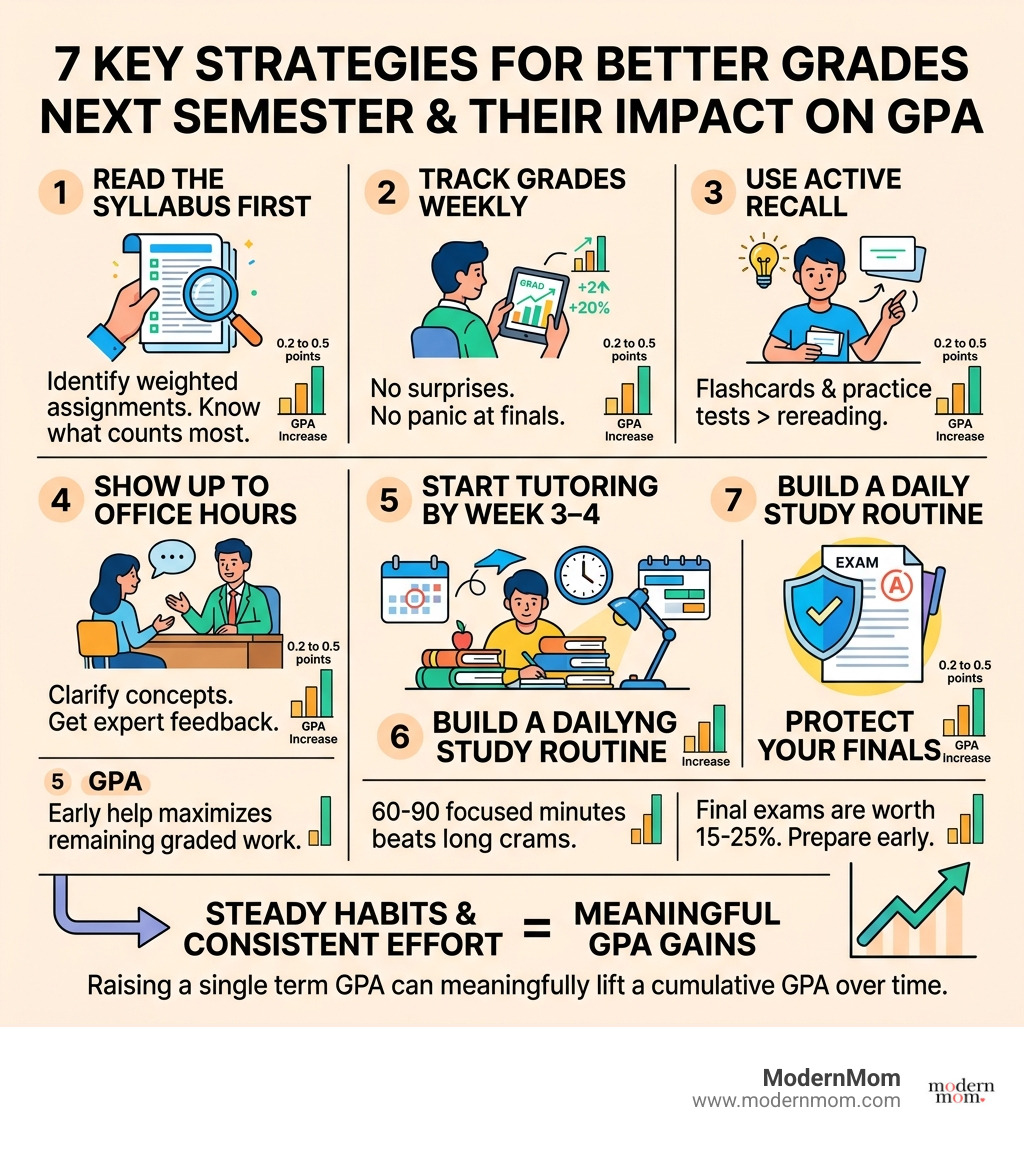
Here’s a quick snapshot of what actually moves the needle:
- Read the syllabus first — know exactly what’s worth the most points
- Track grades weekly — no surprises, no panic at finals
- Use active recall — flashcards and practice tests beat rereading every time
- Show up to office hours — fewer than 25% of students do, and it shows in their grades
- Start tutoring by week 3–4 — early help leaves more graded work left to improve
- Build a daily study routine — even 60–90 focused minutes beats a 5-hour cram session
- Protect your finals — they often count for 15–25% of the total grade
Studies show that students who build steady habits — like weekly grade tracking, regular office hours visits, and consistent study routines — can raise a semester GPA by 0.2 to 0.5 points in a single term. And one strong semester with higher grades across multiple classes can meaningfully lift a cumulative GPA over time.
Whether your kid is coming off a rough semester or just wants to do better, the path forward is clearer than it feels right now. The difference between where they are and where they want to be is usually about systems, not smarts.
Diagnosing the Slump and Setting Targets
Before we can look forward, we have to look back. Why do grades often dip after those first few optimistic weeks? Often, it’s because students fall into “avoidance mode.” This is a psychological state where a student feels so overwhelmed by a mounting workload that they stop engaging entirely. It’s not laziness; it’s a survival mechanism that, unfortunately, tanks a GPA.
To break this cycle, we suggest starting with a thorough syllabus review. Most students undervalue this document, but it’s actually a roadmap to success. You need to identify the “weighted assignments.” If a final paper is worth 40% of the grade and weekly quizzes are only 5%, it’s clear where the most effort should go. Treating all homework as equal is a common mistake that leads to burnout.
By understanding the math behind the grade, students can move from “guessing” to “managing.” For more on how to pivot quickly, check out How to Raise Your GPA Fast: 7 Proven Strategies (2025 Guide).
Setting Realistic Targets for Better Grades Next Semester
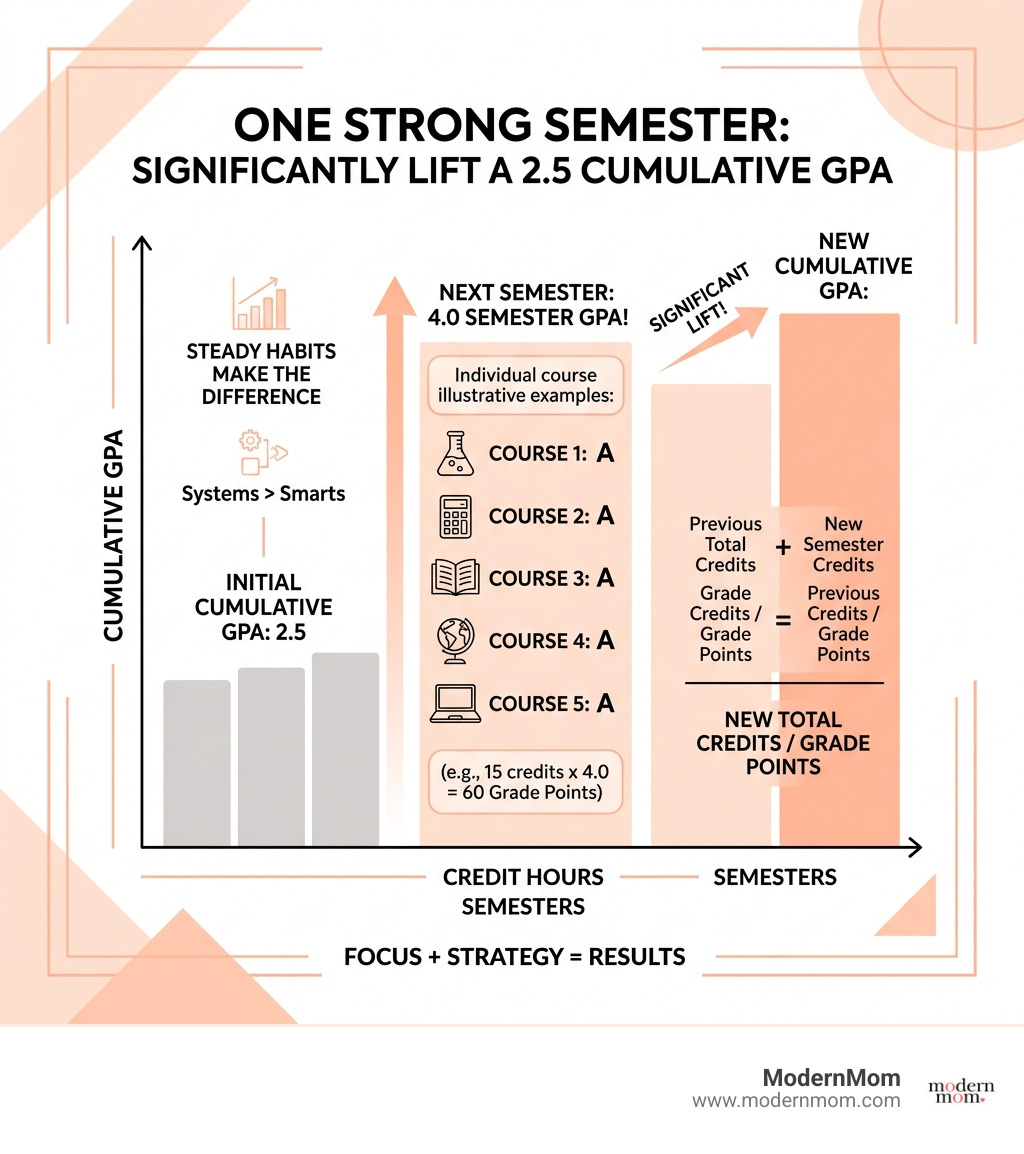
Setting a goal to “get straight As” is great, but it’s not a plan. We recommend using the SMART framework (Specific, Measurable, Achievable, Relevant, and Time-bound). Instead of a vague hope, aim for a specific 0.3 or 0.5 GPA increase.
Understanding credit weighting is also vital. A four-credit science class impacts the cumulative GPA four times as much as a one-credit elective. If your student is short on time, they should prioritize the high-credit courses. We also like to remind our kids Why It Is Important To Do Well In School — not just for the numbers, but for the doors it opens for their future careers.
The 12-Week Action Plan for Better Grades Next Semester
Success doesn’t happen in a vacuum; it happens in a planner. Whether it’s a digital app or a classic paper notebook, staying organized is the foundation of better grades next semester. We’ve seen that students who map out their entire term in week one are far less likely to be blindsided by “Hell Week” in mid-November.
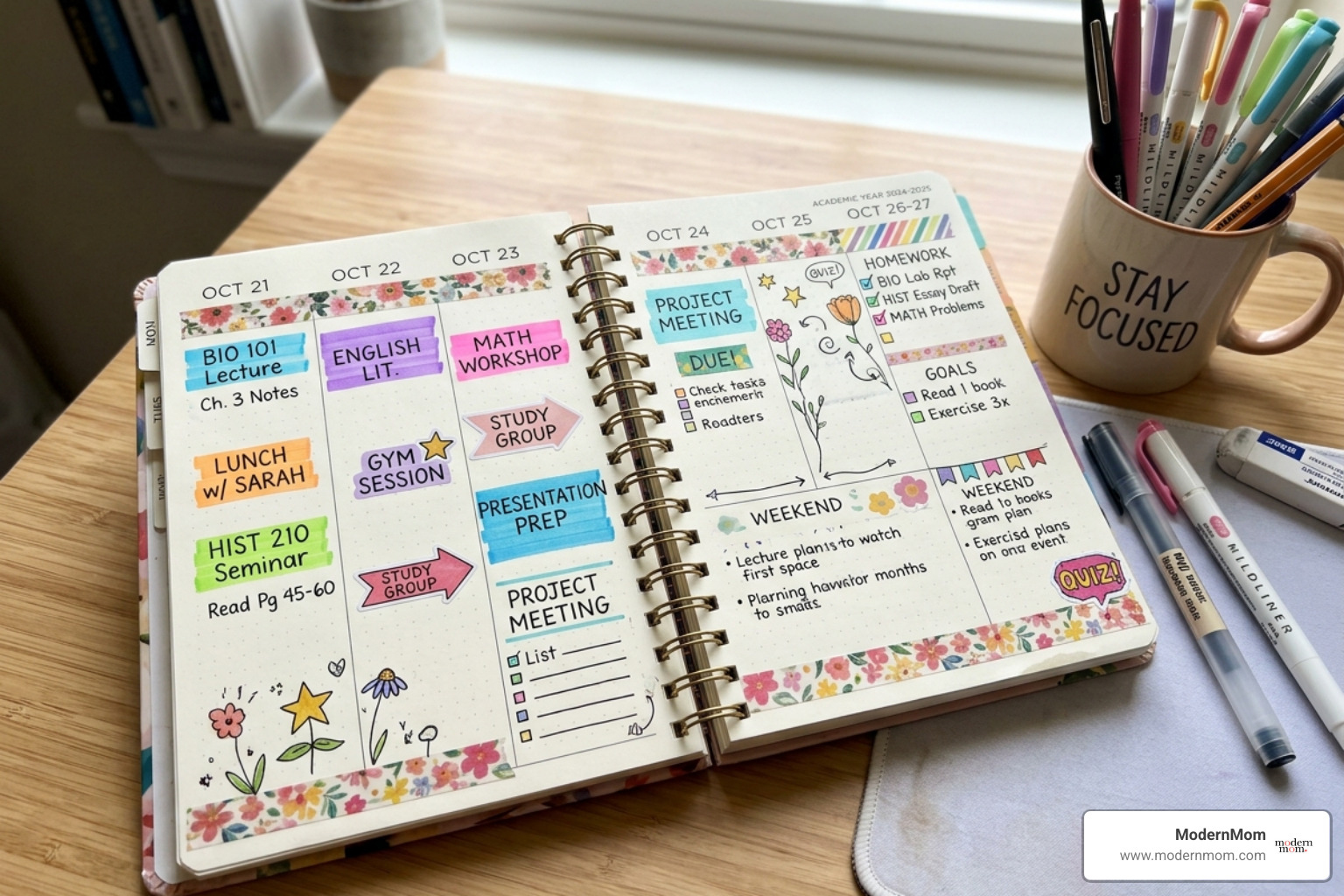
A solid action plan includes a weekly “grade audit.” Every Sunday, spend 20 minutes updating a grade tracker. This eliminates the “I think I’m doing okay” guesswork and replaces it with data. If a midterm doesn’t go well, that’s the time for a pivot, not three weeks later when it’s too late to recover.
For parents of younger students, helping them find the right tools is key. You can find our favorite recommendations in our guide on How To Stay Organized In High School Best Planners And Apps For Students.
| Study Method | Effectiveness | Why it Works |
|---|---|---|
| Passive Review | Low | Rereading notes feels productive but doesn’t build memory. |
| Active Study | High | Testing yourself forces the brain to “retrieve” info, making it stick. |
| Cramming | Very Low | Memory usually evaporates within 24–48 hours. |
Active Study Techniques that Actually Work
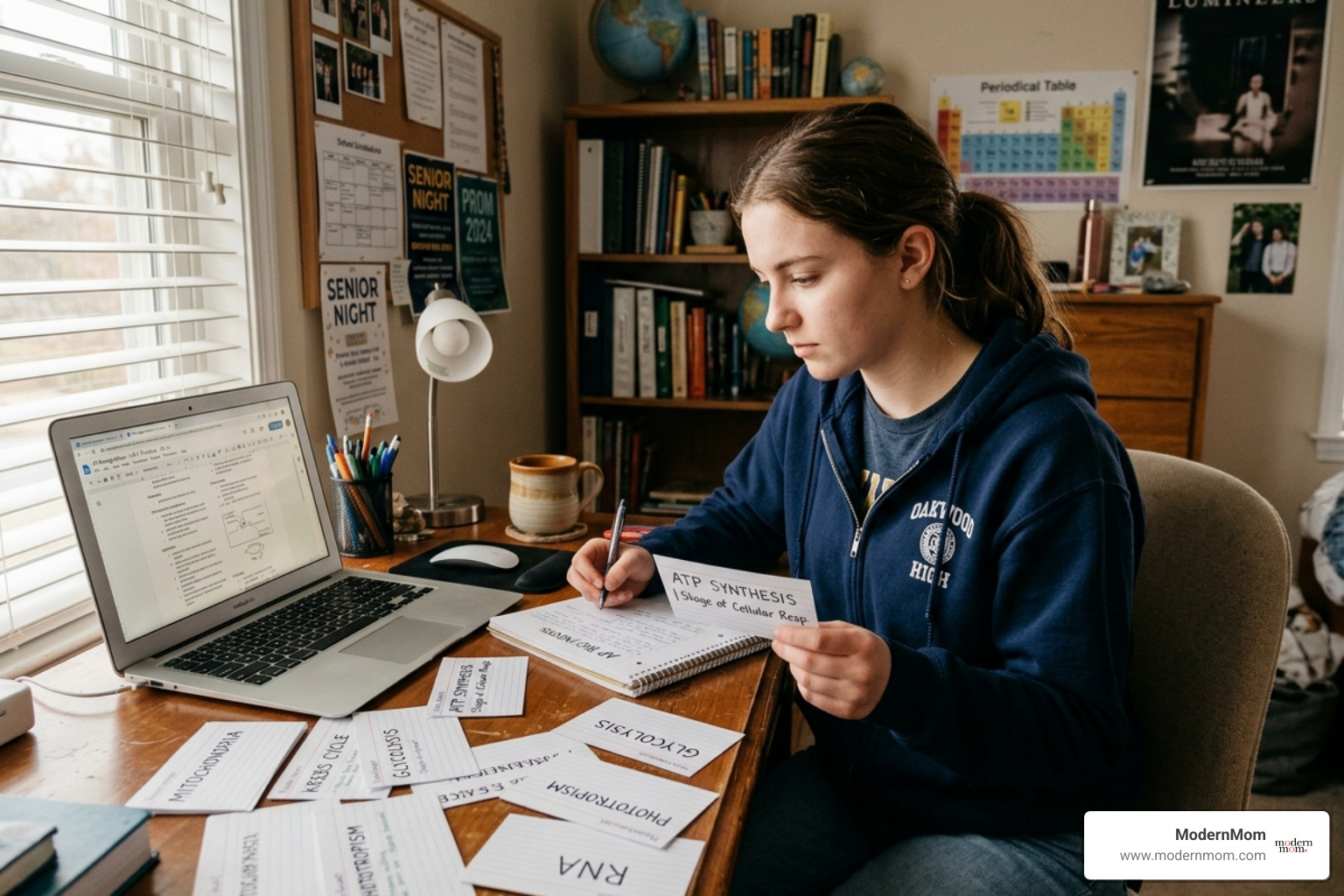
If there is one thing we want you to take away, it’s this: stop rereading. Research shows that active recall and spaced repetition are the gold standards of learning.
Active recall involves closing the book and trying to explain a concept from memory. It’s uncomfortable because it’s hard, but that “struggle” is exactly where the learning happens. The Feynman Technique is a favorite of ours: try to explain a complex topic as if you were teaching it to a sixth-grader. If you hit a snag, that’s exactly where your knowledge gap lies.
Spaced repetition means reviewing material at increasing intervals (Day 1, Day 2, Day 4, Day 7). This moves information from short-term to long-term memory far more effectively than a 10-hour library marathon. For a deep dive into shifting from a 2.5 to a 3.5, see The Ultimate GPA Improvement Guide: From 2.5 to 3.5 in One Semester.
Eliminating Distractions for Better Grades Next Semester
We all know the “phone itch” — that urge to check a notification every three minutes. For students, this “task switching” is a grade killer. It takes the brain an average of 20 minutes to return to “deep focus” after a distraction.
We suggest building study blocks of 50 minutes followed by a 10-minute “phone break.” During those 50 minutes, the phone stays in another room. It sounds harsh, but it’s the only way to get high-quality work done in less time. These same focus principles apply to everything from complex calculus to helping younger kids learn How To Memorize Times Tables.
Leveraging Resources and Professor Feedback
One of the most underused tools in any school is the professor’s office hours. Statistics show that fewer than 25% of students attend these sessions regularly. This is a huge missed opportunity!
Visiting a professor in the first two weeks doesn’t make a student a “teacher’s pet” — it makes them a professional. It builds a rapport that can be incredibly helpful if a student needs to negotiate a deadline later or needs a letter of recommendation. A college degree is something you “take” from an institution through your effort, and using every resource available is just smart management. It’s an investment in the future, especially considering whether a college degree can help you get a better job in today’s competitive market.
Making Extra Help Effective
Don’t wait for a failing grade to seek help. If a student is confused by week three, they should be at the tutoring center or writing lab by week four. When they go, they should bring specific questions. Instead of saying “I don’t get math,” they should say “I’m struggling with the steps for quadratic equations.”
Peer study groups are also fantastic, provided the group is actually focused. Studying with people who are more disciplined can pull a student’s performance up. This collaborative spirit is great for everything from STEM to foreign language practice.
Frequently Asked Questions about Improving Grades
Why do my grades usually drop after the first few weeks?
This is often called the “honeymoon phase” crash. In the beginning, the workload is light. As soon as the first midterms and major papers hit, students who haven’t built a consistent daily routine get overwhelmed. The key to better grades next semester is treating the first week with the same intensity as the last week.
How much can I realistically raise my GPA in one semester?
A realistic goal for a single semester is a boost of 0.3 to 0.5 points. While some students achieve a full 1.0 jump, that usually requires a massive shift in habits and potentially retaking a class for grade replacement. Steady, incremental progress is more sustainable and less likely to lead to burnout.
Is it too late to start a GPA comeback if I’m already a junior?
Absolutely not! In fact, many graduate school admissions committees and employers look for an “upward trend.” Seeing a student “figure it out” and crush their junior and senior years is often more impressive than someone who cruised through with B-minuses for four years. One strong semester can act as a powerful reset.
Conclusion
At ModernMom, we know that watching your student struggle academically is stressful for the whole family. But remember, a GPA is just a snapshot of past performance — it doesn’t dictate the future. By implementing these systems — from syllabus audits to active recall — your student can reclaim their academic confidence.
Better grades next semester aren’t just about the report card; they are about building the discipline and time-management skills that will serve them for the rest of their lives. Start small, track the progress, and celebrate the wins along the way. Start your journey to better grades at ModernMom.com and let’s make this next semester the best one yet!
The post How to Get Better Grades Next Semester: 7 Methods that Guarantee Results appeared first on ModernMom.