
Bad Grades Happen — Here’s How to Handle Them
Dealing with bad grades is something almost every student — and every parent — faces at some point. One low score doesn’t define your child’s future, and it doesn’t have to derail their confidence either.
Here’s a quick overview of what to do right now:
- Take a breath — give yourself a short window (a day or two) to feel disappointed before shifting into action mode
- Figure out why — was it a preparation issue, a tough test, or something outside your child’s control?
- Talk to the teacher — ask about feedback, extra credit, or next steps
- Adjust the study approach — most students re-read notes, which is one of the least effective methods
- Protect your identity — one grade is not a measure of worth, intelligence, or potential
It stings when a test comes back with a number that doesn’t match the effort put in. Whether your child is a high schooler crumbling over a failed exam or a college student staring at a grade that threatens their GPA, the feelings are real — and they deserve to be acknowledged.
But here’s the truth: disappointment is only useful if it leads somewhere. A bad grade is data, not a verdict.
Studies show that students who adopt a growth mindset after a poor grade are 40% more likely to improve on their next assessment. And students who reach out for academic support — tutoring, office hours, or advisors — see an average GPA increase of 0.3 points the following semester. Small steps make a real difference.
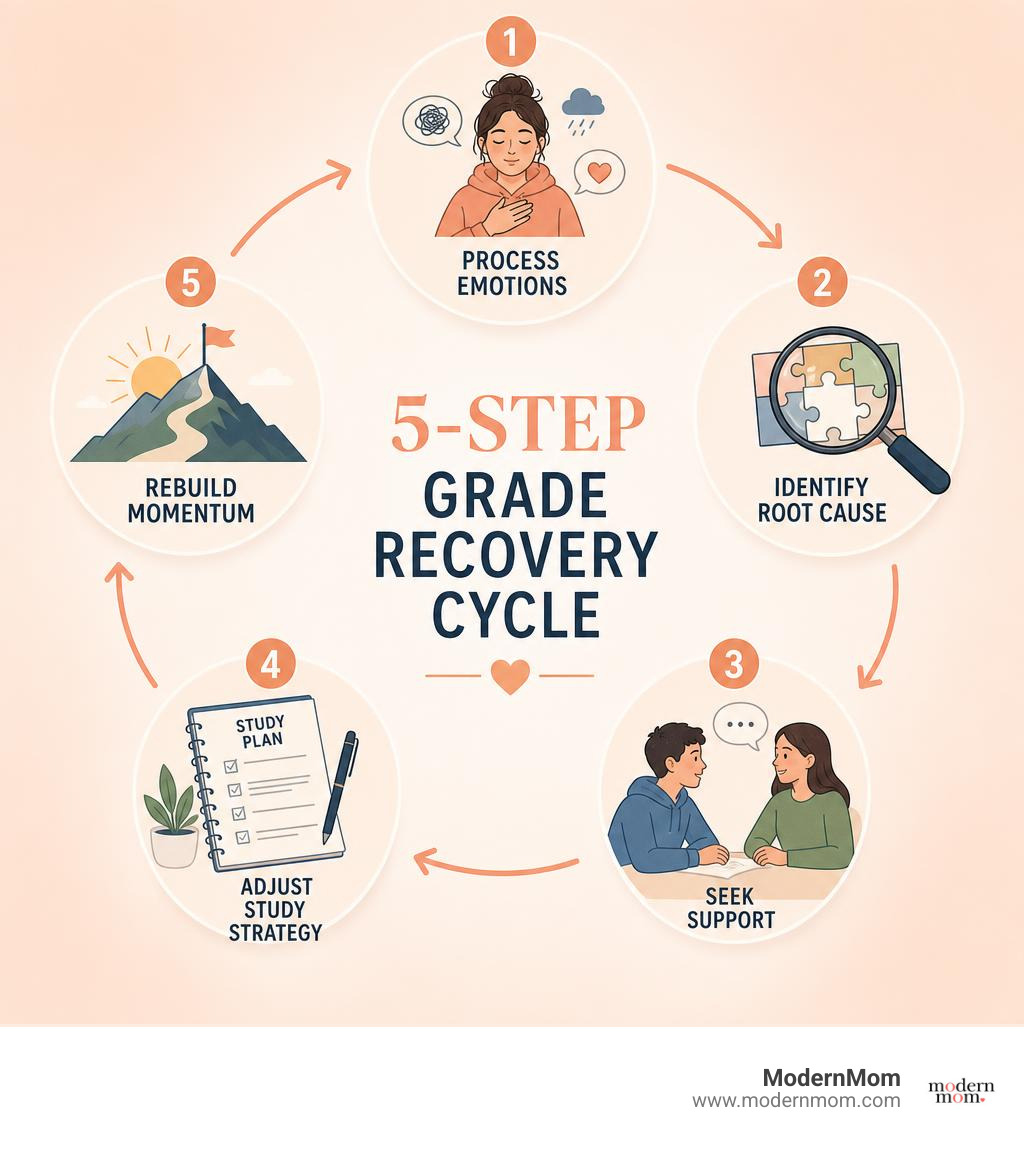
Dealing with Bad Grades: Immediate Steps to Take
When that red ink or digital notification first appears, it is completely normal to feel a wave of panic or disappointment. The key is to manage that initial emotional reaction so it does not turn into academic paralysis.
First, we recommend setting a time-limited grace period. Give your student a day or two to process their feelings, cry, or simply vent. Suppressing these emotions is like walking with a sharp pebble in your shoe—it will only cause more pain down the road. Encouraging them to externalize their feelings through journaling or talking to a trusted friend helps release the emotional pressure.
Once the initial shock wears off, it is time to transition from emotion to action. We can find excellent starting points in wikiHow’s guide on getting over a bad grade, which suggests checking for grading errors and keeping perspective. After clearing the air, you can explore targeted tips on staying motivated after a setback to help your teen rebuild their academic drive.

The Psychological Impact of Dealing with Bad Grades
There is a massive psychological difference between feeling disappointed about a bad grade and tying your entire identity to academic performance. When students view a test score as a reflection of their personal value, a single failure can feel like a devastating verdict on their intelligence.
In the long run, letting a single bad grade define self-worth can lead to chronic anxiety, academic shame, and even depression. According to the CDC, students in high-achieving school environments are actually at a higher risk for mental health struggles when academic pressure becomes too intense.
To break this cycle, we must foster a growth mindset. When students realize that intelligence is a muscle developed through effort, they become far more resilient. Shifting the focus from “I am a failure” to “I failed this test, but I can learn from it” makes all the difference when recovering after a tough academic semester.
Distinguishing Between Effort and External Factors
Before mapping out a comeback plan, your student needs to play detective and figure out what actually went wrong. We must help them distinguish between a lack of preparation and factors completely outside their control.
Have your student perform an honest preparation audit by asking:
- Did I study using active, proven methods, or did I just flip through slides?
- Did I dedicate enough focused, distraction-free time to the material?
- Was I struggling with severe test anxiety or cognitive fatigue during the exam?
Sometimes, external circumstances like an illness, family stress, or severe sleep deprivation are the real culprits. In fact, sleep studies show that each hour of lost sleep increases a student’s risk of psychological stress by 14%. Balancing personal accountability with self-compassion means acknowledging when external life events got in the way, rather than simply blaming a lack of intelligence.
Shifting Mindsets: Reframing Failure and Diversifying Identity
One of the most powerful tools for coping with academic stress is identity diversification. Just like financial experts advise against putting all your money into a single stock, we should not let our kids put all their self-esteem into their report cards.
Psychological resilience studies show that diversifying identity beyond academics—by investing time in sports, creative hobbies, family, and friendships—reduces the negative emotional impact of poor grades by up to 50%. When a student has a robust sense of self, a bad grade is just a minor bump in one area of life, not an existential crisis.

This matches the ancient wisdom of Stoicism, which teaches us to focus entirely on what is within our control (our effort, our reactions, and our daily habits) while letting go of what we cannot control (an unfair exam question or a teacher’s strict grading scale).
Rebuilding Motivation Through Small Wins
When motivation is low, trying to tackle an entire semester of backlogged material is a recipe for burnout. Instead, focus on process-oriented goals rather than outcome-oriented goals. Instead of aiming for an immediate “A,” set a goal to study a specific topic for 25 focused minutes.
We can also apply the Pareto Principle (the 80/20 rule), which suggests that 20% of our habits drive 80% of our results. Identify the core concepts or study habits that will yield the biggest academic return. Rebuilding momentum through small, consistent wins is what ultimately restores a student’s academic self-esteem.
Actionable Strategies for Academic Recovery
To turn things around, students must change how they study, not just how much they study. Amazingly, research shows that 84% of students primarily rely on re-reading their textbooks or notes. This is one of the least effective, most passive study techniques available, leading to a false sense of competence.
Instead, students should implement cognitive science-backed strategies:
- Active Recall: Testing memory using flashcards, practice questions, or teaching the material to someone else.
- Spaced Repetition: Spacing out study sessions over several days or weeks rather than cramming the night before.
If your student is recovering from a specific academic emergency, like a failed midterm, they can find a structured survival plan by reading about recovering from a bombed midterm. For a comprehensive guide on rebuilding a damaged GPA, check out these tactical strategies for raising a low GPA.
Deciding When to Seek Academic Support
Many students view asking for help as a sign of weakness, but it is actually a major sign of maturity. If a student is consistently lost despite putting in honest effort, it is time to bring in reinforcements.
We should encourage our kids to utilize campus resources. Visiting professors or teaching assistants during office hours is incredibly effective. Additionally, utilizing university tutoring centers can yield massive benefits; tutored students earn up to 30% more credits and enjoy a 7% higher course success rate than their peers.
A Parent’s Guide to Dealing with Bad Grades
As moms, our natural instinct is to protect our children and push them toward success. However, reacting to a bad grade with anger or harsh punishments can damage the parent-child relationship and kill a teen’s intrinsic motivation.
Instead, we should strive for an authoritative parenting style—which is warm, supportive, and highly communicative, yet maintains clear standards. We have written extensively about finding this balance in our guide on how to raise a teenager without losing your mind.
When that disappointing report card arrives, start by listening first. You can learn more about active listening techniques in our article on the importance of listening to your teen. For a step-by-step communication strategy, we also highly recommend reviewing Cleveland Clinic’s advice on talking about bad grades.
Supporting Your Child Through Academic Transitions
Academic setbacks are especially common during major life transitions, such as moving from middle school to high school, or taking the big leap to university. To help prepare your family for these shifts, read our guide on the emotional journey from high school to college.
These challenging moments are actually opportunities for growth. You can find inspiration on navigating these shifts in our piece on finding new beginnings for teens. Through it all, take a deep breath and give yourself some grace; just by being here and seeking answers, you are already knowing you are a great parent.
Frequently Asked Questions about Academic Setbacks
Will one bad grade ruin my GPA or future career goals?
Absolutely not. In college, approximately 30% of students find themselves on academic warning or probation at some point, yet the vast majority recover and graduate. Employers and graduate schools look at your cumulative GPA and overall trajectory, not individual test scores. Many schools even offer grade forgiveness policies that allow students to retake a class and replace a poor grade on their transcript.
How do I tell my parents about a bad grade without causing a fight?
The best approach is to be proactive and honest. Do not wait for them to discover the grade on an online portal. Approach them calmly with a clear diagnosis of what went wrong and a concrete action plan for how you intend to improve. This shows maturity and immediately shifts the conversation from past mistakes to future solutions.
What should I do if I studied hard but still failed?
This is a clear sign that your study methods are passive rather than active. If you spent hours re-reading and highlighting but still struggled, audit your process. Switch to active recall, spaced repetition, and practice testing. Additionally, schedule a meeting with your teacher to review your exam and identify exactly where your understanding broke down.
Conclusion
At ModernMom, we know that raising resilient, confident kids is a journey filled with both triumphs and setbacks. Dealing with bad grades is simply a single chapter in your child’s educational story—it is not the final conclusion. By embracing self-compassion, focusing on active study strategies, and keeping academic performance in perspective, our kids can build the resilience they need to succeed both in school and in life.
For more tips, guides, and supportive parenting advice to help your family thrive, explore our curated ModernMom College Planning Resources.
The post How to Handle Bad Grades and Find Your Motivation Again appeared first on ModernMom.