
Why Every Mom Needs a Visual Schedule and Routine for Kids
Routine for kids isn’t just a parenting buzzword — it’s one of the most powerful tools you have for calmer mornings, fewer meltdowns, and a household that actually runs smoothly.
If your mornings feel like a fire drill and bedtime is a full-on negotiation, you’re not alone. Most families struggle with the same chaos. The good news? A consistent daily structure can change everything — fast.
Here’s a quick look at what an effective kids’ routine covers:
- Wake-up — consistent time, calm transition
- Morning hygiene — teeth, face, getting dressed
- Breakfast — ideally prepped the night before
- School prep — backpack, shoes, launch station by the door
- After-school wind-down — snack, homework, free play
- Dinner — family meals together where possible
- Bedtime routine — bath, stories, lights out at a consistent time
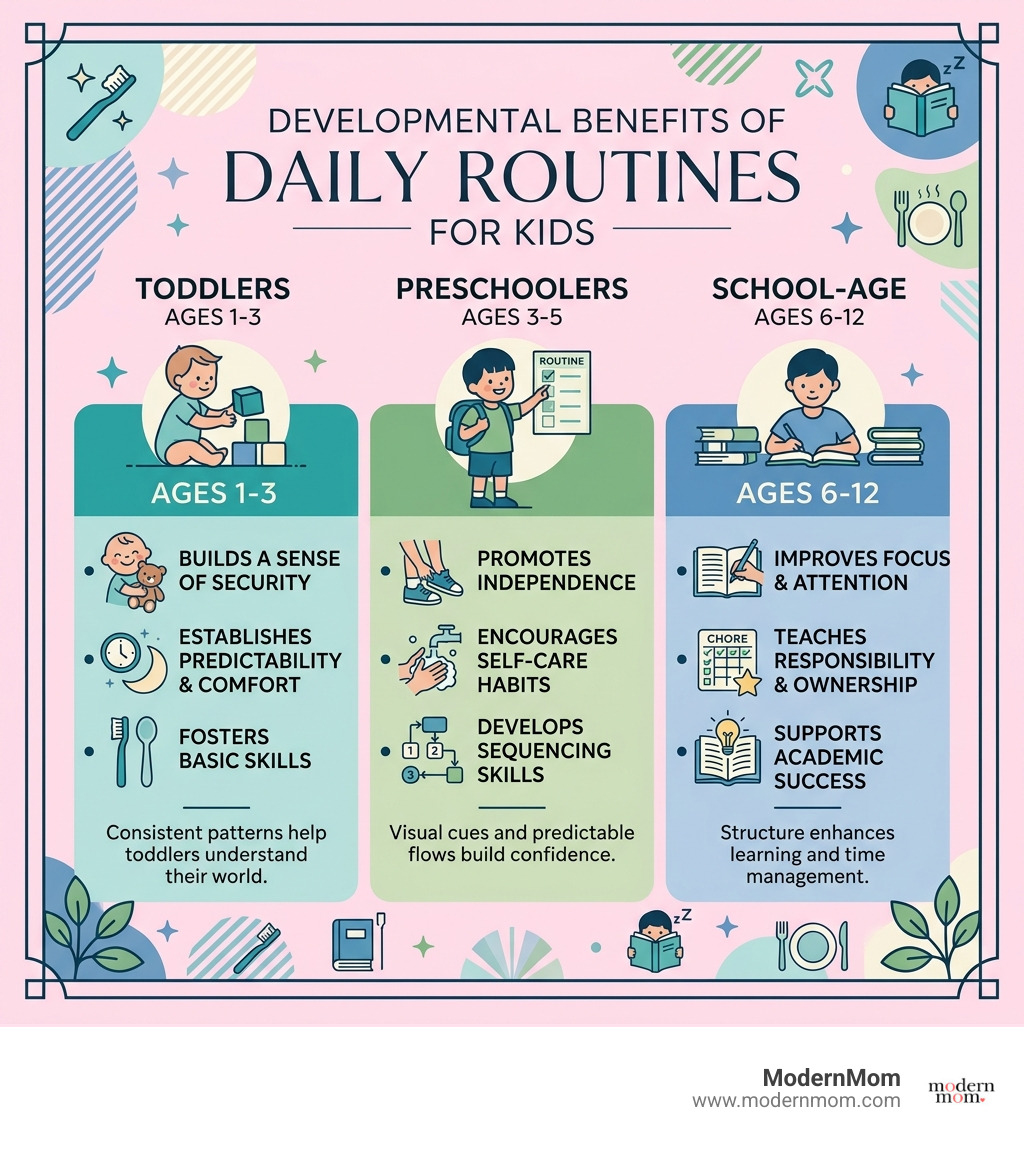
Research confirms that children with strong routines at home have an easier time learning and building friendships at school. And the benefits go way beyond academics — predictable schedules help kids feel safe, build confidence, and reduce the daily power struggles that drain every mom’s energy.
Visual schedules and routine charts take it one step further. Instead of repeating yourself five times before breakfast, you show kids what comes next. For young children especially, seeing the routine in pictures or simple words hands them ownership — and gives you your sanity back.
Why a Consistent Routine for Kids is a Total Game-Changer
We’ve all seen it: the toddler who insists on reading the exact same book every night or the preschooler who won’t leave the house without their specific “lucky” shirt. While it might seem like stubbornness, it’s actually a sign of how much children crave repetition. For a child, the world is a big, unpredictable place. A consistent routine for kids acts as a stable “nest,” providing the emotional security they need before they are ready to “fly” into independence.
The mental health benefits are massive. When children know what to expect, their anxiety levels drop. Predictability helps with emotional regulation because it eliminates the “fear of the unknown” that often triggers tantrums. Studies show that family routines moderate daily hassles and improve a child’s overall psychological adjustment. This stability is even more critical during times of external uncertainty, such as Saving Kids From Election Stress or major life transitions.
Beyond emotional well-being, routines are the secret sauce for school performance. Research confirms that children with structured home lives find it easier to focus on learning and navigate social friendships. Why? Because they aren’t using up all their mental energy wondering when lunch is or if they’ll get to play later. They also develop vital time management skills early on. Even a toddler learning to put their pajamas in the hamper is learning the basics of responsibility and sequencing.
Finally, routines build confidence. When a child masters a part of their schedule—like brushing their teeth without being asked—they feel a sense of pride and autonomy. This mastery reduces power struggles because the “boss” isn’t Mom or Dad; the “boss” is the schedule. It transforms “Go do your homework!” into “What does the chart say we do after snack?”
Mastering the Morning: A Routine for Kids Aged 3 to 8
Mornings for kids aged 3 to 8 are often the most “spirited” part of the day. Between the ages of 3 and 5, children are often dealing with separation anxiety or a deep need for connection after a night spent alone. Experts suggest that spending just five minutes of undivided attention—snuggling or talking—before jumping into the “to-do” list can significantly reduce resistance.
For this age group, we recommend allowing a 45-minute to 1-hour window for the morning routine. This might sound like a lot of time, but it provides the “cushion” young children need to practice independence. If we rush them, we end up doing everything for them just to get out the door, which defeats the purpose of building skills.
A “launch station” is a total lifesaver here. This is a designated spot near the door with hooks for backpacks and a basket for shoes. To make the transition even smoother, check out these 7 fun back to school must haves to keep them organized and excited. Every child is different, so it’s important to learn how to match your parenting style to your kids needs when setting these expectations.
Building an Effective Morning Routine for Kids
To turn your morning from a race into a flow, try these practical tools:
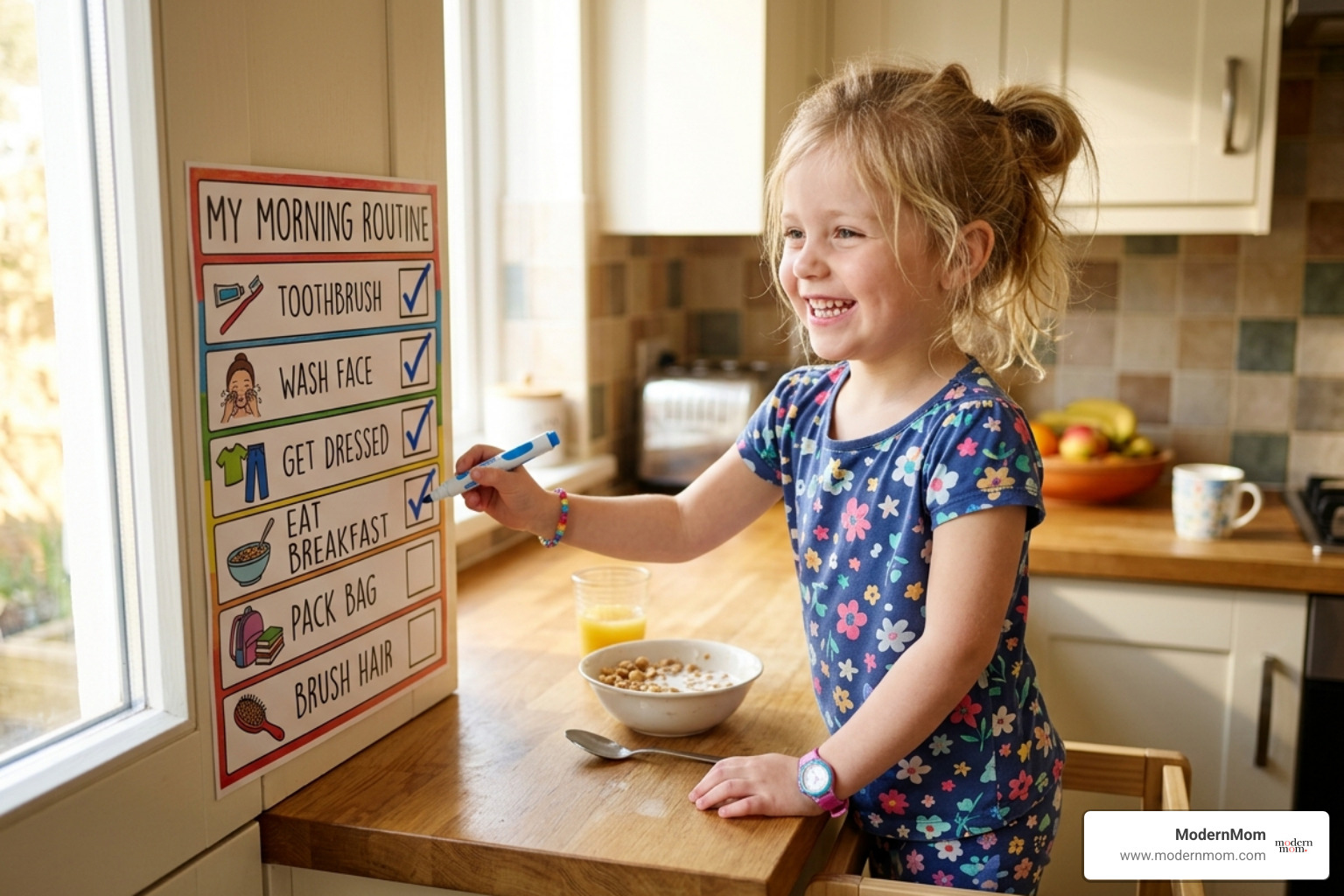
- Visual Checklists: For kids 5 and under, use pictures (a toothbrush, a bowl of cereal, a shirt). For ages 6-8, use a mix of words and images. This allows them to “check off” tasks independently.
- Timers: Use a fun sand timer or a visual countdown app. It turns “hurry up” into a game of “can you finish before the sand runs out?”
- Morning Music: Create a “Get Ready” playlist. Use upbeat songs for dressing and calmer songs for breakfast. When the final song ends, it’s time to put on shoes.
- Breakfast Rituals: Prep what you can the night before. Whether it’s overnight oats or pre-set silverware, reducing the number of decisions you make at 7:00 AM is key.
- Hygiene Habits: Keep a “Morning Essentials Basket” in the bathroom with their toothbrush, hairbrush, and toothpaste so they aren’t searching through drawers.
From Toddlers to Teens: Tailoring Your Daily Schedule
As our kids grow, their needs shift dramatically. What works for a three-year-old will feel like an insult to a thirteen-year-old. The goal is to evolve the routine for kids from high-supervision to high-autonomy.
Toddlers (ages 1-3) thrive on a very rhythmic day. Most toddlers consolidate their naps to just one daytime sleep by 15 to 18 months, and they typically wake between 6:30 and 8:00 AM. Their routine should be heavy on play and connection, including ways to engage babies and toddlers in reading to build early literacy and bonding.
For teenagers, the routine shifts toward self-regulation. We want to involve them in the decision-making process. While they need more autonomy, they still benefit from “anchor points” like a consistent family dinner or a “no phones in the bedroom” rule. Understanding Kids And Smartphones What Age Is The Right Age/ can help you set healthy boundaries within their daily schedule.
| Feature | Toddler (1-3) | School-Age (6-12) | Teenager (13-18) |
|---|---|---|---|
| Wake Time | 6:30 – 8:00 AM | 7:00 – 7:30 AM | 6:30 – 7:30 AM |
| Primary Focus | Play & Exploration | Learning & Chores | Independence & Study |
| Nap/Rest | 1-2 hours | 30 min “Quiet Time” | N/A |
| Screen Time | Minimal/None | 1 hour (supervised) | Negotiated limits |
| Bedtime | 6:30 – 7:30 PM | 8:00 – 9:00 PM | 9:30 – 10:30 PM |
Sample Daily Routine for Kids by Age
The Toddler Flow:
- 7:30 AM: Wake up and cuddles.
- 8:00 AM: Breakfast and “helping” with dishes (toddlers love wiping tables!).
- 9:30 AM: Outdoor play or a park visit.
- 12:00 PM: Lunch followed by a nap.
- 3:00 PM: Snack and free play (let them tinker with blocks or boxes).
- 5:30 PM: Family dinner.
- 6:30 PM: Bath, book, and bed.
The School-Age Rhythm:
- 7:00 AM: Wake up and use the visual chart.
- 8:00 AM: Head to school.
- 3:30 PM: After-school snack and 30 minutes of “brain rest.”
- 4:00 PM: Homework and chores.
- 5:00 PM: Outdoor play or extracurriculars.
- 6:30 PM: Dinner and family talk.
- 8:00 PM: Bedtime wind-down (no screens).
The Teen Strategy:
Teens need a “flexible structure.” They might have late-night sports or heavy homework loads. Focus on the “must-dos” first. Encourage them to pack their bags the night before to reduce morning stress. If they are home more often, like during summer, help them create an “I’m Bored” list of independent activities like journaling or learning a new skill.
Strategies for Special Needs and Reducing Power Struggles
For children with ADHD, Autism, or sensory processing differences, a routine for kids isn’t just helpful—it’s essential. These children often struggle with transitions and executive functioning (the brain’s “air traffic control”).
One highly effective technique is backward chaining. This involves helping a child with all the steps of a task except the last one, allowing them to feel the success of completion. You can read more about backward chaining to see how it applies to daily life.
Visual aids are non-negotiable here. Use sand timers so the child can see time passing, which is much more effective than saying “five more minutes.” If you’re planning for a change in routine, start talking about it weeks in advance.
To reduce power struggles with any child, try offering “limited choices.” Instead of “Put on your shoes,” try “Do you want to put on your left shoe or your right shoe first?” or “Do you want the blue sneakers or the red ones?” This gives the child a sense of control within the safety of your boundaries.
Avoiding Common Mistakes in Your Routine for Kids
Even the best-laid plans can hit a snag. One of the biggest mistakes we make as parents is rigidity. Life happens—kids get sick, cars won’t start, or you might need tips to survive flu season when the whole house is down. A routine should be a rhythm, not a prison. Aim for the “80/20 Rule”: if you follow the routine 80% of the time, the other 20% won’t break the habit.
Another common pitfall is tech distractions. Allowing TV or tablets in the morning often leads to “zombie mode,” where kids move slower and melt down when the screen is turned off. Furthermore, scientific research on blue light shows that evening screen time can suppress melatonin by up to 88% in young children, making it much harder for them to fall asleep. Keep the bedroom a screen-free zone for better rest.
How do I handle a child who resists the routine?
Resistance is often a plea for connection or a sign that the task is too hard.
- Connection before Correction: If they are stalling, spend two minutes just being with them before redirecting to the task.
- Natural Consequences: If a child refuses to get dressed, let them go to school in their pajamas (with their clothes in a bag). Often, the natural consequence of feeling out of place is a better teacher than a lecture.
- Patience: It takes about three nights of consistency to see a change in a bedtime routine. Don’t give up on night two!
What is the best way to start a routine from scratch?
Don’t try to overhaul the whole day at once.
- Start Small: Pick one “pain point”—like the morning rush or bedtime—and focus only on that for a week.
- Involve the Kids: Ask them, “What do you think we need to do to get to school on time?” When they help create the rules, they are more likely to follow them.
- Use Visuals: Even a simple handwritten list on the fridge is better than nothing.
Should weekend routines be different from school days?
Yes, but keep the “core” consistent. You might allow a later wake-up time or a special “Pancake Saturday,” but try to keep the sequence of events (wake, eat, play, rest) the same. This prevents the “Sunday Night Blues” where kids struggle to get back into the school-week rhythm.
Conclusion
At the end of the day, a routine for kids is about more than just checking off boxes. It’s about creating a home environment where everyone knows they are safe, valued, and supported. By using visual schedules and predictable rhythms, we reduce the “noise” of daily life so we can focus on what really matters: connecting with our families.
Consistency is a gift you give to your children and yourself. It builds a foundation of trust that lasts long after the toddler years are over. And remember, a happy home starts with a healthy foundation—sometimes that means making sure the adults are taken care of, too. For more on maintaining a strong family unit, check out our guide on how to make marriage work after separation.
We’re all in this together, Mama. Take a deep breath, grab a poster board, and start where you are. You’ve got this!
The post Visual Schedules and Routine Charts to Save Your Sanity appeared first on ModernMom.