
Why Your Playroom Needs a Game Plan
Playroom organization hacks are simple strategies to create functional zones, store toys efficiently, and maintain order with minimal effort. The best approach combines three steps: decluttering, creating play zones, and labeling everything so kids can help clean up.
Quick-Win Playroom Organization Hacks:
- Declutter first – Remove broken, outgrown, or unused toys before organizing
- Create zones – Designate separate areas for reading, arts and crafts, building, and pretend play
- Label everything – Use picture labels for young kids, word labels for readers
- Go vertical – Install wall shelves and pegboards to free up floor space
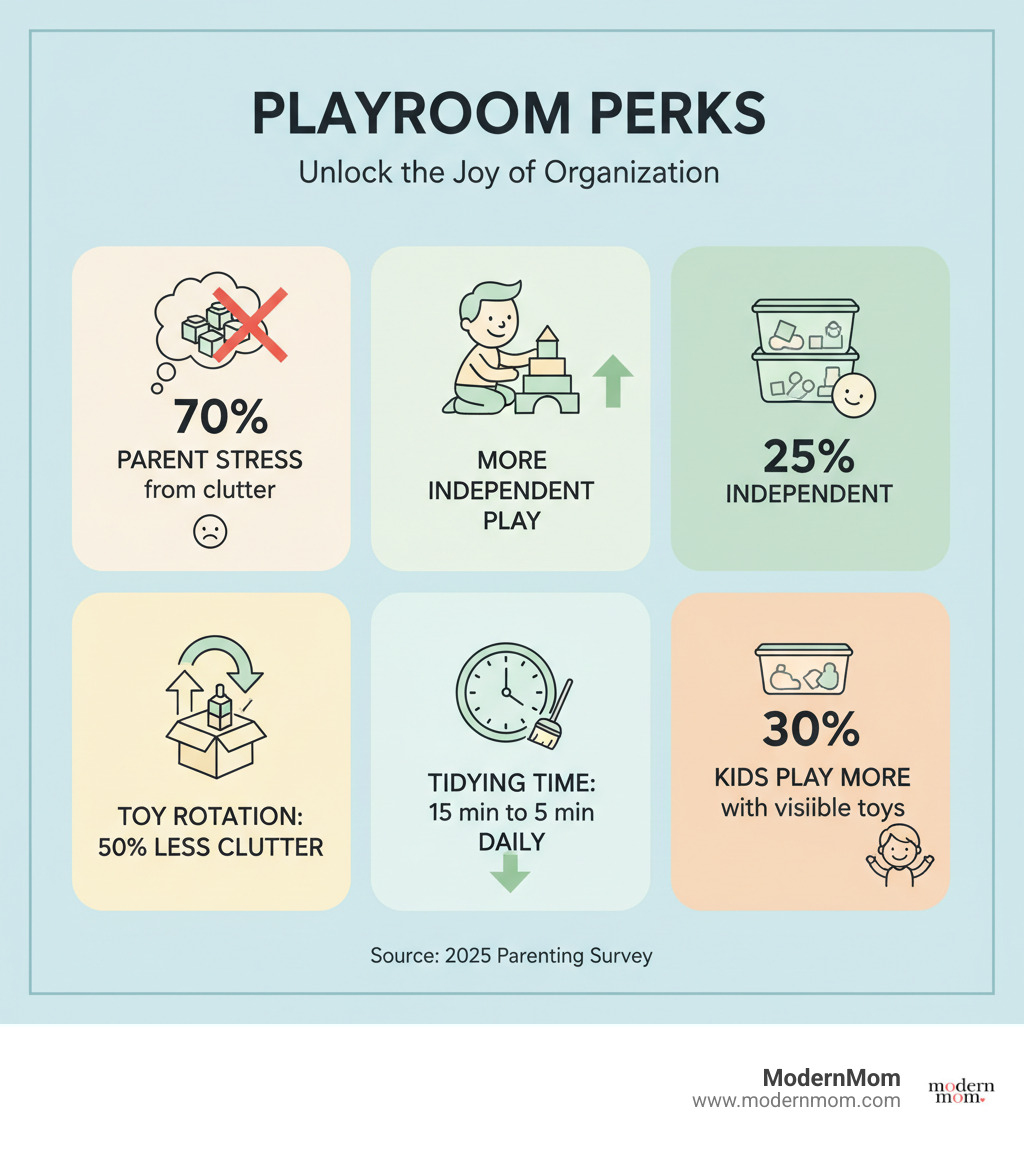
- Use clear bins – Kids are 30% more likely to engage with toys they can see
- Rotate toys – Keep half stored away and swap them out to reduce clutter by 50%
- Choose lidless bins – Makes cleanup easier for little hands
If your playroom feels more like a toy explosion than a creative oasis, you’re not alone. A recent survey found that 70% of parents struggle with toy clutter, which seriously impacts their stress levels. The good news? An organized playroom isn’t just about looks. Studies show that organized spaces can lead to a 25% increase in a child’s independent play time—more creativity for them and more breathing room for you.
The average parent spends 15 minutes per day tidying up toys, which adds up to over 90 hours per year. It doesn’t have to be this way. This article will walk you through practical, mom-tested strategies that work for real families. We’re skipping the Pinterest-perfect solutions that fall apart after one playdate for simple systems your kids can actually help maintain.
The 3-Step Foundation: Declutter, Zone, and Label
Before you buy a single bin, mastering these three foundational steps is your key to success. Think of it as your playroom reset button.
Step 1: The Great Toy Edit (Less is More!)
You can’t organize clutter, so decluttering is the essential first step. Start with a solo pass to remove anything broken, missing pieces, or untouched for months. Then, involve your kids by creating three piles: Keep, Donate, and Toss. This teaches them about generosity and decision-making.
For “maybe” items, try the “toy purgatory” trick: box them up for a month. If no one asks for them, they can be donated. Most families find they can let go of 30-40% of their toys, leading to less chaos and more focused play. For more help, check out our guide on Help! My House is Overrun by Baby Gear!.
Step 2: Create ‘Yes’ Spaces with Play Zones
Now, create designated zones to transform a chaotic room into an intentional space. Think about how your kids play and set up areas like a cozy reading nook, an art station, a building corner, or a pretend play area. This keeps similar items together and makes cleanup simpler. You don’t need walls; a colorful rug, a small table, or strategic furniture placement can effectively define each zone.

Step 3: The Magic of Labels for Easy Cleanup
Labels are the secret weapon that makes organization stick. For pre-readers, picture labels are game-changers. Snap a photo of what goes in each bin and stick it on the front. As kids learn to read, you can switch to worded labels or use both.
Labels transform cleanup from a battle into a sorting game, empowering kids to put things away independently. Involve them in making the labels to give them a sense of ownership. You can even find ready-made printable toy bin labels to simplify this step.
These three steps—decluttering, zoning, and labeling—form the foundation of a playroom that actually stays organized.
Smart Storage Solutions for Every Type of Toy
With your playroom decluttered and zoned, it’s time to choose the right storage to make playtime and cleanup effortless.
Taming the Tiny Toys: LEGOs, Figurines, & Craft Supplies
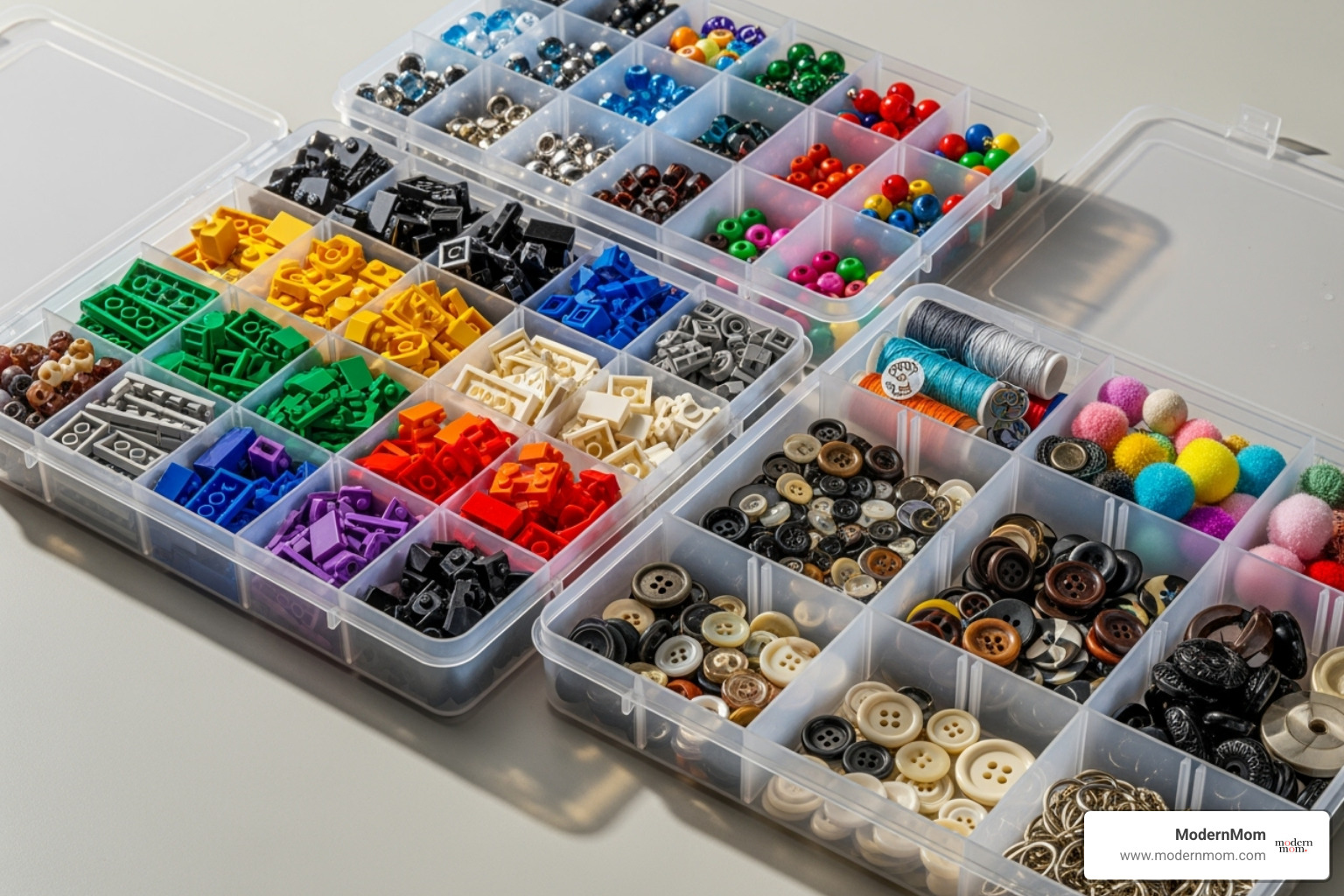
Tiny toys like LEGOs, doll accessories, and craft supplies require smart solutions.
- Divided bins and compartment containers are lifesavers for sorting small pieces. Clear containers are best so kids can see what’s inside.
- Zipper pouches are perfect for card games or small building sets.
- Rolling carts create a mobile art station, keeping markers, paper, and glue organized and accessible. Add magnetic strips to the side for extra storage.
For LEGOs, store instruction manuals in a file holder to prevent meltdowns over lost directions.
Conquering Bulky Items & the Stuffed Animal Army
For oversized toys and the stuffed animal collection, think big and get things off the floor.
- Large open bins or woven baskets make it easy for kids to toss plush toys in at cleanup time.
- Stuffed animal hammocks use unused corner space.
- Storage benches are brilliant for hiding bulky items while providing extra seating.
- Open shelving gives large items like dollhouses or play kitchens a dedicated home.
Displaying Books & Artwork with Style
Thoughtfully displaying books and art encourages reading and celebrates creativity.
- Forward-facing book displays, like floating acrylic or wooden shelves, entice young readers by showing off the covers.
- Wire and clip systems or wall-mounted clipboards make it easy to rotate your child’s latest artwork.
- Framed cork boards create a dedicated gallery for drawings and certificates, containing the visual clutter while showcasing their masterpieces.
Genius Playroom Organization Hacks to Maximize Your Space
These clever hacks will help you maximize every square inch, reduce visual clutter, and keep playtime feeling fresh.
Go Vertical: Using Your Walls for Storage
When floor space is scarce, look up. Your walls are prime real estate for storage.
- Wall-mounted shelves are perfect for books, special toys, or labeled bins. Adjustable systems like IKEA’s BOAXEL can grow with your kids.
- Pegboards are workhorses. Use a rail with cups for art supplies or a wall-mounted paper holder for coloring sheets.
- Over-the-door organizers and hanging cabinets are great for holding small dolls or games without taking up floor space.
Implement a Toy Rotation System
A toy rotation is one of the most effective playroom organization hacks. Divide toys into groups and keep only one group out at a time, storing the rest. Swap them every few weeks. This reduces playroom clutter by up to 50% and makes old toys feel new again, sparking renewed interest and more independent play. It also makes cleanup significantly easier. For more ways to simplify, check out our article on 15 Things You Should Give Up to Be a Happy Parent.
Choose Furniture That Works Double-Duty
In a playroom, every piece of furniture should serve multiple purposes.
- Cube organizers like IKEA’s KALLAX or a sturdy cube organizer shelf are perfect for bins and books.
- Storage ottomans and benches hide bulky toys while providing seating.
- Activity tables like a dedicated art table and chair set with built-in storage keep supplies contained.
A crucial safety note: Always anchor heavy furniture like shelving units and dressers to the wall to prevent dangerous tip-overs.
Multi-Functional Furniture Ideas:
- Cube storage units – shelving, room divider, or play kitchen base
- Storage benches and ottomans – seating plus hidden toy storage
- Activity tables with drawers – play surface plus supply storage
- Bookshelves with lower cabinets – book display plus concealed storage
- Wall-mounted or fold-down tables – workspace that disappears when not in use
Making It Last: Involving Kids and Adapting Your System
An organized playroom is a family habit, not a one-time project. Here’s how to create a system that sticks.
Turn Tidy-Up Time into a Game
Make cleanup fun to get kids invested. Instead of a chore, turn it into a game.
- Set a timer and challenge them to “beat the clock.”
- Turn on a favorite song and see if they can finish before it ends.
- Make it a sorting game: “Find all the red toys first!”
A quick, 5-minute tidy-up as part of the daily routine makes a huge difference. When kids feel ownership, they’re more likely to help. For more on setting boundaries, read Be Your Kids’ Best Parent, Not Their Best Friend.
Budget-Friendly and DIY Playroom Organization Hacks
You don’t need a huge budget. Some of the best playroom organization hacks use items you already have.
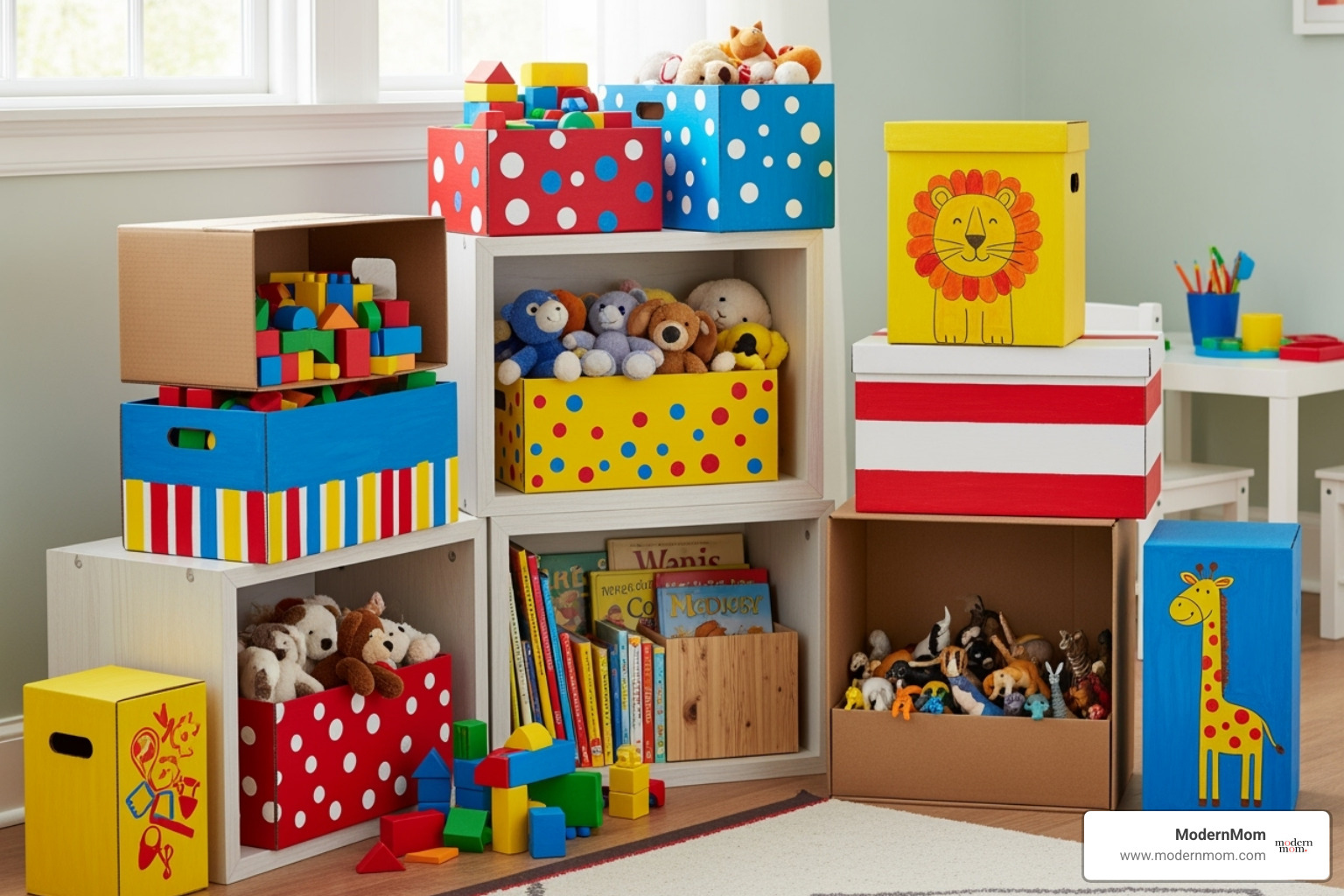
Repurpose food storage containers for small craft supplies, or use spare trays to wrangle puzzle pieces. Cardboard boxes can become custom storage with a little paint. Dollar stores are goldmines for inexpensive bins, and a wall-mounted Grocery Bag Holder is a genius trick for toy tracks. 4 Tier Stackable Storage Baskets also offer a cost-effective solution.
Adapting Your System as They Grow
A system that works for a toddler won’t work for a tween. Flexibility is key.
- Invest in adjustable shelving, like an Elfa system, that can change as needs evolve.
- Repurpose containers. Bins that held toddler blocks can later store board games.
- Reassess your system twice a year. Ask your kids what’s working and what isn’t. Their input is valuable and helps them stay invested. For guidance on other transitions, see our article When is a Child Too Big for a Toddler Bed?.
Frequently Asked Questions about Playroom Organization
Here are answers to common questions about playroom organization hacks.
How do I organize a playroom in a living room?
To integrate a play area into a living room, choose storage that blends with your decor.
- Use decorative woven or fabric baskets that match your furniture to hold toys.
- Opt for furniture with closed storage, like a media console or cabinet, to hide games and building sets.
- A storage ottoman serves as both seating and a toy hiding spot.
The goal is to hide toys in plain sight, keeping the space calm for adults but ready for play.
What’s better for toy storage: open shelves or closed cabinets?
The best approach is often a hybrid of both.
- Open shelves encourage play by keeping toys visible and accessible. They’re great for books and frequently used items.
- Closed cabinets are perfect for hiding visual clutter, messy craft supplies, or toys in rotation.
Use open shelving for daily-use toys you want to encourage, and closed cabinets for everything else. This gives you the best of both worlds: an inviting play space and a tidy appearance.
What are the biggest playroom organization mistakes to avoid?
- Not decluttering first: You can’t organize clutter. Always start with a thorough toy edit.
- Creating overly complex systems: Keep it simple. If a toddler can’t follow the system, it’s too complicated.
- Forgetting to anchor heavy furniture: This is a critical safety step. Always secure tall or heavy furniture to the wall.
- Not getting kid input: Involve your kids in the process. They’re more likely to maintain a system they helped create.
- Buying storage before you declutter: Wait until you know exactly what you need to store to avoid wasting money and creating more clutter.
- Ignoring vertical space: Use your walls! Shelves, pegboards, and hanging organizers free up valuable floor space.
By sidestepping these common mistakes, you’ll create a playroom organization system that works with your family’s real life, not against it.
Conclusion: Reclaim Your Space and Your Sanity
An organized playroom isn’t just about a tidy house; it’s about creating a peaceful environment that fosters creativity, encourages independence, and gives you back a piece of your sanity. By implementing these playroom organization hacks—decluttering, zoning, using smart storage, and involving your kids—you’re teaching life skills and reducing daily stress.
Progress beats perfection. You don’t need a Pinterest-worthy playroom. Start with one small area, be consistent, and give yourself grace when messes happen (that’s what play is for!). These strategies can adapt and grow with your family.
You’ve got this, mama. A little organization goes a long way in managing the beautiful chaos of family life. For more tips on creating a home that works for your family, including navigating sensory needs, explore our resources on autism and too much stuff.
The post No More Toy Trouble: Genius Playroom Organization Hacks appeared first on ModernMom.