


Why Starting Your Decluttering Journey Matters More Than Ever
Decluttering for beginners doesn’t have to feel impossible, even when you’re staring at piles of toys, mountains of laundry, and counters you haven’t seen in weeks. Here’s how to start:
Quick Start Guide:
- Trash Bag Therapy – Grab a bag and toss obvious trash (junk mail, broken toys, expired food) for an instant win
- Shift Your Mindset – Replace “I’m bad at this” with “I deserve a calm home”
- The Donation Decision – Ask yourself: “Would I buy this again today?” If not, it’s time to let it go
If you’ve ever spent an afternoon untangling cords instead of actually decluttering—or finded 20 extra toothbrushes lurking in your bathroom cabinet—you’re not alone. Life gets busy. Things pile up. And suddenly, the mess itself becomes another source of stress.
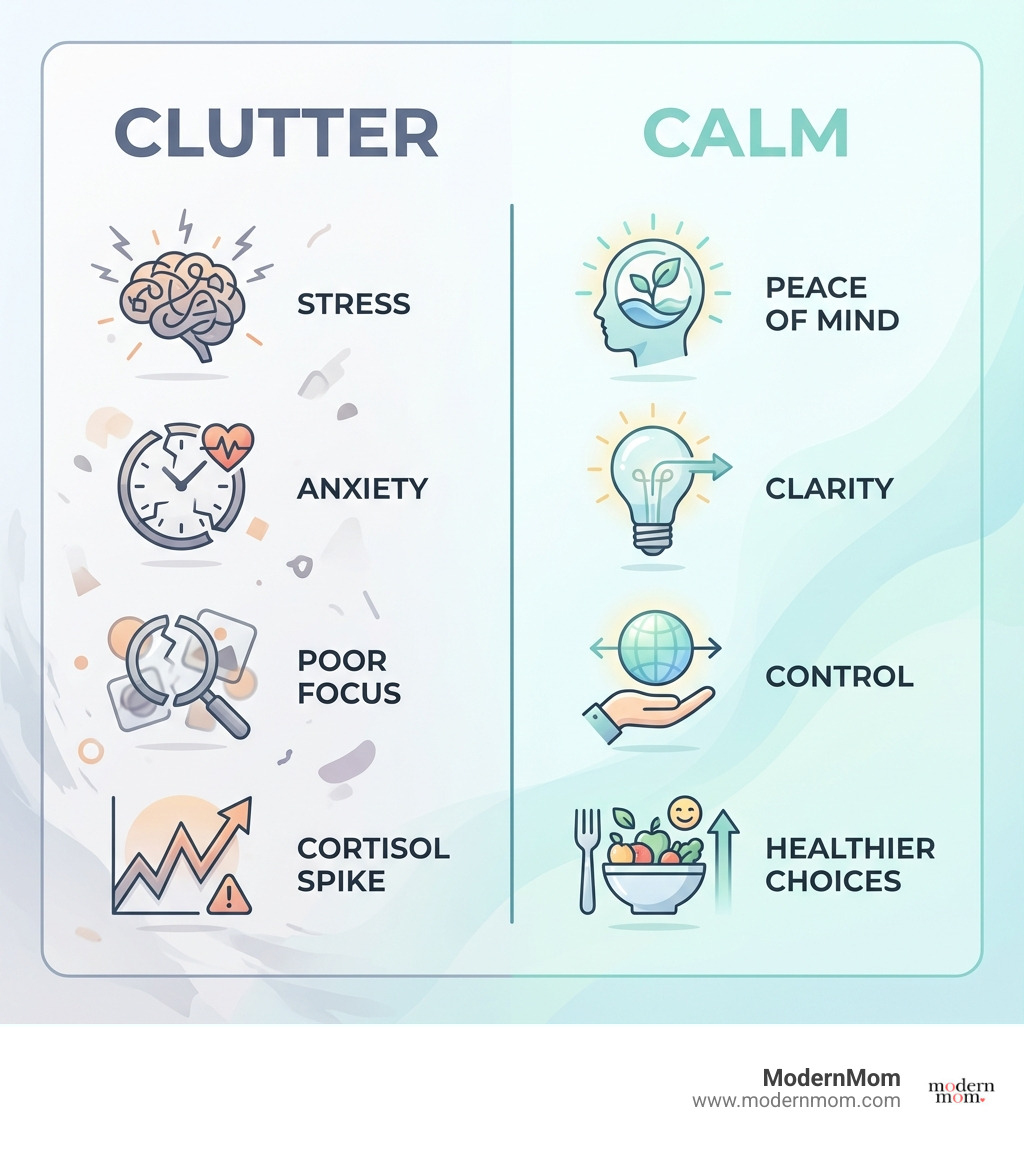
Here’s the truth: clutter isn’t just about having too much stuff. Research shows that a disorganized household can actually trigger a cortisol response in your body, the same stress hormone that kicks in during a crisis. That means your messy kitchen or overflowing closet might literally be affecting your mental and physical health.
But there’s good news. Studies also show that being in an organized space makes you more likely to make healthier choices—from what you eat to how you spend your time. And for busy moms juggling work, kids, and everything in between, even small acts of decluttering can create a sense of control when life feels chaotic.
The path forward is simpler than you think. You don’t need to channel your inner minimalist guru or spend an entire weekend hauling boxes. You just need to start small, be intentional, and give yourself permission to let go of what no longer serves you.
As a creative problem solver who’s built brands, websites, and even a restaurant from scratch, Modern Mom’s team knows that decluttering for beginners starts with breaking big challenges into bite-sized, doable steps. This guide will show you exactly how to reclaim your space—and your sanity—without the overwhelm.
Decluttering for beginners word roundup:
Why Declutter? The Surprising Benefits Beyond a Tidy Home

We often think of decluttering as just a physical task, something we do to make our homes look nicer. But the truth is, the benefits extend far beyond a tidy living room. For us busy moms, decluttering is a powerful tool for boosting our mental health, increasing our focus, and creating more time for what truly matters.
Studies have consistently linked clutter to overall life dissatisfaction. It’s not just about aesthetics; a chaotic environment can contribute to feelings of anxiety and overwhelm. The constant visual noise of too much stuff can drain our energy, leaving us feeling perpetually behind. In fact, research during the pandemic found that decluttering helped women increase their sense of situational control and reduced feelings of fear. Imagine that – simply tidying up can make us feel more in control of our lives!
When our homes are organized, our minds tend to follow suit. A clear space often leads to a clear head, allowing for better focus and concentration. This means more productive work, more present moments with our children, and more time for ourselves. An organized environment has even been shown to encourage healthier choices, from what we eat to how generously we contribute to charity. It’s as if the order around us inspires order within us.
Beyond the mental and physical benefits, there’s a profound sense of accomplishment that comes with decluttering. Each item we thoughtfully release, each space we reclaim, builds our confidence and reminds us of our ability to create positive change. We’re not just clearing out junk; we’re creating a sanctuary, a peaceful haven for ourselves and our loved ones. Our homes should be places of rest and rejuvenation, not sources of stress. By embracing decluttering for beginners, we’re not just tidying up; we’re investing in our well-being and building a more serene, mindful lifestyle.
Getting Started: Your 3-Step Plan for Decluttering for Beginners
Feeling overwhelmed is a common starting point for many of us. The sheer volume of “stuff” can feel paralyzing. But what if we told you that decluttering for beginners doesn’t require a weekend-long marathon or a complete home overhaul? Our simple, three-step plan is designed to help you break through that initial inertia, build momentum, and see tangible results without the stress. This approach focuses on quick wins and mindset shifts, making the process manageable and even enjoyable.
Step 1: Kickstart with ‘Trash Bag Therapy’ – An Easy Win for Decluttering for Beginners
When you’re first dipping your toes into decluttering, the best place to start is with the easiest, most obvious stuff. We call this “Trash Bag Therapy,” and it’s a game-changer for decluttering for beginners. The idea is simple: grab a trash bag (or a few!) and start on a guilt-free hunt for anything that is undeniably trash.
Why start with trash? Because it’s an instant win. There’s no emotional attachment, no difficult decisions, just pure, unadulterated clearing. This immediate progress provides a powerful dopamine boost, making you feel accomplished and motivated to keep going. It eases you into the process, reduces anxiety about “making the wrong choice,” and builds invaluable momentum.
So, what counts as trash? Think about the obvious candidates that have no place in your home. This includes:
- Scraps of paper, old notes, and junk mail
- Broken items that are beyond repair (or have been “meaning to fix” for years)
- Empty containers, wrappers, and packaging
- Stale or expired food and outdated pantry items
- Dried-up pens, markers, and broken crayons
- Old receipts, bills, and documents that have been digitized or are no longer needed
- Clothes with holes or stains that can’t be mended or cleaned
- Old magazines and newspapers you’ll never reread
- Outdated makeup or toiletries that are past their prime
- Anything that is clearly garbage and has been sitting out
Don’t overthink it. Just toss it. This is your first step towards reclaiming your space, and it’s incredibly empowering.
Step 2: Shift Your Mindset from Overwhelm to Empowerment
Once you’ve experienced the immediate satisfaction of Trash Bag Therapy, the next crucial step in decluttering for beginners is to tackle your internal landscape: your mindset. Decluttering is as much a mental game as it is a physical one. We often carry around negative self-talk, guilt, and emotional attachments that make letting go incredibly difficult.
It’s common to hear thoughts like, “I’m bad at decluttering,” “It’s too hard to let go,” or “I might need this someday.” These thoughts are forms of resistance, and they can keep us stuck. ModernMom guidance suggests reframing these narratives. Instead of allowing your belongings to control you, remind yourself that you are in control of your space and your stuff.
Try incorporating positive affirmations into your decluttering routine. Replace those negative statements with empowering ones like: “I deserve a calm and organized home,” “I am capable of making decisions about my belongings,” or “I am creating space for what truly matters.” Repeating these mantras can help retrain your brain, shifting your perspective from dread to determination.
Overcoming emotional attachment is key here. We often hold onto items not for their utility, but for the memories or potential future uses they represent. This is where the “sunk cost fallacy” comes in – holding onto something because of the money or effort we’ve already invested, even if it no longer serves us. Similarly, the “just in case” trap can fill our homes with items we rarely, if ever, use. Remind yourself that the memory isn’t in the object; it’s in your heart. Letting go of the item doesn’t mean letting go of the memory. By shifting your mindset, you empower yourself to make choices that support your present self and your future well-being.
Step 3: The Donation Decision: What to Keep, What to Let Go
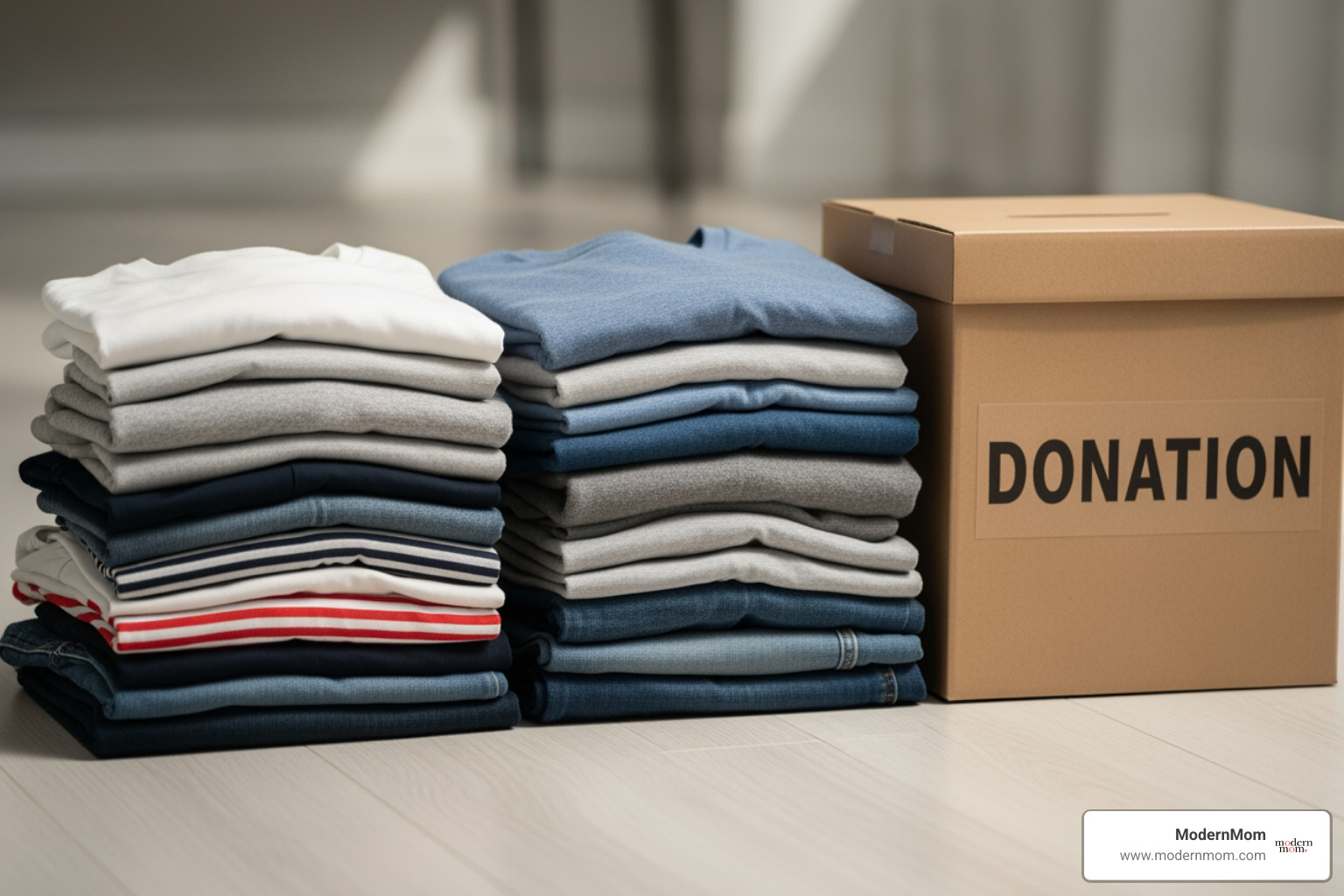
With your trash removed and your mindset adjusted, you’re ready for the third step in decluttering for beginners: making intentional decisions about donations. This is where we sort through items that are still useful but no longer serve you.
A popular and effective method is the “four-box system.” When you’re tackling a space, have four designated containers ready:
- Keep: For items you genuinely love, use regularly, and want in your home.
- Donate/Sell: For items that are in good condition but you no longer need or want.
- Trash: For anything that belongs in the bin (you’ve likely already tackled much of this in Step 1!).
- Relocate: For items that belong in a different room or area of your home.
As you pick up each item, ask yourself these key questions:
- “Do I love this?” Does it genuinely bring you joy or a sense of peace?
- “Do I use this?” Have you used it in the last six months to a year (excluding seasonal items)?
- “Would I buy this again today?” If you saw this item in a store right now, knowing what you know, would you purchase it?
If the answer to these questions is “no,” it’s a strong indicator that the item can go. For clothing, look for pieces that don’t fit, don’t make you feel good, or haven’t been worn in ages. For children’s items, consider unused toys or duplicates. Be intentional and selective.
Once you have your donate pile, the next step is to get it out of your house promptly. Don’t let it become “clutter-in-waiting.” Research suggests that being organized inspires generosity, so accept that feeling! Look for local donation centers, thrift stores, or charities that accept specific items. Many organizations offer pickup services, or you can drop off items during your weekly errands. Giving these items a new life with someone who needs them can transform the act of letting go into an act of kindness.
Practical Decluttering Methods You Can Use Today
Now that you have our essential three-step plan, it’s time to dive into some practical methods that can make decluttering for beginners even more achievable. There’s no single “right” way to declutter. The best method is the one that works for you and your family, fitting into your unique lifestyle and schedule.
The ‘Start Small’ Strategy for When You Feel Overwhelmed – A Key Tip for Decluttering for Beginners
Feeling overwhelmed by the sheer volume of stuff is perhaps the biggest hurdle for beginners. The “start small” strategy is your secret weapon. Instead of trying to tackle an entire room, choose a tiny, manageable area. Think one drawer, one shelf, or even just your bedside table.
The magic of this approach is in building momentum without burning out. Dedicate just 15 minutes to this small task. Set a timer – perhaps using a method like the Pomodoro technique – and focus on that one small area. Our brains respond well to small, achievable goals, and completing even a tiny task releases feel-good hormones that motivate us to keep going.
Modern Mom’s team knows that small steps act as “cues of safety” for our nervous system, reducing the stress response that often accompanies big projects. After your 15 minutes are up, pause and celebrate your victory, no matter how small. A clear drawer might not seem like much, but it’s a tangible sign of progress and a powerful motivator for your next mini-session. Consistency with these short bursts will lead to significant changes over time.
Room-by-Room (or Category) Approach
Once you’re comfortable with small bursts, you can scale up using a room-by-room or category-based approach. Many experts, including professional declutterers, advocate for tackling items by category rather than by room. Why? Because our brains process information better when focusing on one type of item at a time. This allows you to see everything you own within that category, making decisions more consistent.
Here’s how to apply it to key areas:
- Kitchen Tips: The kitchen is often called the heart of the home, but it can also be a major clutter hotspot. Start with a small section, like the spice rack or a single drawer. You might even begin with the refrigerator, as it often requires less emotional attachment to items. Look for duplicate utensils, appliances used once a year or less, and expired pantry items. Remember the “empty, categorize, and place” strategy: empty a cabinet, sort everything, then only put back what you truly use and love.
- Closet Tips: This is a fantastic category to start with, as clothes are personal but generally less sentimental than family heirlooms. Gather all your clothes from every closet, drawer, and laundry basket. You might be surprised by how much you have! Studies suggest we wear 80% of our clothing only 20% of the time, so be honest about what you truly wear.
- The Hanger Trick: Turn all your hangers backward. When you wear an item, turn the hanger forward. After six months (or a season), any hanger still facing backward holds an item you can likely donate.
- Minimalist Fashion Challenge: Consider trying a challenge like Project 333, where you commit to wearing a small, curated collection of clothes (e.g., 33 items for 3 months). This can be incredibly liberating and help you identify your true wardrobe essentials.
- Digital Decluttering: Clutter isn’t just physical. Our digital lives can be just as overwhelming, with unused apps, blurry photos, and overflowing inboxes draining our mental energy and even our device’s battery life.
- Back up everything: Before deleting, ensure important photos and documents are backed up to cloud storage or an external drive.
- Delete what doesn’t serve you: Go through your phone and computer. Delete apps you haven’t used in months, old text threads, and duplicate or blurry photos.
- Organize files: Create a simple folder system for documents and photos.
- Go paperless: Opt for e-statements and bills whenever possible to reduce physical paper clutter. Shred any sensitive documents before recycling.
Dealing with Sentimental Items
For many of us, sentimental items are the hardest to let go of. This is why experts recommend saving them for last. By the time you get to them, you’ll have built your decluttering muscles and developed a clearer understanding of what truly brings you joy.
When approaching sentimental items, acknowledge the powerful memories and emotions they evoke. It’s okay to feel a pang of sadness or nostalgia. However, the memory lives in your heart and mind, not solely in the object itself. You don’t need to keep every single memento to cherish a memory.
Here are some strategies:
- Keep a small memory box: Designate one box for truly precious items that tell your life story. When it’s full, you’ll have to make choices about what’s most important to keep.
- Take photos: If an item is too large to keep or simply doesn’t fit your current life, take a high-quality photograph of it. Create a digital album of these memories.
- Share the story: Sometimes, the best way to honor a sentimental item is to share its story with family members before letting it go. Perhaps someone else in your family would cherish it.
- It’s okay to let go: Give yourself permission to release items that no longer serve a purpose in your present life, even if they hold an emotional charge. This act can be incredibly liberating, making space for new memories and experiences.
Frequently Asked Questions about Decluttering
What if my family or partner isn’t on board with decluttering?
This is a very common challenge, and you are definitely not alone. It can be frustrating when you’re ready for a calmer home, but your family isn’t on the same page. Our Modern Mom advice is to start by focusing on your own personal spaces and belongings first. Declutter your closet, your nightstand, your side of the bathroom. Lead by example and let them see the positive impact on your well-being.
Communicate the benefits of a calmer home without lecturing. Instead of saying, “You need to get rid of your stuff,” try, “I’ve noticed how much more peaceful I feel in my decluttered space, and I’d love for us to experience that together as a family.” Most importantly, avoid decluttering their personal items without their explicit permission. That can breed resentment and make them even more resistant. Focus on what you can control, and the positive changes might inspire others over time.
How do I get rid of things I spent a lot of money on but never use?
Ah, the “sunk cost fallacy” – a powerful force that keeps many of us clinging to expensive items we don’t love or use. The truth is, the money is already spent. Holding onto the item doesn’t magically bring that money back or make it a worthwhile purchase. Instead, it continues to take up valuable space and mental energy in your home.
We encourage you to reframe this situation: by letting go, you’re making space for your current life, your current needs, and items that truly serve you now. Consider selling higher-value items to recoup some of the cost, even if it’s just a fraction. This can make letting go feel more productive. For items that might not sell, donating them to a cause you care about can transform a past “mistake” into an act of generosity, allowing someone else to benefit from your investment.
I have so much stuff, I’m too overwhelmed to even start. What’s the absolute first thing I should do?
If you’re feeling completely paralyzed by the sheer volume of your belongings, take a deep breath. We understand that feeling. The absolute first thing you should do is grab one trash bag and fill it with obvious, easy-to-toss trash. Don’t overthink it. Walk around your home and look for:
- Empty snack wrappers
- Junk mail on the counter
- Broken pens
- Dried-up flowers
- Expired coupons
- Anything that is clearly garbage and you wouldn’t think twice about throwing away.
This single action provides an instant sense of accomplishment and creates a tiny pocket of clear space. That small win is incredibly powerful and makes it easier to take the next step, no matter how small. It’s the simplest form of “Trash Bag Therapy” and a perfect entry point for decluttering for beginners.
Conclusion: Your Journey to a More Peaceful Home
Embracing decluttering for beginners is truly a journey, not a race to perfection. It’s not about achieving a magazine-worthy, minimalist home overnight, but about creating a living space that genuinely supports you and your family. It’s about finding peace, reducing stress, and making room for joy.
Small steps truly do lead to big changes. Each drawer you clear, each shelf you organize, and each item you thoughtfully release contributes to a more serene environment. This process isn’t just a one-time event; it’s a sustainable habit that, once cultivated, will continue to benefit your well-being. By making decluttering a regular practice, you’re investing in a more peaceful and mindful lifestyle for everyone under your roof.
At ModernMom, we’re here to support you every step of the way. If you’re feeling the sensory strain of too much stuff, you’re not alone. We know that a cluttered environment can contribute to sensory overload, especially for those sensitive to their surroundings. To learn more about managing sensory overload and creating a calmer environment for your family, explore our resources on autism and too much stuff. Your journey to a calmer, more joyful home starts now.
The post From Clutter to Calm: How to Begin Your Decluttering Journey appeared first on ModernMom.