


Why Starting Fresh Matters More Than You Think
Decluttering before moving is one of the smartest moves you can make—literally. Here’s what you need to know:
- Start 6-8 weeks before moving day to avoid last-minute stress
- Sort items into four categories: Keep, Donate, Sell, and Trash
- Focus on one room at a time to prevent overwhelm
- Apply the 90/90 rule: If you haven’t used it in 90 days and won’t in the next 90, let it go
- Save money on moving costs since movers charge by weight
- Create space for your new life instead of hauling old baggage
Moving to a new home brings a mix of excitement and stress. You’re juggling work deadlines, school schedules, and somehow trying to pack up years of accumulated stuff. It’s overwhelming, we get it.
But here’s the good news: decluttering before your move can cut your stress, save money, and give you the fresh start you’re craving. According to U.S. census data, an estimated 22 million people moved in 2021, and those who decluttered first reported faster packing times, lower moving costs, and easier unpacking.
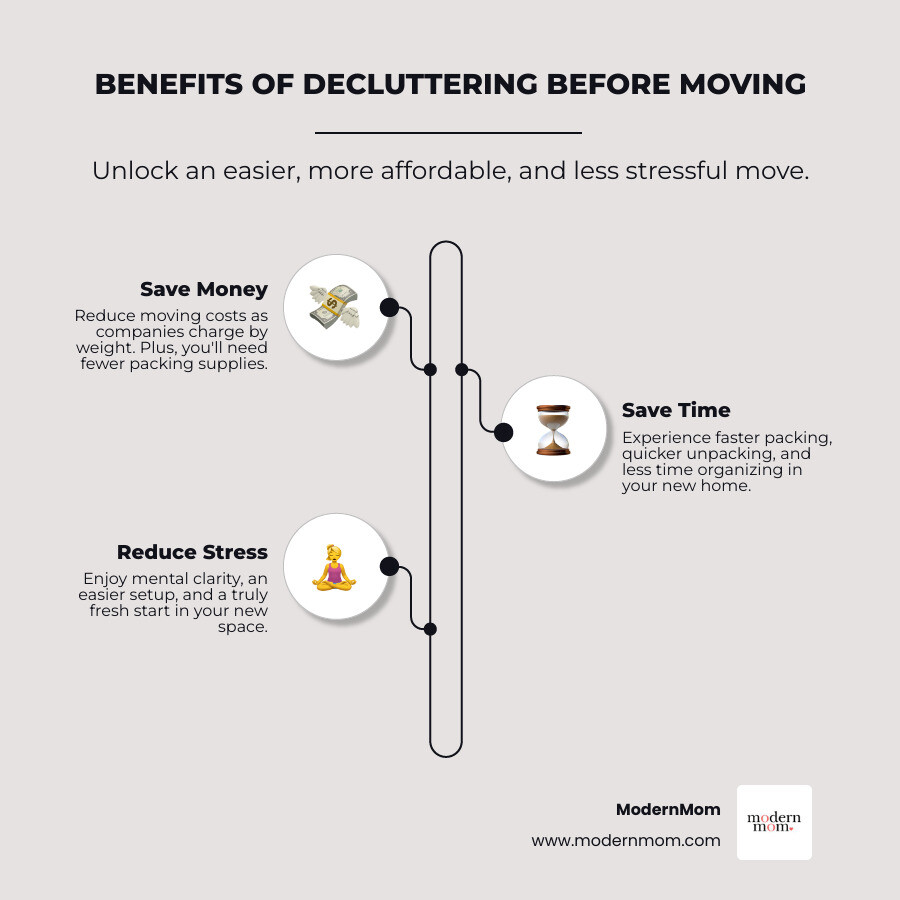
The secret? Don’t move items you don’t need, use, or love. Moving companies charge by weight, so every box of forgotten kitchen gadgets or outgrown clothes is costing you real money. Plus, you’ll spend less time packing, unpacking, and organizing in your new space.
Think of it this way: success in any new venture often starts with getting rid of what no longer serves you. That same principle applies to decluttering before moving. It’s your chance to clear out the old and make room for what matters most in your next chapter.
This guide breaks down exactly how to tackle the declutter, room by room, without losing your mind. You’ll learn what to toss, what to keep, and how to get your family on board—all while protecting your sanity and your budget.
Decluttering before moving vocabulary:
Why Decluttering Before You Move is a Sanity-Saver
Moving is a huge undertaking, and it’s easy to get caught up in the logistics of packing boxes and scheduling movers. However, taking the time to declutter beforehand is arguably the most crucial step in the entire process. It’s not just about tidiness; it’s about making your move smoother, more affordable, and less stressful.
When we declutter, we’re not just tidying up; we’re making intentional choices about what we want to bring into our next chapter. This process impacts everything from the cost of your move to the ease of settling into your new home. By shedding unnecessary items, you create mental clarity and space for your new home vision to truly flourish.
The Financial Perks of Decluttering Before Moving
Let’s talk money, because moving can be expensive! One of the biggest financial benefits of decluttering before moving is the significant savings on moving costs. Many movers, especially for long-distance relocations, charge by weight or volume. This means every item, from forgotten kitchen gadgets to outgrown clothes, adds to your bill.
By reducing the sheer quantity of your belongings, you directly lower your moving company quotes. Removing even 500–1,000 pounds can save you anywhere from $250–$800 or more on many routes. This also means you’ll need fewer packing supplies like boxes, tape, and bubble wrap, further cutting down expenses. In some cases, a thorough purge might even allow you to opt for a smaller moving truck, translating to even greater savings. Plus, selling unwanted items can put extra cash in your pocket to help offset other moving expenses.
The Time and Energy Benefits
Beyond the financial savings, decluttering before moving is a massive time and energy saver. Imagine spending hours packing items you don’t even want, only to unpack them in your new home and realize they’re still clutter. That’s a cycle we want to avoid!
With fewer items, your packing process will be much faster and more efficient. Quicker packing means less time spent wrestling with boxes and more time for your family or other essential moving tasks. When you arrive at your new place, unpacking becomes a breeze. You’ll have less to sort through, less to organize, and can set up your new home much more quickly. This reduction in decision fatigue allows you to enjoy your new space sooner, rather than being surrounded by mountains of boxes filled with things you don’t truly need.

Your Game Plan: How to Start Decluttering Before Moving
The thought of decluttering your entire home can feel like climbing Mount Everest, especially when you’re already swamped with moving plans. But it doesn’t have to be overwhelming. The key is to have a solid game plan, break down the tasks, and tackle them systematically. We’ll make it manageable, we promise!
When to Start and How to Create a Timeline
Procrastination is the enemy of a smooth move. The best time to start decluttering before moving is as soon as you know you’re relocating. Experts recommend beginning at least six to eight weeks before moving day, but several months in advance is even better if you have the luxury of time. This extended timeline allows you to go through things carefully, make thoughtful decisions, and avoid last-minute panic.
Here’s a sample timeline to help you plan:
- 8 weeks out: Start with storage areas like the garage, attic, or basement. These are often the least-used spaces and can yield the most significant purge.
- 6 weeks out: Tackle one room per week, focusing on less-used areas first, like guest bedrooms or formal dining rooms. Set goals for each space.
- 4 weeks out: Move to daily-use spaces like the kitchen and bedrooms. Schedule dedicated 20-30 minute bursts each day to prevent decision fatigue.
- 2 weeks out: Focus on remaining small spaces, schedule donation pickups, and arrange for junk removal.
- Move week: Do a final sweep, shred old papers, and pack a “first night” essentials bag.
Effective Strategies for Decluttering Before Moving: The 4-Box Method
Once you’ve set your timeline, it’s time to dive into the actual sorting. A highly effective method is the 4-Box Method. Grab four boxes (or bins, or even just designated areas) and label them:
- Keep: Items you genuinely love, use regularly, and want in your new home.
- Donate: Items in good condition that you no longer need but someone else could use.
- Sell: Valuable items you want to recoup some money from.
- Trash/Recycle: Broken, expired, or unusable items that belong in the bin.
When you’re sorting, try the “one-touch rule”: pick up an item, make an immediate decision, and place it in the appropriate box. Don’t overthink it! If you’re struggling, ask yourself key questions: “Do I need it? Have I used it? Am I going to pay to have it moved?” Another excellent guideline is the 90/90 Rule: If you haven’t used it in the past 90 days and don’t plan to use it in the next 90, it’s probably time to let it go.
Involving the Family (Without the Fights)
Getting the whole family on board with decluttering before moving can be a challenge, but it’s essential. Make it a team effort! Assign specific rooms or areas to family members, or even make it a game to see who can fill their donation box fastest. For children, this is a great opportunity to teach them about the value of giving to others. Explain that their outgrown toys can bring joy to another child.
While involving everyone, remember to set clear boundaries. You don’t want to accidentally throw out a cherished item! Lead by example, and be firm but fair. For more tips on keeping your home tidy with kids, check out our cleaning and decluttering hacks. A little help from friends or family can also provide accountability and support, especially when making tough decisions.

Room-by-Room Ruthless Purge: A Mom’s Guide
Now that we have our general strategy, let’s get specific. Tackling your home room by room helps break down the massive task of decluttering before moving into manageable chunks. We’ll focus on high-clutter zones and give you targeted advice to make decisions easier. The goal is to only move what you truly love, use, or need.
The Kitchen and Pantry
The kitchen often hides a surprising amount of clutter. Start by emptying cabinets and drawers, focusing on one zone at a time.
- Expired Food & Spices: Toss anything past its prime. Spices lose their flavor over time, so if that cumin has been there since your first child started solid foods, it’s time for it to go.
- Duplicate Gadgets: Do you really need three vegetable peelers or two fondue pots? Keep the best one and let the others go.
- Mismatched Tupperware & Chipped Mugs: If containers are missing lids or mugs are chipped, they’re not serving you well. Ditch them.
- Unused Small Appliances: That bread maker you used twice, the snow cone maker, or the asparagus peeler? If they collect dust, they’re not coming to the new house.
- The Junk Drawer: This is a classic! Empty it out and ruthlessly discard old pens, dried-up glue, and takeout menus from restaurants that closed years ago.
Bedrooms and Closets
Our personal sanctuaries can become repositories for items we rarely use.
- Clothes That Don’t Fit or Make You Feel Good: If it doesn’t fit, is out of style, has holes, or simply doesn’t make you feel fabulous, it’s not coming with us. Apply the one-year rule: if you haven’t worn it in a year (excluding special occasion wear), let it go. Remember the 80/20 rule: we often only wear 20% of our clothing 80% of the time.
- Worn-Out Linens: Old, stained, or ripped sheets and towels have no place in your new home. Keep only what’s in good condition and what you genuinely use.
- Old Mattresses: If your mattress is eight years or older, WebMD recommends it’s time to replace it. Don’t pay to move an old, unsupportive mattress only to buy a new one shortly after.
- Single-Use Formal Wear: Unless it’s a timeless piece you absolutely adore, consider donating or selling formal wear that’s only been worn once.
Kids’ Rooms and Playrooms
This can be an emotional battlefield, but a necessary one. Involve your children in the process to teach them about donating and letting go.
- Broken Toys: If it’s broken beyond repair or missing crucial pieces, it’s trash.
- Outgrown Clothes: Set aside clothes that no longer fit for donation or hand-me-downs.
- Old School Projects: Keep a few truly sentimental pieces, but consider taking photos of others as digital keepsakes.
- Unused Baby Gear: If your baby is now a toddler, it’s time to let go of the infant swing, changing table, and other gear they’ve outgrown. The “one-in-one-out” rule works well here: when a new toy comes in, an old one goes out.
The Garage, Attic, and Storage Spaces
These are often the biggest culprits for forgotten and unnecessary items. Be prepared for a serious purge here.
Here’s a list of 15 common items you’ll regret moving, especially from these storage zones:
- Old Paint Cans: Most moving companies won’t transport these anyway.
- Broken Tools & Equipment: If it’s been broken for years, it’s not getting fixed in the new house.
- Outdated Electronics: Old computers, VCRs, or phones—recycle them responsibly.
- Excess Holiday Decor: Keep what you love, but multiple boxes of unused ornaments are just dead weight.
- Mystery Boxes: If you don’t know what’s in it, you probably don’t need it.
- Old Taxes & Paperwork (beyond 7 years): Shred sensitive documents; most tax records can be discarded after 3-7 years.
- Unused Hobby Supplies: If that pottery wheel or woodworking kit has gathered dust for years, it’s time to let it go.
- Old Cleaning Tools: Rusty rakes, broken mops, or half-empty bottles of cleaning solution.
- Seasonal Items (unsuitable for new climate): Moving to Florida? Ditch the snow shovel and heavy winter coats.
- Appliances & Gadgets You Don’t Use: That old deep fryer or ice cream maker.
- Broken or Outdated Furniture: A wobbly chair or scratched-up desk isn’t worth the moving cost.
- Obsolete Media Formats: VHS tapes, cassette tapes, or CDs if you’ve gone digital.
- Unused Chargers & Cables: A tangled mess of cords for devices you no longer own.
- Old Magazines: Recycle them!
- Extra Vehicles: If you have an unused car or truck, selling it can provide cash and reduce transportation costs.
Letting Go: Dealing with Discards and Sentimental Items
One of the hardest parts of decluttering before moving is dealing with the emotional attachment we have to our belongings. It’s easy to feel guilt or sadness when letting go of items that hold memories. However, “clutter is not just physical stuff. It’s old ideas, toxic relationships and bad habits. Clutter is anything that does not support your better self,” as co-founder John McCutcheon of JP Urban Moving wisely noted. Our goal is guilt-free purging and responsible disposal.
How to Handle Sentimental Items
Sentimental items can be the biggest hurdle. We cherish memories, and sometimes those memories become intertwined with objects. Here are some practical tips:
- The Memory Box Concept: Designate one small box (like a shoebox) per person for truly irreplaceable sentimental items. This limits how much you keep.
- Take Photos: For items you can’t keep but want to remember, take a high-quality photo. This creates a digital keepsake without the physical clutter.
- Repurposing Heirlooms: Can that antique chest be refinished and used in your new home? Can an old blanket be turned into a cushion cover?
- Focus on the Memory, Not the Object: Remind yourself that the memory lives in your heart, not just in the item. Ask yourself, “Do I truly cherish this item, or am I attached to the memory?”
- Give Items to Family: If an item has family significance, consider passing it on to a relative who will appreciate and use it. This ensures its legacy continues.
How to Get Rid of Unwanted Items
Once you’ve made the tough decisions, it’s time to get those items out of your home. Responsible disposal is key.
| Method | What to Sell | Where to Sell |
|---|---|---|
| Selling | Mid- to high-value items in good condition: furniture, appliances, electronics, collectibles, antiques, brand-name clothing, books, toys. | Online marketplaces (Ebay, Craigslist, Facebook Marketplace, Poshmark, thredUP, Tradesy), consignment shops, garage sales. |
| Donating | Clean, working items in good condition that you no longer need: clothes, shoes, kitchenware, small appliances, books, linens, toys, games, decor, sporting goods, furniture. Unexpired, sealed food items. | Charities like Goodwill, The Salvation Army, Habitat for Humanity ReStore, local shelters, community centers. |
| Recycling | Paper, cardboard, plastics, glass, metals. Electronics (e-waste): old phones, computers, TVs, batteries. Hazardous materials: paint, chemicals, expired medications. | Local recycling centers, community recycling events, specialized e-waste drop-offs (check EPA’s e-waste guidance), hazardous waste disposal sites, pharmacy take-back programs for medications. |
| Trashing/Disposing | Broken, unsafe, unsellable, or unusable items that cannot be recycled or donated. Mixed debris, renovation waste, items past their useful life. | Curbside trash pickup, junk removal services, dumpster rental for large quantities. |
For selling, be realistic about pricing and set a hard deadline. Take clear photos and provide detailed descriptions for online listings. For donating, schedule pickups in advance if available, or drop off items regularly as you declutter.
What Movers Won’t Move
It’s important to know that moving companies legally cannot transport certain items, especially for interstate moves. This affects your decluttering decisions, as you’ll need to make separate arrangements for these goods. Common items movers won’t transport include:
- Hazardous Materials: This is a big category and includes aerosol cans, ammunition, flammable items (like gasoline, propane tanks), car batteries, paints, pesticides, cleaning solvents, and fertilizers. These require special disposal.
- Perishable Food: Movers generally won’t take open or perishable food items. Plan to consume or donate these before your move.
- Plants: Regulations vary by state, but many movers avoid transporting plants due to potential pests or damage during transit.
- Alcohol: High-value or large quantities of alcohol may have restrictions.
- Firearms: Check with your moving company and local regulations regarding firearms and ammunition.
Always confirm with your specific moving company about their non-allowable items. This list should be a priority in your purge, as you’ll need to dispose of them properly well before moving day.
Conclusion: Accept Your Clutter-Free Chapter
Decluttering before moving isn’t just another item on your moving checklist; it’s a transformative process. It’s your chance to shed the weight of the past, both literally and figuratively, and step into your new home with intention and clarity. We’ve seen how it saves you money, time, and stress, making the entire relocation experience far more enjoyable.
Imagine walking into your new home, not to be greeted by boxes of forgotten junk, but by a curated collection of items that truly serve you and spark joy. That’s the fresh start you deserve! This process also lays the groundwork for avoiding future clutter. By practicing intentionality now, you’re building habits that will keep your new home organized and serene.
At ModernMom, we believe in supporting you through every stage of motherhood and life’s big transitions. Accept this opportunity to create a home that reflects your best self. You’ve got this, and we’re here to cheer you on!
Find more tips for managing your home and life.
The post Don’t Move Your Mess: Essential Decluttering Tips for Relocation appeared first on ModernMom.