
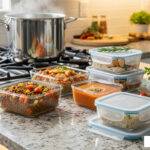

Why Batch Cooking Meals Changes Everything for Busy Families
Batch cooking meals is the practice of preparing large quantities of food at once, then portioning and storing them for quick weeknight dinners throughout the week. Here’s what you need to know:
Quick Answer: Best Batch Cooking Meals
- Soups & Stews: Chili, beef stew, chicken soup (freeze up to 3 months)
- Sauces & Bases: Bolognese, tomato sauce, pulled chicken (freeze 1-3 months)
- Casseroles: Lasagna, shepherd’s pie, mac and cheese (freeze 1-2 months)
- Breakfast Items: Muffins, granola, energy bites (freeze up to 2 months)
It’s 5 PM on a Tuesday. The kids are hungry, you just got home, and the thought of cooking from scratch feels impossible. Sound familiar?
What if instead of scrambling for dinner ideas, you could open your freezer and pull out a homemade lasagna, a container of chili, or perfectly portioned chicken and rice? That’s the magic of batch cooking.
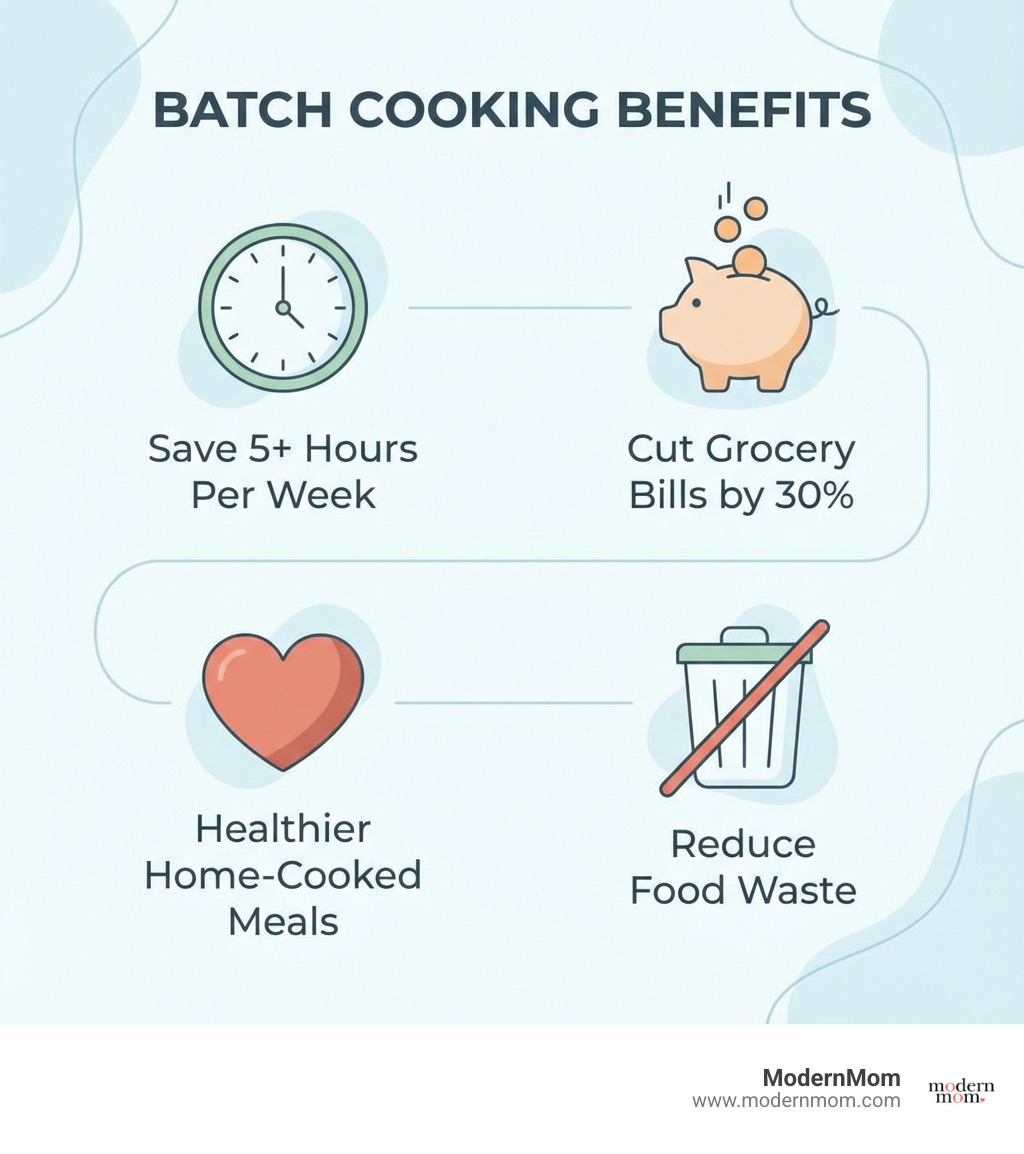
Batch cooking saves you time, money, and your sanity. Research shows it can cut your weekly cooking time in half while reducing food waste and helping you avoid expensive takeout. Plus, having pre-made meals means you’re more likely to choose a healthier homemade option instead of ordering delivery.
The concept is simple: dedicate a few hours on the weekend to prepare multiple meals at once. Cook large batches of family favorites, portion them out, and freeze them. During the week, you just reheat and serve.
As a mom who’s juggled running a restaurant from scratch while managing a busy household, we’ve learned that batch cooking meals isn’t just about efficiency—it’s about reclaiming your evenings and reducing the daily stress of “what’s for dinner?” At Modern Mom, we’re here to show you exactly how to make it work for your family, no matter how hectic life gets.
Batch cooking meals terms you need:
Getting Started: Your Batch Cooking Game Plan
The idea of cooking a month’s worth of meals at once can feel overwhelming, but it doesn’t have to be! Planning is key to successful batch cooking meals, and a simple, manageable plan makes it easy to get started. Don’t feel pressured to tackle everything at once. We’re here to guide you through a practical approach that fits your family’s needs.

Plan Your Meals Like a Pro
To kick off your batch cooking journey, we recommend starting small. Pick just one or two recipes that your family already loves and that you know freeze well. This helps build confidence without feeling like you’re taking on too much. As one expert suggests, “Don’t be afraid to dream a little smaller when it comes to meal prep” if a whole month of batch cooking feels daunting.
Once you have your chosen recipes, grab a calendar and map out your menu plan. This could be for a week or even a month, depending on your ambition. Before you head to the grocery store, check your pantry for existing ingredients. Then, compile a detailed shopping list based on what you need for your chosen recipes. Don’t forget to make some space in your freezer – you’ll need it for all those delicious prepped meals!
A little planning goes a long way. Consider how you can streamline your kitchen routine even further by checking out our 7 Secret Ways to Cut Kitchen Cleaning Time in Half.
Gather Your Kitchen Essentials
You don’t need a professional kitchen to master batch cooking meals. Most of what you need, you probably already have! Essential items include large pots or a Dutch oven, which are perfect for simmering big batches of soups or sauces.
A slow cooker is also a game-changer for hands-off batch cooking. It allows you to prepare large quantities of food while you focus on other tasks. Many parents find this incredibly useful, and we agree that A good slow cooker is a game-changer.
Beyond cooking vessels, you’ll need:
- Good knives: For efficient chopping and dicing of ingredients.
- Freezer-safe containers: Glass or BPA-free plastic containers are ideal for storing your prepped meals. Many multi-sized options are available and are often freezer, dishwasher, and microwave-safe, making them incredibly versatile.
- Freezer bags: These are great for saving space and can be used for items like marinades or flash-frozen ingredients.
- Labels and a permanent marker: Crucial for identifying what’s in each container and when it was made, ensuring you use items before they lose quality. “Label your frozen meals so you don’t forget what they are,” advises one expert.
For more ideas on essential kitchen tools that can simplify your life, take a look at our Holiday Kitchen Must-Haves.
The Best “Cook Once, Eat All Week” Batch Cooking Meals
The secret to successful batch cooking meals lies in choosing recipes that not only taste great but also freeze and reheat beautifully. We want comforting, hearty dishes that can withstand the freezer and still provide that “just-made” satisfaction. Think about the meals your family already loves and how you can prepare them in bulk.

Freezer-Friendly Soups, Stews, and Chilis
These are the superheroes of batch cooking. Soups, stews, curries, and chili are often even better the next day as the flavors meld, and they freeze wonderfully. Classic beef chili can be frozen for up to three months, making it a perfect hearty option for busy weeknights. Ratatouille lentil soup and burgoo also keep well in the freezer for up to three months. Even a simple slow cooker chili is a fantastic choice.
A pro tip for freezing: if your recipe includes pasta or dairy, it’s often best to omit these until you’re ready to reheat and serve. Pasta can become mushy, and dairy-based ingredients like sour cream can separate after freezing. Add them fresh when you warm up your meal for the best texture and flavor. For a family favorite that freezes like a dream, try our Perfect Crock Pot Chili Recipe.
Versatile Sauces, Meats, and Grains
Having versatile components on hand can transform your weeknight meals. Instead of a full pre-made dish, think of these as building blocks:
- Bolognese Sauce: A big batch of bolognese sauce can be frozen for up to six months, ready to be tossed with pasta, layered in lasagna, or even served over baked potatoes. Sausage ragu and healthy ragu are also excellent choices.
- Meatballs: Cooked meatballs can be frozen for up to three months, while uncooked garlic butter chicken meatballs will keep for about two months. They’re perfect for quick pasta dishes or subs.
- Pulled Chicken or Pork: Slow-cooked pulled chicken or pork shoulder can be a base for tacos, sandwiches, or grain bowls. Butter chicken sauce, which can be frozen for up to a month, is another fantastic option for a quick curry.
- Cooked Grains: Cook a large batch of rice or quinoa and flash-freeze it on a cookie sheet before bagging. Mujadara (lentils and rice with caramelized onions) freezes well for up to three months, providing a wholesome side or base. Beet braised lentils are also freezer-friendly. These are perfect for quick salads or stir-fries.
You can get creative with these bases. For example, a batch of chili can be repurposed into our delicious Alfredo Chili Mac Recipe for an entirely new meal experience.
Easy Breakfasts and Snacks
Batch cooking meals isn’t just for dinner! Prepping breakfasts and snacks means you can grab and go on hectic mornings, ensuring everyone starts their day fueled and happy.
- Muffins: Bake a large batch of banana bread or dark chocolate zucchini muffins. Banana bread can be frozen for up to two months, offering a quick breakfast or a delightful snack.
- Granola: Homemade granola is probably the number one best breakfast item to batch cook and freeze. When well-sealed, it stays fresh in the freezer for up to three months, ready to top yogurt or enjoy with milk.
- Energy Bites: Sticky almond, oat ‘n honey power bites are fantastic for quick energy boosts and can be made ahead.
- Other Snacks: Cookie dough logs can be refrigerated for up to a week or frozen for up to two months, providing warm cookies on demand. Brownies are also freezer-friendly.
For more morning inspiration, check out our Easy Breakfast Smoothie Pops to Energize Your Morning. And for healthy lunchbox ideas, don’t miss our Official Guide to Lunchbox Beverages.
The “Cook, Cool, and Store” Method for Food Safety and Freshness
Once you’ve poured your love and effort into creating amazing batch cooking meals, you want them to stay safe, fresh, and delicious. Proper storage is paramount, ensuring your food maintains its quality and is safe to enjoy later.
Best Practices for Storing Your Meals
Following these guidelines will help you avoid foodborne illnesses and keep your meals tasting great:
- Cool food completely: This is a crucial first step. Never put hot food directly into the fridge or freezer, as it can raise the temperature of other foods and potentially create a breeding ground for bacteria. Let your food cool down to room temperature before portioning.
- The 2-hour rule: Once cooked, food should be refrigerated or frozen within two hours. This minimizes the time it spends in the “danger zone” (between 40°F and 140°F, where bacteria multiply rapidly).
- Portion before freezing: Decide on your serving sizes before freezing. This allows you to pull out just what you need, reducing waste and thawing time. “Cut up or divide portions BEFORE freezing,” is a top tip from budgeting batch cookers.
- Use airtight containers: Whether glass, BPA-free plastic, or freezer bags, ensure your containers are airtight. This protects against freezer burn and preserves flavor.
- Squeeze air out of bags: If using freezer bags, push out as much air as possible before sealing. This creates a tighter seal and further prevents freezer burn.
- Label everything: We can’t stress this enough! Use labels and a permanent marker to clearly write the name of the meal, the date it was cooked, and the number of portions. This helps you easily identify meals and ensures you use older items first. “Label your frozen meals so you don’t forget what they are,” is practical advice we stand by.
Reheating for That “Just-Cooked” Taste
When it’s time to enjoy your batch cooking meals, proper reheating makes all the difference:
- Thaw safely: For best results, thaw frozen meals overnight in the refrigerator. This slow, safe thawing process helps maintain texture and flavor.
- Reheating methods: Depending on the dish, you can reheat on the stovetop (for soups, stews, sauces), in the oven (for casseroles, baked goods), or in the microwave (for individual portions). Always ensure food is piping hot throughout to eliminate any bacteria.
- Add fresh elements: To bring that “just-cooked” freshness back, add fresh herbs, a sprinkle of cheese, a dollop of sour cream, or a squeeze of lemon after reheating. Dairy products like sour cream should be added during reheating, not before freezing.
- Follow safety guidelines: Always ensure food is thoroughly reheated. The NHS guidelines recommend that frozen meals are thoroughly re-heated (always check that the center of the meal is piping hot) before serving.
- Avoid re-freezing: Once a meal has been thawed, do not refreeze it. This can compromise food safety and quality.
For comprehensive food safety information, always Follow NHS guidelines for storing and reheating food safely.
Adapting Batch Cooking for Your Family’s Needs
Batch cooking meals is incredibly flexible. It’s not about forcing your family to eat the same thing every night, but about making meal prep work for you. This means accommodating different dietary needs and actively reducing food waste, which is smart for both your budget and the planet.
Batch Cooking for Different Diets
Whether you’re feeding vegetarians, vegans, or dealing with allergies, batch cooking can be adapted.
- Vegetarian & Vegan Swaps: Many classic batch-cooked dishes can be easily made vegetarian or vegan. Think hearty lentil soups, bean chilis, or chickpea curries. Lentils and beans are fantastic protein sources that freeze exceptionally well. For a delicious plant-based option, try our Black Bean and Corn Burgers.
- Gluten-Free: Simply swap out traditional pasta for gluten-free varieties and ensure any grains like couscous are replaced with gluten-free alternatives such as quinoa or rice.
- Adapting for Allergies: When batch cooking for allergies, clearly label all containers and be mindful of cross-contamination during preparation. Focus on whole, unprocessed ingredients. This proactive approach can significantly ease mealtime stress when managing dietary restrictions. For more guidance, explore our 6 Tips to Make It Through the Holidays When You Have Food Allergies or Intolerances.
How Batch Cooking Reduces Food Waste
One of the most significant benefits of batch cooking meals is its positive impact on food waste and your wallet.
- Use up produce: By planning meals and buying ingredients in bulk, you’re more likely to use up fresh produce before it spoils. This means fewer forgotten vegetables wilting in the back of the fridge.
- Freeze leftovers: Instead of tossing uneaten portions, freeze them! This turns potential waste into future meals, saving you money and effort.
- Save money by buying in bulk: When you cook in large quantities, you can often take advantage of sales on ingredients, especially non-perishable goods like rice and pasta. One expert points out that batch cooking can help families “save a few extra pounds” on their grocery bill. This smart shopping combined with utilizing everything you buy means less money in the trash and more in your pocket.
Batch cooking isn’t just a kitchen hack; it’s a mindful approach to meal management that benefits your family, your budget, and the environment.
Frequently Asked Questions about Batch Cooking Meals
We know you’ve got questions, and we’ve got answers! Here are some of the most common inquiries we hear about batch cooking meals.
How long can I store batch-cooked meals in the freezer?
The freezer is your best friend for making batch cooking meals last. Most batch-cooked meals can be safely stored in the freezer for 1 to 3 months, though some can last longer.
- Soups, stews, and chilis: These robust dishes typically fare very well and can last up to 3 months. Classic beef chili, ratatouille lentil soup, and hearty burgoo are all good examples, freezing well for up to three months.
- Casseroles: Dishes like lasagna and macaroni and cheese are best enjoyed within 1 to 2 months to maintain their optimal texture and flavor. Spinach lasagna, for instance, can be frozen for one to two months.
- Baked goods: Items like banana bread and homemade granola can be frozen for up to two to three months respectively.
- Sauces and bases: Bolognese sauce can surprisingly last up to six months, while butter chicken sauce and sofrito are good for up to one to three months.
Always label your containers with the date you prepared the meal. This helps you rotate your stock and ensures you use older items first, preventing freezer burn and flavor degradation.
What foods don’t freeze well?
While many foods are freezer-friendly, some just don’t hold up. Knowing which ones to avoid can save you disappointment and wasted effort:
- Cream-based sauces: These tend to separate and become grainy or watery upon thawing and reheating. It’s best to add dairy components like sour cream or heavy cream after reheating.
- Vegetables with high water content: Think lettuce, cucumber, radishes, and some raw tomatoes. They become soggy and lose their crispness when thawed. If using these in a dish, add them fresh after reheating.
- Fried foods: While you can technically freeze them, fried foods often lose their crispy texture and can become soggy or chewy when reheated.
- Cooked pasta: While some pasta dishes (like lasagna) freeze well due to their saucy nature, plain cooked pasta can become mushy. If a recipe calls for pasta, it’s often best to cook it fresh when reheating the batch-cooked sauce.
- Soft herbs: Delicate herbs like fresh basil or cilantro can turn black and lose their vibrant flavor and texture when frozen. It’s better to add these fresh upon serving.
How do I avoid freezer burn?
Freezer burn is the enemy of perfectly prepped batch cooking meals, but it’s entirely preventable! It occurs when food is exposed to air, causing dehydration and oxidation that results in dry, discolored spots.
To prevent freezer burn:
- Cool food completely: As we mentioned, never put warm food directly into the freezer. This creates condensation that can turn into ice crystals and lead to freezer burn.
- Use airtight containers or freezer bags: Ensure your storage solutions are specifically designed for the freezer. They create a barrier against air exposure.
- Remove as much air as possible: If using freezer bags, press out all the excess air before sealing. For containers, fill them as much as possible to minimize air space at the top.
- Wrap tightly: For items like casseroles or meats, consider wrapping them first in plastic wrap directly against the food, then in aluminum foil, and finally placing them in an airtight container or bag. This multi-layered approach provides extra protection.
By following these simple steps, your batch cooking meals will emerge from the freezer as delicious and satisfying as the day you made them.
Conclusion
It’s time to accept the calm and reclaim your weeknights. Batch cooking meals isn’t just a trend; it’s a powerful strategy for busy families to eat healthier, save money, and significantly reduce stress. Imagine coming home after a long day, knowing a delicious, homemade meal is just minutes away. That’s not just convenience; it’s a form of self-care, giving you more time for what matters most – whether that’s family time, a moment for yourself, or simply enjoying a peaceful evening.
At Modern Mom, we understand the juggle, and we’re here to support you with practical tips and resources for a less stressful family life. Accept the magic of batch cooking, and transform your kitchen into a hub of efficiency and delicious possibilities.
Explore more healthy living tips and recipes
The post Batch Cooking Meals: What to Cook and How to Make it Last All Week appeared first on ModernMom.