

The Weekly Lunch Plan That Finally Ends the Midday Scramble
A weekly lunch plan is the simplest way to stop wasting food, save money, and take the daily “what’s for lunch?” stress completely off your plate. Here’s how to build one fast:
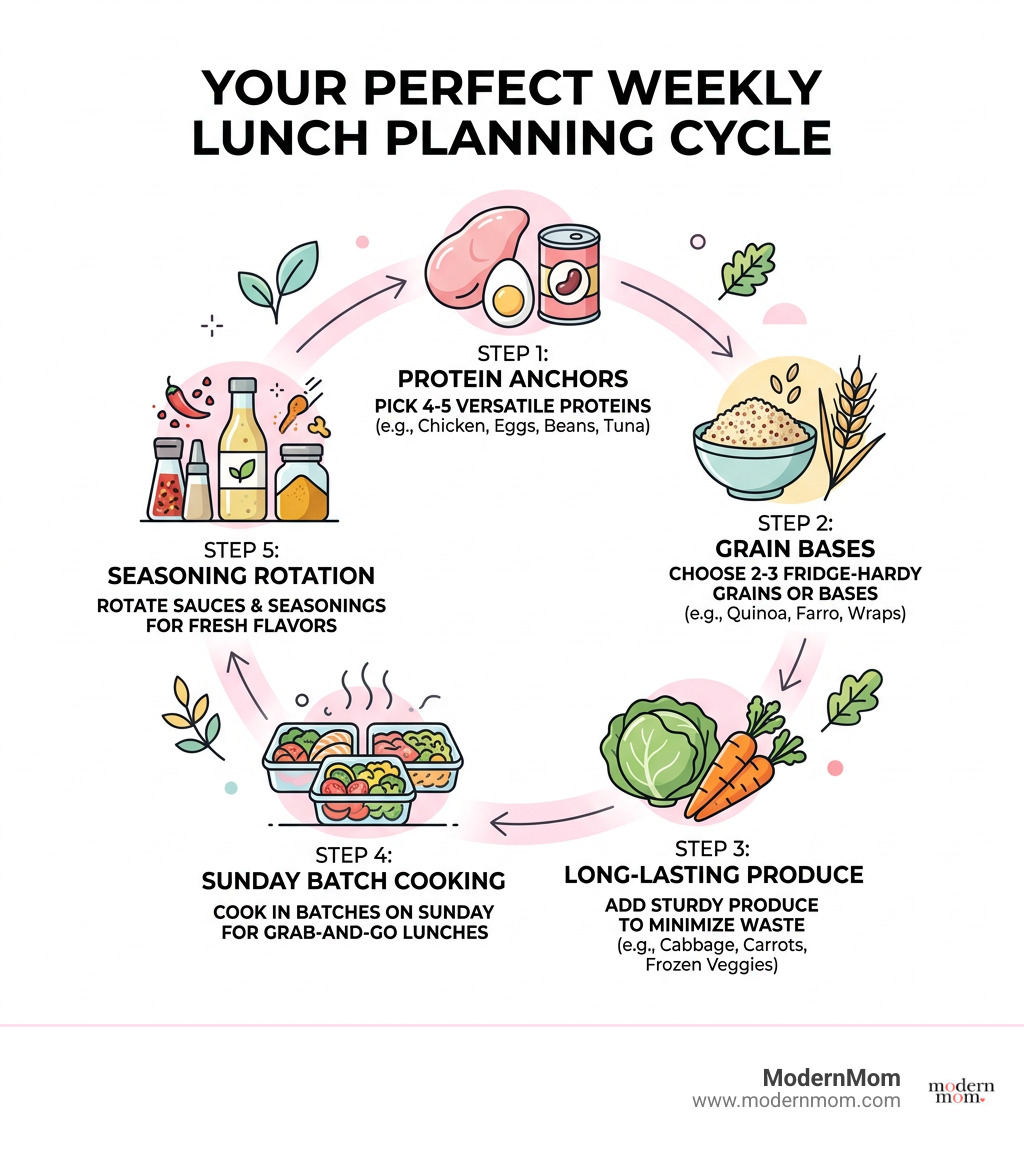
- Pick 4-5 versatile proteins (chicken, eggs, beans, tuna) to anchor your week
- Choose 2-3 grains or bases (quinoa, farro, wraps) that hold up in the fridge
- Add long-lasting produce (cabbage, carrots, frozen veggies) to minimize waste
- Batch cook on Sunday so lunches are grab-and-go all week
- Rotate sauces and seasonings to keep the same ingredients feeling fresh and new
Sound familiar? You’ve spent all morning managing school drop-offs, work calls, and a never-ending to-do list — and then noon hits and you’re staring blankly into the fridge. Nutritionists point out that most families already rotate just 10 meals for dinner, yet lunch somehow still feels like a mystery every single day.
The good news: it doesn’t have to. With a little planning upfront, you can eat well, cut down on grocery bills, and actually enjoy your midday meal — without spending hours in the kitchen.
At Modern Mom, we know that balancing a career and family life is a full-time job. A solid weekly lunch plan is the secret weapon for keeping real food on the table without the daily chaos. Let’s build one together.
Weekly lunch plan ideas:
Master the Art of the Weekly Lunch Plan

When we talk about a weekly lunch plan, we aren’t just talking about what to eat; we’re talking about a strategy to keep our grocery costs in check. One of the biggest drains on a family budget is the “panic buy”—those last-minute trips to the store for a single meal that end up costing $50 because we grabbed three extra things we didn’t need.
To truly master your plan, we recommend starting with the sales flyer. Before you decide on a single recipe, see what’s on sale. Is chicken breast at an all-time low? That’s our protein for the week. Are bell peppers and zucchini overflowing in the produce aisle? Those are our roasted veggies. By building our meals around seasonal ingredients and sales, we can significantly reduce our food waste and our spending.
Experts suggest that shoppers who stick to a list based on a meal plan can save hundreds of dollars a month. We like to call this “sales-based shopping.” It turns the traditional meal planning method on its head: instead of finding a recipe and buying ingredients, we find the ingredients and then choose the recipe.
Why a Consistent Weekly Lunch Plan Saves Your Sanity
Decision fatigue is real, especially for moms. By the time lunch rolls around, we’ve already made a hundred choices. Having a pre-set plan removes that mental load. It’s not just about the food; it’s about creating a routine that supports our lifestyle.
Building a routine doesn’t mean being bored. It means having a framework. When we know that Monday is always a salad day and Wednesday is always a grain bowl day, our brains can relax. Look for ways to streamline your habits to make every day a little more joy-filled.
Smart Strategies for Ingredient Reuse and Variety
The biggest complaint about meal prepping is monotony. No one wants to eat the exact same grilled chicken and broccoli five days in a row. The secret to a successful weekly lunch plan is learning how to reuse ingredients in fun, new ways.
We love the “Cook Once, Eat Thrice” method. For example, if we roast a large batch of chicken on Sunday, we aren’t just making “chicken.” We are making the base for three entirely different flavor profiles:
- Monday: Mediterranean Chicken Wraps with a creamy tzatziki sauce.
- Tuesday: Asian-inspired Chicken Bowls with a spicy mayo drizzle.
- Wednesday: Chicken Caesar Salads with crunchy croutons.
By changing the sauces, sides, and seasonings, the “leftover” chicken feels brand new every time. You can even pin it here to save these meal plan ideas for later!
Reusing Ingredients in Your Weekly Lunch Plan
Versatility is key. A rotisserie chicken is perhaps the most famous “mom hack” for a reason. You can shred it for tacos, slice it for sandwiches, or toss it into a quick soup. If you have time to cook your own, our Easy honey glazed chicken is a fantastic base that pairs well with almost anything.
Don’t forget the power of a good panini or wrap. If you have leftover turkey from dinner, you can easily transform it into a gourmet Turkey pesto panini the next day. This kind of repurposing ensures that nothing goes to waste and your taste buds never get bored.
Tools and Inspiration for New Recipes
Sometimes the hardest part of planning is just finding inspiration. When we feel stuck staring at a random assortment of ingredients, we turn to technology. Apps like Supercook are lifesavers; you simply input what you have in your pantry (like that half-empty bag of lentils or the jar of sun-dried tomatoes), and it suggests recipes you can make right now.
For those who want a more structured approach, Meal Prep Pro offers customizable plans that generate shopping lists for you. We also love browsing community forums for “no-spend week” hacks. Many households find that by limiting themselves to four planned meals plus a “pizza night” or “leftover night,” they can stay well under their budget while still eating variety.
Versatile Ingredients and Batch Cooking Methods
To make a weekly lunch plan work, you need a pantry stocked with “workhorse” ingredients. These are items that last a long time and can be used in dozens of ways. Root vegetables like sweet potatoes and carrots are perfect because they stay fresh in the crisper drawer for weeks and taste amazing when roasted.
Batch cooking is the engine that drives your meal plan. Instead of cooking every day, we set aside a couple of hours on Sunday to prep our “building blocks.” This includes cooking a large pot of grains, roasting a tray of veggies, and prepping our proteins.
Storage Comparison: Fridge vs. Freezer
Knowing how long your food lasts is crucial for safety and taste. Here is a quick guide to help you manage your prepped items:
| Ingredient Type | Fridge Life (Days) | Freezer Life (Months) |
|---|---|---|
| Cooked Grains (Rice, Quinoa) | 4–5 Days | 2–3 Months |
| Roasted Vegetables | 3–4 Days | 2 Months (best in soups) |
| Cooked Chicken/Beef | 3–4 Days | 2–3 Months |
| Hard-Boiled Eggs | 5–7 Days | Do Not Freeze |
| Beans/Legumes | 4–5 Days | 3–6 Months |
| Soups and Stews | 3–4 Days | 4–6 Months |
Prepping Proteins and Vegetables to Prevent Spoilage
One of our favorite high-protein snacks and lunch additions is the humble hard-boiled egg. They keep well for up to a week and add instant satiety to any salad. For a plant-based protein boost, we recommend making a batch of buffalo roasted chickpeas. They add a satisfying crunch and a spicy kick to grain bowls.
If you’re looking for a complete meal prep dish that holds up beautifully, try Sweet potatoes and veggies in a vegan basil pesto. The flavors actually improve over a day or two as the pesto soaks into the vegetables.
When it comes to storage, quality matters. Investing in freezer-safe containers ensures your hard work doesn’t end up with freezer burn. We especially love glass containers for the fridge because you can see exactly what you have, which helps prevent those “forgotten” leftovers at the back of the shelf.
Meal Categories Perfect for Making Ahead
Some meals are simply born for meal prep. Grain bowls are at the top of the list. Because grains like farro and quinoa are sturdy, they don’t get mushy when dressed. In fact, many grain-based salads taste better on day three because the vinaigrette has had time to marinate the ingredients.
Mason jar salads are another brilliant invention for the busy mom. The trick is the layering: put the dressing at the very bottom, followed by sturdy veggies (like cucumbers or chickpeas), then the grains, and finally the leafy greens at the top. This keeps the lettuce crisp until the moment you shake it into a bowl.
Portable and Kid-Friendly Lunch Options
If you’re packing lunches for the little ones (or yourself) to take on the go, portability is key. We love making “grab-and-go” items that don’t require a fork. These spaghetti cups are a fun, handheld twist on a classic dinner that kids absolutely adore.
For a sweet and salty fix, try a crunchy grilled apple peanut butter sandwich. It’s a step up from the standard PB&J and provides a great mix of fiber and protein. If you prefer something more savory, the crunchy and creamy Mediterranean sandwich is packed with flavor and holds up well in a lunchbox.
And don’t forget the drinks! Proper hydration is part of a balanced lunch. Check out our official guide to lunchbox beverages to find healthy alternatives to sugary juice boxes.
Frequently Asked Questions about Lunch Planning
How can I keep my weekly grocery bill under $125?
Keeping costs low is all about the “pantry-first” approach. Before you go to the store, take inventory of what you already have. Build your weekly lunch plan around those items. Buy proteins in bulk when they are on sale and freeze them in portions. Also, embrace plant-based proteins like beans and lentils—they are incredibly cheap, filling, and have a long shelf life.
What are the best grains for meal prep that won’t get mushy?
For the best texture, opt for “sturdy” grains. Farro, barley, and wheat berries are excellent because they maintain a chewy bite even after several days in the fridge. Quinoa is also a great option, though it is slightly softer. Avoid white rice for long-term prep if you don’t like it getting a bit dry; brown rice or wild rice tends to hold up much better.
How do I prevent fresh produce from going bad before Friday?
The “First In, First Out” rule is essential. Use your most delicate greens (like spinach or berries) early in the week. Save your hardier vegetables (like cabbage, carrots, and broccoli) for Thursday and Friday. You can also “revive” wilted carrots or celery by soaking them in a bowl of ice water for 30 minutes. Finally, don’t underestimate frozen vegetables! They are picked at peak ripeness and won’t spoil if your plans change.
Conclusion
Creating a weekly lunch plan isn’t about perfection; it’s about preparation. It’s a gift you give to your future self—the self that is tired at 12:15 PM on a Tuesday. By spending a little time on the weekend to prep, you’re ensuring that you stay fueled, focused, and within your budget.
We hope these tips help you reclaim your lunch hour! You don’t have to change everything at once. Start by prepping just two days of lunches this week and see how much lighter you feel. For more inspiration on specialized diets, check out our More info about dairy-free lunches to keep your meal rotation exciting and inclusive for the whole family. Happy prepping!
The post Never Ask ‘What’s For Lunch?’ Again: Crafting Your Perfect Weekly Plan appeared first on ModernMom.