

Why Bedtime Battles Don’t Have to Be Your Every Night
A solid kids bedtime routine can be the difference between peaceful evenings and a full-on nightly meltdown — for your child and for you.
If you’ve ever wrestled a overtired toddler into pajamas or watched your school-age kid suddenly “remember” three urgent things the moment you say goodnight, you’re not alone. Up to 50% of children experience sleep problems at some point, according to research published in American Family Physician.
The good news? A simple, consistent routine can turn things around — often within just a few nights.
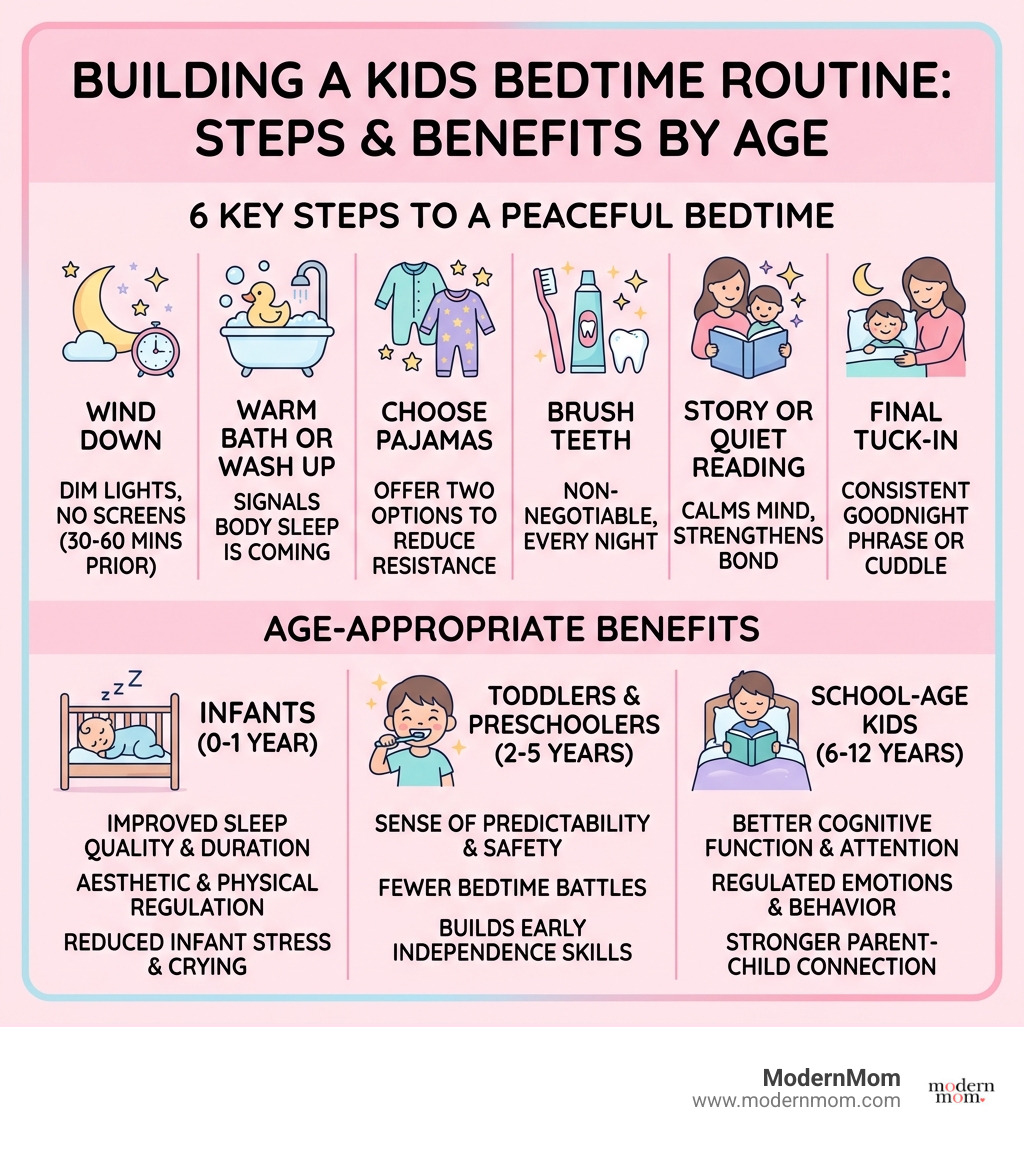
Here’s what an effective kids bedtime routine looks like:
- Wind down — Turn off screens and dim lights 30-60 minutes before bed
- Warm bath or wash up — Signals the body that sleep is coming
- Pajamas — Let kids choose between two options to reduce resistance
- Brush teeth — Non-negotiable, every night
- Story or quiet reading — Calms the mind and strengthens your bond
- Final tuck-in — A consistent goodnight phrase or cuddle to close the day
Bedtime routines aren’t just about getting kids to sleep faster. They also give children a sense of safety and predictability — and that emotional security pays off in big ways during the day too.
In fact, a 2025 study in the Journal of Developmental & Behavioral Pediatrics found that a consistent bedtime routine can matter more than actual sleep length or quality when it comes to a child’s emotions and behavior.
That’s powerful. A routine you can repeat every night — even an imperfect one — is worth more than the “perfect” bedtime that never happens.
Why a Consistent Kids Bedtime Routine Matters
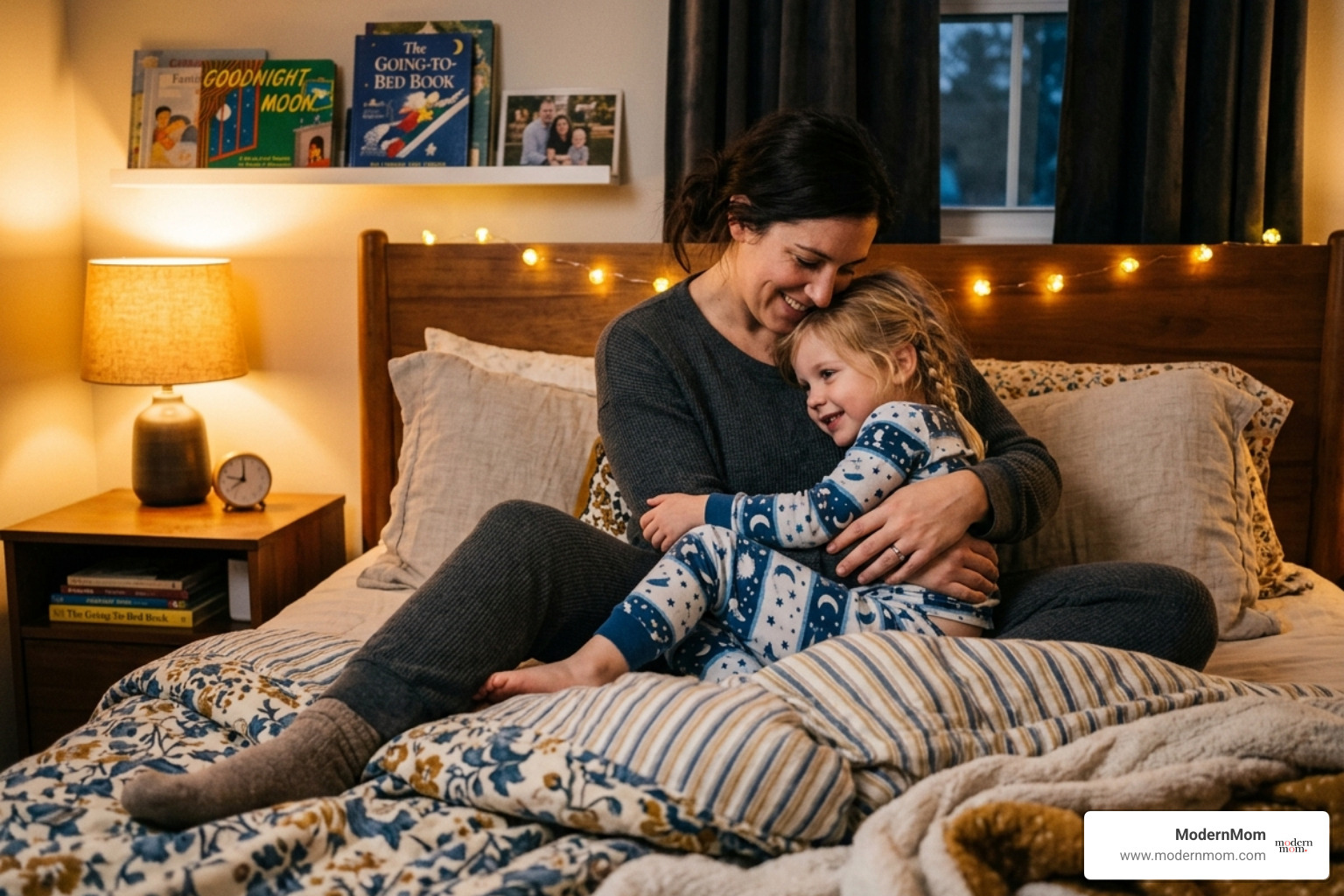
We’ve all been there: flopping onto the couch after a long day, wondering why our kids treat bedtime like a negotiation in a high-stakes thriller. But here at Modern Mom, we know that a kids bedtime routine is about so much more than just “lights out.” It’s the foundation for your child’s emotional regulation and cognitive development.
When we create a predictable rhythm, we’re essentially giving our children “invisible guardrails.” According to a 2025 study in the Journal of Developmental & Behavioral Pediatrics, the consistency of the routine itself is a major predictor of a child’s emotional health. It helps them feel safe and settled, which leads to fewer tantrums and better behavior during the day.
Beyond the emotional perks, routines sharpen cognitive skills like working memory and attention. When kids know what comes next, they spend less energy worrying about transitions and more energy growing. For us moms, the benefits are just as sweet. Research shows that when kids sleep through the night, our own moods improve significantly. If you’re feeling the burn of the “witching hour,” check out our bedtime tips for sleep-deprived mommies to help reclaim your sanity.
A solid routine also fosters independence. As children grow, they take ownership of their nightly tasks—brushing their own teeth or picking out their PJs—which builds confidence. A calm evening leads to deeper sleep, less stress for the whole family, and a much happier morning.
Recommended Sleep Hours and Age-Appropriate Adjustments
Understanding how much sleep your child actually needs is the first step in ending the “I’m not tired” debate. Children’s sleep needs change rapidly as they grow, driven by their internal circadian rhythm and the production of melatonin (the hormone that tells the brain it’s time to sleep).
The American Academy of Sleep Medicine provides clear guidelines to help us hit those targets. During deep sleep, the body releases growth hormones essential for physical development, while REM sleep acts like a “hard drive backup” for learning and memory.
| Age Group | Recommended Sleep Duration (Per 24 Hours) |
|---|---|
| Infants (4–12 months) | 12–16 hours (including naps) |
| Toddlers (1–2 years) | 11–14 hours (including naps) |
| Preschoolers (3–5 years) | 10–13 hours (including naps) |
| School-Age (6–12 years) | 9–12 hours |
| Teens (13–18 years) | 8–10 hours |
For most children, experts suggest a bedtime window between 7:00 PM and 9:00 PM. This ensures they get enough rest before the school bell rings. If you have a teenager in the house, you might notice their “sleep phase” naturally shifts later, but they still need substantial rest. You can dive deeper into the specifics of older kids in our guide on how many hours should a teenager sleep.
Customizing Your Kids Bedtime Routine by Age
As they grow, your kids bedtime routine needs to grow with them. What works for a snuggly toddler won’t fly with a teen seeking autonomy.
- Infants: Focus on a gentle wind-down. Dim the lights, lower your voice, and use a consistent sequence like “bath, bottle, book.” Put them down “drowsy but awake” to help them learn to self-soothe.
- Toddlers: This stage is all about connection and choice. Toddlers love to feel in control, so let them pick between two pairs of pajamas or two books. This reduces power struggles.
- School-Age: Shift toward responsibility. Have them tidy their room or lay out clothes for the next day as part of the routine. This builds self-reliance and makes mornings smoother.
- Teens: Move toward partnership. Instead of “ordering” them to bed, discuss why sleep matters for their sports or grades. Encourage them to “dock” their tech at a family charging station an hour before sleep to avoid blue light interference.
Building Your Nightly Roadmap
Think of your kids bedtime routine as a roadmap that leads from the chaos of the day to the calm of the night. The journey should start with a “power-down hour.” This is when we dim the lights and signal to the brain that the “magic hour” has begun.
Environmental factors play a huge role here. To create a sensory-soothing space, consider:
- Blackout curtains: These are a lifesaver, especially during summer months when the sun stays up late.
- White noise: A fan or sound machine can drown out household noises (like the TV or dishes) that might pique a child’s curiosity.
- Temperature: A slightly cool room is generally better for deep sleep.
- Security objects: For children over one year old, a favorite stuffed animal or blanket can provide comfort and associate the bed with safety.
For the hygiene portion of the night, we love using tools like the Gimlet Media’s Chompers podcast, which makes brushing teeth fun with two-minute jokes and stories. It’s a great way to keep them engaged without the struggle.
5 Essential Steps for a Calming Kids Bedtime Routine
If you’re looking for a simple nightly pattern, the American Academy of Pediatrics recommends the Brush, Book, Bed routine. Here is our expanded version:
- Warm Bath: A warm soak helps lower the body’s core temperature afterward, which naturally induces sleepiness.
- Pajama Choice: Give them a limited choice (e.g., “The blue ones or the dinosaur ones?”) to satisfy their need for independence.
- Dental Hygiene: Use a timer or a song to ensure they brush for the full two minutes.
- Shared Story: Whether you’re reading a picture book or a chapter of a novel, this is the ultimate time for connection.
- Final Tuck-In: Use a consistent “closing” ritual, like a specific hug, a secret handshake, or a phrase like, “I love you to the moon and back. See you in the morning.”
Managing Common Bedtime Challenges and Stalling
“I need a glass of water.” “I forgot to tell you about the squirrel I saw.” “One more hug!” Kids are world-class negotiators when it comes to stalling. Research shows that as many as 20 to 30% of babies and toddlers have trouble sleeping, often due to these stalling tactics or difficulty falling asleep independently.
One effective tool is the “Bedtime Pass.” Give your child one physical card they can “trade in” for one extra request—a drink, a hug, or a quick question. Once the pass is used, they know the boundaries are firm.
If your child is struggling with separation anxiety or fears, try the “check-in” method. Promise to come back and check on them in five minutes if they stay quietly in bed. Gradually increase the time between checks. This builds trust and teaches them that you are always there, even when you aren’t in the room.
For those nights when emotions run high, we find that practicing Radical Loving Acceptance can change the dynamic. Instead of meeting their frustration with your own, acknowledge their feelings: “I know it’s hard to stop playing. You really love those blocks.” This validation often de-escalates the struggle faster than a stern “because I said so.”
For more serious issues like nightmares or night terrors, nightmares happen during REM sleep (later in the night), and kids usually need comfort. Night terrors happen in deep sleep (early in the night); the child may scream but isn’t actually awake. In those cases, it’s best to stay nearby to keep them safe but avoid waking them, as they won’t remember it in the morning.
Frequently Asked Questions about Bedtime
How long should a typical routine last?
A manageable kids bedtime routine should generally last between 15 and 60 minutes. If you include a bath, aim for the longer end of that window. The goal is efficiency and calm—if the routine drags on for 90 minutes, it often becomes a platform for more stalling. Keep it short, predictable, and sweet.
When should I seek professional help for sleep issues?
While most sleep problems are behavioral, some have biological roots. According to a study published in American Family Physician, up to 50% of children experience sleep issues, but some require expert intervention. You should talk to your pediatrician if your child:
- Snores loudly or breathes through their mouth consistently.
- Has frequent night terrors that disrupt the family.
- Shows excessive daytime sleepiness that affects their mood or schoolwork.
- Consistently struggles to fall asleep despite a solid routine.
In these cases, pediatric sleep coaching or a consultation with a sleep specialist can provide a personalized plan to get everyone back on track.
How do I handle screen time before bed?
The blue light from tablets and TVs suppresses melatonin production, making it much harder for the brain to “shut down.” We recommend a “digital sunset”—turning off all electronics at least 60 minutes before bed. Creating a family charging station in the kitchen or living room helps keep devices out of the bedroom, ensuring the sleep environment remains a tech-free zone.
Conclusion
At Modern Mom, we believe that a kids bedtime routine isn’t a test of your parenting—it’s a gift you give your family. It’s about creating “tiny repeating stories” that signal safety, love, and completion at the end of every day.
Connection beats perfection every single time. A five-minute cuddle on a night when you’re exhausted is more valuable than a 40-minute forced routine that leaves everyone frustrated. By staying consistent and adapting as your children grow, you’re not just helping them sleep; you’re building a foundation of well-being that will last a lifetime.
When the house finally softens and the dishes are waiting in the sink, take a moment to breathe. You’re doing a great job. And once the kids are tucked in, you might even find time to focus on other areas of your life—like how to make marriage work after separation or simply enjoying five minutes of silence with a cup of tea.
Sweet dreams, Mama. You’ve earned them.
The post From Chaos to Calm with a Better Kids Bedtime Routine appeared first on ModernMom.