


From Chaos to Calm: Reclaiming Your Mealtimes
Mindful eating habits are practices that help you pay full attention to your food and eating experience—focusing on taste, texture, hunger cues, and satisfaction—without distractions or judgment. These habits include slowing down, engaging all your senses, distinguishing between physical and emotional hunger, and eating without screens or multitasking.
Quick Guide to Mindful Eating:
- Slow down – Chew thoroughly and make meals last at least 20 minutes
- Remove distractions – Turn off screens and sit down to eat
- Listen to your body – Stop when you’re about 80% full
- Engage your senses – Notice colors, smells, textures, and flavors
- Ask yourself – “Am I physically hungry or eating for another reason?”
- Start small – Practice with just one meal or even one mindful bite
Sound impossible when you’re eating leftovers over the sink, answering emails during lunch, or grabbing breakfast on the way out the door? You’re not alone. The average American spends just 1 hour and 12 minutes eating each day, while watching 2½ to 3 hours of TV. In fact, 66% of Americans regularly eat dinner in front of the television.
This constant multitasking comes at a cost. When your mind is distracted during meals, your digestive process can be 30% to 40% less effective, leading to bloating, gas, and missed signals that you’re actually full. No wonder so many of us feel disconnected from our food and our bodies.
Mindful eating isn’t about perfection or following strict rules. It’s a gentle approach that helps you reconnect with the simple act of nourishing yourself. It’s about being present, not perfect—and that’s something every busy mom can work with.
We get it. Between career, family, and everything else, sustainable mindful eating habits can feel out of reach. But they aren’t about adding more to your plate—they’re about bringing more awareness to what’s already there. This guide will show you practical, realistic ways to start eating smarter, not harder, even on your busiest days.
Mindful eating habits helpful reading:
What Is Mindful Eating (And What It’s Not)
At its heart, mindful eating is about truly paying attention to our food. It’s an approach rooted in the broader concept of mindfulness, which Jon Kabat-Zinn, a pioneer in the field, defines as “the awareness that arises when we’re paying attention, on purpose, in the present moment, without judgment.” This practice, with its origins in Zen Buddhism, has become a powerful tool for changing how we interact with food.
Unlike traditional diets that often impose strict rules about what, when, and how much to eat, mindful eating is process-oriented. It’s not primarily about achieving weight loss, although that can be a positive side effect. Instead, it focuses on our individual experience with food, emphasizing sensual awareness and a nonjudgmental presence. It invites us to savor the moment and our meal, encouraging full engagement rather than fixating on calories or restricting ourselves. Organizations like The Center for Mindful Eating offer resources and guidance for those looking to deepen their practice.
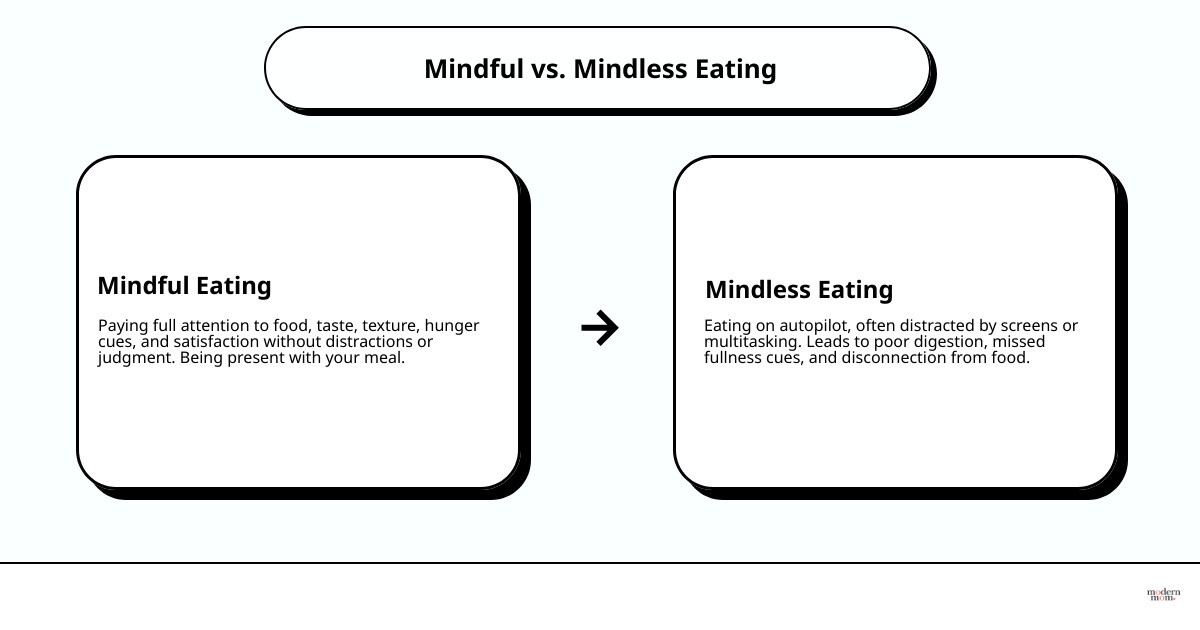
Mindful vs. Mindless Eating
To truly grasp mindful eating habits, it helps to understand what they’re not. Most of us have fallen into the trap of mindless eating, where our attention is elsewhere while we consume our meals. This often leads to overeating and a feeling of dissatisfaction.
| Feature | Mindful Eating | Mindless Eating |
|---|---|---|
| Approach | Intentional, conscious, present | Automatic, habitual, distracted |
| Awareness | Fully engaged with food and body signals | Detached, unaware of eating process |
| Pace | Slow, deliberate, savoring each bite | Fast, rushed, often gulping food |
| Hunger Cues | Listens to physical hunger and fullness signals | Driven by external cues, emotions, or habit |
| Distractions | Minimal or none (no screens, work) | Frequent (TV, phone, work, driving) |
| Satisfaction | High, leads to contentment | Low, often leads to overeating without feeling full |
Consider this: 66% of Americans regularly eat dinner in front of the television. When we eat while distracted by screens, work, or driving, our digestive process can be 30% to 40% less effective. This not only impairs digestion but also prevents our brains from receiving crucial fullness signals, often leading us to eat more than our bodies truly need. Mindful eating helps us restore that vital connection.
The Core Principles of Mindful Eating
Embracing mindful eating habits is less about following rigid rules and more about cultivating a set of foundational attitudes, as outlined by mindfulness experts. These principles help us approach our food—and ourselves—with kindness and awareness:
- Non-judging: We observe our thoughts, feelings, and sensations about food without labeling them as “good” or “bad.” This helps us let go of food guilt and shame.
- Patience: We understand that developing new habits takes time. We don’t rush the process or expect instant results, especially when it comes to changing long-standing eating patterns.
- Beginner’s Mind: We approach each meal with curiosity, as if we’re experiencing food for the very first time. This helps us notice subtle flavors, textures, and sensations we might otherwise overlook.
- Trust: We learn to trust our body’s innate wisdom regarding hunger and fullness. This means listening to our internal cues rather than relying on external rules or diet plans.
- Non-striving: We focus on the process of mindful eating itself, rather than striving for a specific outcome like weight loss. The goal is presence, not perfection.
- Acceptance: We acknowledge our current eating habits and emotional responses to food without resistance. Acceptance is the first step toward change.
- Letting Go: We release expectations, past judgments, and the need to control every aspect of our eating. This allows us to be fully present with our food.
The Real-Life Benefits: More Than Just Food
Adopting mindful eating habits offers a wealth of benefits that extend far beyond the plate. It’s a holistic practice that can profoundly impact both our physical and mental well-being, helping us cultivate a healthier and more enjoyable relationship with food. Research shows that mindful eating is linked to increased psychological well-being, greater pleasure during meals, and improved body satisfaction.
Boost Your Physical Health
When we eat mindfully, we’re not just savoring flavors; we’re also supporting our body’s natural processes. As we learned, mindless eating can make our digestion 30-40% less effective. By slowing down and paying attention, we allow our bodies to properly break down food, absorb nutrients, and reduce uncomfortable symptoms like gas and bloating.
Mindful eating can also be a valuable tool in managing chronic conditions. For instance, studies have shown that it can be an effective component of diabetes self-management education, helping individuals improve depression, nutrition self-efficacy, and control overeating behaviors. While not a cure, it complements medical guidance beautifully. For those looking for delicious and healthy meal ideas, consider internal links like Quick and Healthy Baked Pizza Potatoes or Crunchy Salmon Quinoa Patties.
Nurture Your Mental Well-being
Perhaps one of the most profound benefits of mindful eating habits is their impact on our mental and emotional health. In our lives, food often becomes a source of stress, guilt, or anxiety. Mindful eating helps us break this cycle. By approaching food with non-judgment and acceptance, we reduce food-related anxiety and foster a healthier relationship with our bodies.
This practice encourages self-acceptance and an appreciation of food over restriction, allowing us to derive greater pleasure from our meals. Experts in nutritional psychiatry suggest that our brain’s connection to food is complex, and mindful eating helps us tune into this connection, promoting overall psychological well-being. It’s about feeling full of energy and vitality, not just full of food.
Your Practical Guide to Mindful Eating Habits
Ready to integrate mindful eating habits into your daily life? The good news is that you don’t have to overhaul your entire routine overnight. We can start small, perhaps with just one meal a day, or even a single mindful bite. The key is consistency and a gentle approach.

A great way to begin is by creating a dedicated space for eating. This means no distractions like TVs, phones, or work. Simply sit down, even if it’s just for a few minutes. Harvard Health outlines 8 steps to mindful eating that can help guide you on this journey. For example, some people start by trying the “raisin exercise” (or a similar single-piece-of-food exercise), where you examine, smell, taste, and slowly chew a single piece of food, noticing every sensation.
Engage All Your Senses
Mindful eating is a feast for all five senses. Before you even take a bite, pause and engage them:
- Sight: Notice the colors, shapes, and presentation of your food. How does it look on the plate?
- Smell: Inhale the aromas. What scents do you detect? Research suggests honoring your food by considering its journey from its origin to your plate, appreciating the resources and people involved.
- Touch: Feel the texture of the food in your hands or on your fork. How does it feel in your mouth?
- Sound: Listen to the sounds of your chewing, the rustle of packaging, or the gentle clinking of utensils.
- Taste: Savor each flavor. Is it sweet, salty, bitter, sour, umami? Where do you feel the taste on your tongue?
When we fully engage our senses, we not only improve our eating experience but also help our brains register that we are indeed eating, which can aid in satiety. Try this with a special treat like a Cranberry Pear Tart Recipe to truly appreciate its complexity.
Slow Down and Savor
In our rush to get things done, we often eat too quickly, missing out on satisfaction and proper digestion. Slowing down is a cornerstone of mindful eating habits:

- Chew thoroughly: Aim for 20-40 chews per bite, or until the food is fully broken down and you can taste its essence. This helps with digestion and allows your body time to register what you’re eating.
- Put your utensils down: After each bite, place your fork or spoon down. Wait until you’ve fully swallowed before picking it up again. This simple act forces you to pause.
- Take deep breaths: Before and during your meal, take a few slow, deep breaths. This can help calm your nervous system and bring you into the present moment.
- Extend your mealtime: Try to make your meals last at least 20 minutes. This is roughly the time it takes for your stomach to signal fullness to your brain.
- Experiment with novel tools: For an extra challenge, try eating with your non-dominant hand or using chopsticks. These methods naturally slow you down and increase your awareness.
Tuning In: Understanding Hunger and Triggers
One of the biggest wins of mindful eating is learning to listen to your body again. Think about it: how often do we eat because the clock says it’s lunchtime, not because our stomach is actually rumbling? We’re so busy that we often override our body’s natural hunger and fullness cues. Mindful eating helps you tune back in. It creates a powerful pause between an emotional trigger (like stress or boredom) and your automatic response to grab a snack. This gives you the freedom to choose how you react and is a key step in understanding what makes you want to eat when you’re not truly hungry.
Physical vs. Emotional Hunger
Distinguishing between physical and emotional hunger is fundamental to mindful eating. Many of us turn to food to cope with feelings rather than true physiological need.
| Feature | Physical Hunger | Emotional Hunger |
|---|---|---|
| Onset | Comes on gradually, builds over time | Comes on suddenly, feels urgent and intense |
| Timing | Can be postponed without distress | Feels like it needs to be satisfied immediately |
| Specificity | Satisfied by any food | Craves specific foods (e.g., salty, sweet, crunchy) |
| Satiety | Stops when full, leads to comfortable satisfaction | Leads to overeating, discomfort, and often guilt or shame |
| Location | Felt in the stomach (rumbling, emptiness) | Felt in the head (thoughts of food) or chest (a “hollow” feeling) |
| Aftermath | Feeling nourished and content | Feeling worse, guilt, regret, or still emotionally unfulfilled |
By increasing our recognition of physical hunger and fullness cues, we can better distinguish between emotional and true physical hunger. This awareness is the first step toward making choices that truly serve us.
How to Manage Your Triggers for Unhealthy Eating
Once we can differentiate between types of hunger, the next step is to manage the triggers that lead to unhealthy eating behaviors. Common emotional eating triggers include stress, boredom, loneliness, sadness, or even celebration.
When you feel the urge to eat, pause and ask yourself: “What am I truly feeling, and what do I really need?”
- Am I tired and need sleep?
- Am I lonely and need to connect with a loved one?
- Am I bored and need to engage in a new hobby?
- Am I celebrating an achievement and need to establish a non-food reward?
Instead of automatically reaching for food, consider non-food rewards or coping mechanisms. This might involve journaling about your feelings, taking a short walk, calling a friend, or engaging in a hobby. For example, during the holidays, when food is abundant and emotional eating can be prevalent, understanding your triggers is especially important. Our article on Holiday Eating and Eating Disorders provides further insights into navigating challenging eating environments.
The Deeper Dive: Weight, Research, and Realities
It’s important to be clear: mindful eating habits aren’t a weight-loss diet. While some people find it helps with weight management, its real purpose is to help you build a healthier, happier relationship with food and your body. We also need to be realistic about what it can and can’t do. Mindful eating is a powerful tool, but it isn’t a replacement for professional treatment for clinical eating disorders. If you’re struggling, seeking specialized care is a sign of strength. The National Eating Disorders Association has reported a significant increase in calls for help, a reminder that specialized care is essential when needed and you’re not alone.
Can Mindful Eating Help with Weight Management?
So, can mindful eating help with weight? The research is mixed, but promising. While it isn’t designed as a weight-loss program, many studies find it’s a valuable tool for some people. For example, a systematic review on the topic found that even when a direct link to weight loss wasn’t clear, the behavioral changes it promotes often led to positive results.
Mindful eating can lead to a “likely outcome” of weight management by:
- Reducing binge eating: Mindfulness interventions appear most successful in reducing binge eating and emotional eating.
- Decreasing sweets consumption: One randomized controlled trial found that adults practicing mindfulness had decreased intake of sweets.
- Improving eating behaviors: A literature review of 68 studies found that mindfulness strategies improved eating behaviors such as slowing down the pace of a meal and recognizing feelings of fullness and greater control over eating.
The focus here shifts from the number on the scale to cultivating sustainable, healthy behaviors. By becoming more attuned to our body’s signals and reducing emotional eating, we naturally tend to make choices that support our well-being.
Potential Pitfalls and Limitations
While the benefits are numerous, it’s important to acknowledge the potential pitfalls and limitations of mindful eating habits:
- Not a replacement for eating disorder treatment: As mentioned, for severe clinical conditions like anorexia, bulimia, or binge eating disorder, mindful eating should not be used as a sole treatment. It can be an effective component of a comprehensive treatment plan, but professional guidance from therapists and dietitians specializing in eating disorders is essential.
- Can be challenging with a busy schedule: Modern life is hectic. Finding the time to eat slowly and without distraction can feel impossible for busy moms juggling work, kids, and household duties. We might not always achieve perfect mindfulness, and that’s okay.
- Social eating situations: Eating mindfully in social settings can be difficult. It might feel awkward to chew slowly or put your fork down repeatedly when others are not.
- Avoiding perfectionism: It’s easy to fall into the trap of thinking we’re “failing” if we aren’t perfectly mindful at every meal. Mindful eating is a practice, not a destination. Self-compassion is key. Every mindful moment counts, even if it’s just one bite.
Frequently Asked Questions about Mindful Eating
We often hear common questions when discussing mindful eating habits. Let’s address some of them.
How long does it take to form mindful eating habits?
There’s no set timeline, as it’s truly a journey rather than a destination. Think of it as a skill you develop over time, like learning to play an instrument. Consistency, not perfection, is what matters. Start small: perhaps choose one meal a week to practice mindful eating, or even just the first few bites of each meal. Every mindful moment contributes to strengthening these new neural pathways. It’s about gradually building awareness, and every mindful choice makes a difference.
Can I practice mindful eating with my family?
Absolutely! Practicing mindful eating habits as a family can be a wonderful way to foster a healthier relationship with food for everyone. Children are often naturally more attuned to their hunger and fullness cues than adults, and we can learn from them.
- Model the behavior: Let your kids see you eating slowly, savoring your food, and putting down your fork.
- Turn off screens: Make mealtime a screen-free zone for everyone.
- Talk about the food: Engage in conversations about the food’s flavors, textures, and even where it came from.
- Express gratitude: Take a moment to appreciate the meal together.
- Avoid pressure: Don’t force children to “clean their plate.” Encourage them to listen to their own fullness signals.
There’s emerging interest in applying mindful eating strategies to youth, and studies show potential benefits, such as reduced body concerns and less binge eating in adolescents. A pilot intervention even evaluated a mindful eating curriculum among elementary school children and their parents, highlighting its applicability.
What if I don’t like “healthy” food?
This is a common misconception! Mindful eating isn’t about what you eat; it’s about how you eat. You can practice mindful eating with any food, whether it’s a salad or a piece of cake. The idea is to bring full awareness to the experience, without judgment.
By truly paying attention to the food you eat—even a cheeseburger and fries—you may find that you’re satisfied with less. When you savor each bite, noticing the flavors and textures, you’re more likely to feel content and less likely to overeat. As the book Savor: Mindful Eating, Mindful Life suggests, it’s about making peace with all foods through awareness.
Your Journey to a Healthier, Happier Relationship with Food
Embracing mindful eating habits is a powerful way to bring calm to the chaos of modern mealtimes. It’s not about adding another item to your to-do list, but about cultivating presence over perfection. This practice serves as a profound tool for self-care, helping us reduce stress, reconnect with our bodies, and foster a healthier, happier relationship with food.
This is a journey, not a sprint. There will be days when you eat on the go, distracted and rushed. And that’s perfectly okay. The goal is to gently return to awareness, to pause, and to listen to what your body truly needs. By doing so, you’re not just nourishing yourself physically; you’re also nurturing your emotional and mental well-being, one mindful bite at a time. We at ModernMom are here to support you in every step of this journey.
Explore more ways to nourish your body and soul in our Living Healthy section.
The post Eat Smarter, Not Harder: Your Guide to Mindful Eating appeared first on ModernMom.