

Finding Your Strength in New Motherhood
Breastfeeding friendly workouts are safe, supportive exercises that help new moms regain strength and energy without negatively impacting milk supply or breastfeeding comfort. Here’s what you need to know:
The Best Breastfeeding Friendly Workouts:
- Weeks 0-6: Pelvic floor exercises (Kegels), gentle walking, diaphragmatic breathing, and posture work
- Weeks 6-12: Low-impact cardio, bodyweight strength training, light dumbbell work, and postpartum yoga
- Week 12+: Running, higher-intensity activities, swimming, and strength training classes
Key Tips for Success:
- Timing matters: Nurse or pump before exercising for maximum comfort
- Hydration is crucial: Drink extra water to support both milk production and recovery
- Wear the right gear: Invest in a supportive nursing sports bra that doesn’t compress too tightly
- Listen to your body: Moderate exercise won’t affect your milk supply, but rest if you feel pain or excessive fatigue
You’re a few weeks (or months) into new motherhood, and you’re starting to feel like maybe—just maybe—you’d like to move your body again. Not because you need to “bounce back” or hit some impossible standard, but because exercise can genuinely help you feel more like yourself.
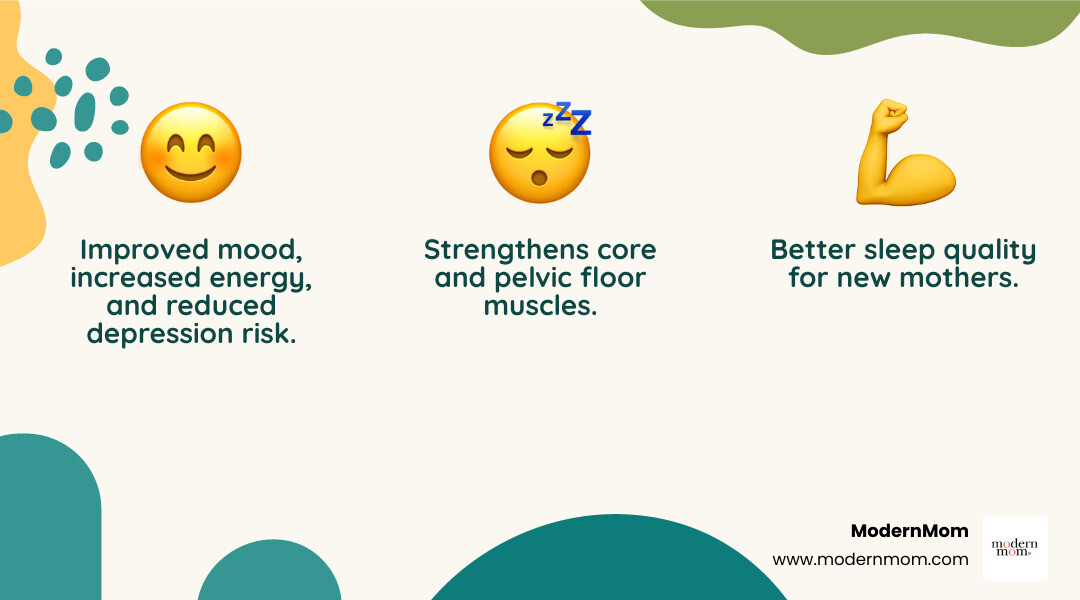
Research shows that postpartum exercise offers real benefits: improved mood, better sleep, more energy, and a lower risk of postpartum depression. It strengthens your core and pelvic floor, which took on a lot during pregnancy and birth. And here’s the good news—moderate exercise doesn’t affect your milk supply or quality.
But between feeding schedules, sleep deprivation, and adjusting to life with a baby, figuring out when and how to exercise can feel overwhelming. You might wonder if working out will tank your milk supply, or if your body is even ready yet.
That’s where this guide comes in. We’ve gathered expert advice, real research, and practical strategies to help you safely return to movement—on your timeline, in a way that supports both you and your baby. As the Digital Marketing Director at Element Associates and co-owner of a busy restaurant, Renee Kemper understands the challenge of balancing demanding schedules while prioritizing health—including finding time for breastfeeding friendly workouts that fit into real life. This guide brings together that practical experience with expert insights to help you steer your postpartum fitness journey with confidence.
Getting the Green Light: When to Start Exercising Postpartum
After bringing a new life into the world, your body has been through an incredible journey. Naturally, you’re eager to feel strong and energized again, but knowing when to safely begin breastfeeding friendly workouts is crucial. The most important first step is always to listen to your body and get clearance from your healthcare provider.

For many women, especially those who had an uncomplicated vaginal delivery, it’s generally safe to begin light exercise a few days after giving birth, or as soon as you feel ready. This might mean gentle walking or simple pelvic floor exercises. However, if you experienced a C-section, extensive vaginal repair, or other complications during birth, your recovery timeline will be different. In these cases, talk to your healthcare provider about when to start an exercise program. Typically, C-section recovery requires waiting at least 6-8 weeks before resuming more strenuous physical activity.
The American College of Obstetricians and Gynecologists (ACOG) emphasizes that physical activity during the postpartum period is incredibly beneficial. It can improve your mood, boost energy levels, support better posture, and reduce common aches and pains from carrying and caring for your baby. We’ve even seen studies suggesting that postpartum women who gradually return to exercise 4-6 weeks after delivery report lower depression and anxiety than those who don’t meet physical activity guidelines. For more expert guidance on postpartum exercise, you can visit the ACOG FAQ on Exercise After Pregnancy.
Your Postpartum Exercise Timeline
Your journey back to movement is unique, but here’s a general timeline to help guide you:
- Uncomplicated Vaginal Birth (Early Postpartum: Days to 6 Weeks): If you had an uncomplicated vaginal delivery, you might be cleared for light exercise within days. This includes gentle walks, pelvic floor exercises (Kegels), and deep core breathing. The goal here isn’t intensity, but rather reconnecting with your body and promoting healing.
- C-section or Complicated Birth (6-8+ Weeks Postpartum): If you had a C-section or a complicated birth, your body needs more time to heal. Your incision requires several weeks to recover. It’s crucial to consult with your doctor before starting any formal exercise program, and most often, they’ll recommend waiting until your 6-8 week postpartum checkup. Even then, you’ll want to start with very gentle core activation and walking, gradually increasing intensity.
- The Importance of Medical Clearance: Regardless of your birth experience, getting the “all clear” from your doctor or midwife at your postpartum checkup is non-negotiable. They can assess your individual healing, discuss any specific concerns (like diastasis recti or pelvic floor issues), and provide personalized recommendations for your return to breastfeeding friendly workouts.
- Starting Slowly: We can’t stress this enough: start slowly and gradually. Your body has undergone profound changes, and it needs time to adapt. Think of it as rebuilding your foundation, not jumping straight back into pre-pregnancy routines. Even if you were a marathon runner before, your postpartum body is a new body with new needs.
Red Flags: When to Pause and Call Your Doctor
While exercise is generally safe and beneficial postpartum, listen to your body and recognize when something might be wrong. If you experience any of the following, it’s a sign to pause your workout and contact your healthcare provider:
- Increased Bleeding (Lochia): If your vaginal bleeding (lochia) increases, becomes heavier, or turns bright red after exercising, it could indicate you’re overdoing it.
- Pain that Doesn’t Go Away: Any persistent or sharp pain, especially in your abdomen, C-section incision, perineum, or pelvic area, should not be ignored. Exercise should not hurt.
- Dizziness or Shortness of Breath: Feeling unusually dizzy, lightheaded, or experiencing excessive shortness of breath during or after light to moderate activity could be a sign of fatigue or other issues.
- Pelvic Pressure or Incontinence: If you notice new or worsening feelings of heaviness or pressure in your pelvis, or increased urinary leakage, it might indicate pelvic floor strain. This is a common concern and something a physical therapist specializing in postpartum recovery can help with.
The Big Question: How Does Exercise Affect Your Milk Supply?
One of the biggest concerns for nursing mothers returning to exercise is whether it will impact their precious milk supply. We’re here to put your mind at ease: for most moms, moderate exercise does not affect milk supply or quality.
This is a common myth, but numerous studies and expert opinions confirm that engaging in breastfeeding friendly workouts at a moderate intensity is perfectly safe and beneficial for both you and your baby. Moderate levels of exercise aren’t thought to affect the quality or quantity of your milk supply, nor your baby’s growth. Analysis of breast milk samples from studies showed that moderate to high-intensity exercise didn’t affect the macronutrient composition or volume of the milk.
So, what about strenuous exercise? Some research suggests that high-intensity workouts might cause lactic acid to accumulate in breast milk. This can temporarily produce a slightly sour taste, which some mothers report leads to their baby being fussy for a while afterwards. However, it’s important to note that this is likely rare, and even if it occurs, it does not typically affect milk supply or your baby’s growth. The lactic acid disappears quickly from breast milk, so if your baby seems bothered, you can simply wait 30-60 minutes after a very intense workout before offering the breast, or express a small amount of milk first.
Historically, mothers worked strenuous jobs and continued breastfeeding without problems, which offers a powerful real-world perspective that physical activity and milk production can absolutely coexist. The body’s ability to produce milk is incredibly resilient. The key is to listen to your body, stay hydrated, and ensure you’re consuming enough calories to support both your milk production and your activity levels.
In fact, the benefits of exercise often outweigh any minor, temporary changes. Exercise can boost your energy, improve your mood, and help manage stress – all factors that can indirectly support your breastfeeding journey by helping you feel more capable and well-rested. For more insights into postpartum health and exercise, the Mayo Clinic provides valuable information.
Your Guide to Breastfeeding Friendly Workouts and Recovery
Starting on your postpartum fitness journey is about more than just “getting back in shape.” It’s about rebuilding your body from the inside out, focusing on healing, strengthening, and reconnecting with yourself. Our approach to breastfeeding friendly workouts emphasizes a gradual, phased progression custom to your body’s unique recovery needs.

We’ll start by rebuilding your foundation, particularly focusing on your core and pelvic floor. These areas undergo significant changes during pregnancy and birth, and addressing them is paramount for long-term health and injury prevention. Diastasis recti, a common separation of the abdominal muscles, is also a key consideration. Specific exercises can help heal and strengthen this area, while others should be avoided in the early stages. Gradual progression is our mantra: we’ll help you slowly increase intensity and duration as your body heals and adapts.
Phase 1: Gentle Breastfeeding Friendly Workouts for Early Recovery (Weeks 0-6+)
This initial phase is all about gentle movement, healing, and re-establishing your mind-body connection. Medical clearance is key, especially after a C-section or complicated birth.
- Pelvic Floor Exercises (Kegels): These are foundational. Your pelvic floor muscles support your bladder, uterus, and bowels, and they’ve been through a lot. Start by gently contracting these muscles as if you’re stopping the flow of urine or holding back gas. Hold for a few seconds, then relax. Aim for multiple repetitions throughout the day. If you had a forceps or vacuum delivery, your doctor might advise waiting 6 weeks before starting pelvic floor exercises.
- Diaphragmatic Breathing: Also known as belly breathing, this helps to gently engage your deep core muscles and relax your nervous system. Lie on your back, place one hand on your chest and the other on your belly. Inhale deeply through your nose, feeling your belly rise, and exhale slowly through your mouth, feeling your belly fall.
- Gentle Walking: Start with short, easy walks around your house or neighborhood. Even 5-10 minutes can be beneficial. Gradually increase the duration as you feel comfortable, working up to 30 minutes, 5 days a week. Walking is a fantastic way to boost mood and improve circulation.
- Posture Correction: Pregnancy and breastfeeding can lead to common postural changes. Focus on standing tall, shoulders relaxed, and engaging your core gently. This helps alleviate back pain and improves overall body mechanics.
- Diastasis Recti Awareness: During this phase, focus on gentle core engagement that doesn’t put pressure on your midline. Avoid traditional crunches or sit-ups. For specific exercises designed to help with abdominal separation, try this 10-Minute Diastasis Recti Workout. If you’re experiencing persistent abdominal discomfort, we have more information on abdominal discomfort during pregnancy that may offer helpful insights for postpartum recovery as well.
Phase 2: Building Strength with Breastfeeding Friendly Workouts (Weeks 6-12+)
Once you’ve received medical clearance and feel ready, you can gradually introduce more structured, low-impact movements. This phase focuses on rebuilding strength and endurance.
- Low-Impact Cardio: Continue with brisk walking, and consider adding activities like cycling on a level surface, gentle aerobics, or using an elliptical. These exercises get your heart rate up without excessive jarring on your joints or pelvic floor.
- Bodyweight Strength: Incorporate exercises that use your own body weight to build strength. Think squats (modified if needed), lunges, wall push-ups, and glute bridges. These are excellent for strengthening major muscle groups.
- Light Dumbbell Exercises: If you feel ready, you can introduce light weights (8-20 pounds is often a good starting point, but listen to your body). Focus on exercises like bicep curls, tricep extensions, shoulder presses, and rows to strengthen your upper body, which is essential for carrying and lifting your baby. For a comprehensive routine, try this 30-Minute Postpartum Strength Workout.
- Postpartum Yoga/Pilates: These practices are excellent for improving flexibility, core strength, and body awareness. Many studios offer postpartum-specific classes that focus on safe and effective movements.
Phase 3: Increasing Intensity Safely
Around 12 weeks postpartum, or when your body feels consistently strong and recovered, you might be ready to gradually increase the intensity and duration of your workouts.
- Returning to Running: If running is your passion, ease back into it slowly. Start with short intervals of running and walking, gradually increasing your running time. A common guideline is to wait until at least 12 weeks postpartum to minimize impact on your pelvic floor.
- Higher-Intensity, Low-Impact Workouts: This could include swimming (once any vaginal discharge has stopped and wounds are healed, typically around 8-12 weeks postpartum), cycling on different gradients, or more vigorous dance aerobics. For a fun way to get your heart rate up, try this 10-Minute Cardio Kickboxing.
- Listening to Your Body: This remains paramount. As you increase intensity, pay close attention to any signs of pain, fatigue, or pelvic floor issues.
- Avoiding Overexertion: While you’re building strength, avoid pushing yourself to the point of exhaustion. You’re still recovering and nurturing a baby. The goal is to build sustainable fitness, not to crash and burn.
Fueling Your Fitness: Nutrition, Hydration, and Gear for Nursing Moms
When you’re exercising and breastfeeding, you’re essentially fueling two bodies (and sometimes feeling like you’re doing the work of two people!). This means your approach to nutrition, hydration, and even your workout gear needs a little extra attention to ensure optimal health for both you and your baby.
Hydration is Key
We cannot overstate the importance of hydration. Breast milk is primarily water, and when you exercise, you lose additional fluids through sweat. Dehydration can quickly impact your milk volume and quality. Our bodies require approximately an extra 300 to 400 calories per day to produce milk, and that process is highly dependent on sufficient fluid intake.
- Drink, Drink, Drink: Keep a water bottle handy at all times – literally near every nursing station in your home! Sip water before, during, and after your workouts. Aim for at least 10-12 glasses of water daily, and even more if you’re exercising frequently.
- Electrolyte Boost: Consider adding a pinch of sea salt or an electrolyte tab to your water, especially after longer or more intense workouts, to replenish lost minerals. Coconut water is another great natural option for electrolytes.
Increased Calorie Needs
Forget about restrictive dieting in the early postpartum period, especially if you’re breastfeeding. Your body needs adequate fuel to recover from birth, produce milk, and support your new activity levels.
- Listen to Your Hunger Cues: Most breastfeeding moms need to consume at least 1,800 calories per day, and often more if they’re exercising. An increase in appetite is expected, and listening to your hunger and fullness cues is often sufficient, rather than obsessively counting calories.
- Focus on Nourishment: Prioritize nutrient-dense whole foods that provide sustained energy. This means plenty of protein, complex carbohydrates, and healthy fats.
Nutrient-Dense Foods
Making smart food choices can make a huge difference in your energy levels and milk supply.
- Protein: Lean meats, poultry, fish, eggs, dairy, legumes, and nuts.
- Complex Carbohydrates: Whole grains (oats, brown rice, quinoa), fruits, and vegetables provide fiber and sustained energy. Oats are often suggested by trainers to help increase milk supply and provide energy.
- Healthy Fats: Avocados, nuts, seeds, olive oil.
- Vitamins and Minerals: Continue taking your prenatal vitamin, and focus on foods rich in iron, calcium, and Omega-3s.
Here are 5 energizing snacks for nursing moms:
- Oatmeal with berries and nuts: A powerhouse of complex carbs, fiber, and healthy fats.
- Almonds: A convenient source of protein, healthy fats, and calcium.
- Greek yogurt with fruit: Packed with protein and probiotics for gut health.
- Hard-boiled eggs: An easy, portable source of high-quality protein.
- Avocado toast: Healthy fats and complex carbs for sustained energy.
Finding the Right Support: Bras and Workout Timing
Comfort is paramount when combining exercise and breastfeeding. The right gear and strategic timing can make all the difference.
- Importance of a Supportive Bra: Your breasts will likely be fuller, heavier, and more sensitive while lactating. A good sports bra is essential for comfort and support during any breastfeeding friendly workouts. Your regular sports bras might not cut it anymore. Your breasts may change significantly from pregnancy to postpartum, so consider getting a supportive sports bra that’s designed for high-impact sports requiring a lot of movement. For tips on choosing a supportive bra, check out Medela’s article on breast changes during pregnancy.
- Nursing Sports Bras: These are a game-changer! They offer the support you need for exercise while also providing easy access for nursing or pumping. Look for bras with adjustable straps and comfortable, moisture-wicking fabric.
- Avoiding Clogged Ducts: A tight or ill-fitting bra, especially worn for extended periods, can contribute to plugged milk ducts or even mastitis. We recommend wearing your supportive sports bra only during your workout and changing into something less restrictive immediately afterward. Hanging out in a sweaty bra can also contribute to yeast infections, so a quick change is always a good idea!
- Timing Workouts Around Feeds: Many women find that they exercise more comfortably when they feed their baby or pump just before working out. This helps to empty your breasts, reducing discomfort from engorgement and making movement much easier. If possible, try to schedule your exercise routine to follow a nursing or pumping session.
- Pumping for Comfort: If you’re planning a longer workout or find yourself engorged before a planned session, a quick pump can provide significant relief. A hand pump can be a useful tool to quickly express a few milliliters of milk before or even during a workout if needed.
Listening to Your Body: 5 Signs You Might Be Overdoing It
We’re all about empowering you to move your body, but it’s equally important to listen to its signals. Your postpartum body is still healing and adapting, and pushing too hard can be counterproductive. Here are five signs that you might be overdoing it with your breastfeeding friendly workouts:
- Pain or Discomfort: Exercise should not cause sharp, persistent, or worsening pain. This includes pain in your C-section incision, perineum, pelvic floor, back, or joints. If you feel pain, stop and assess. Your body is still recovering, and postpartum hormones can affect ligaments, potentially leading to sore joints.
- Increased Bleeding (Lochia): Any increase in vaginal bleeding (lochia) or if it restarts after it had stopped, is a clear sign to slow down. This indicates that your body needs more rest and that you might be taxing your healing uterus.
- Dizziness or Extreme Exhaustion: While some fatigue is normal with a newborn, exercise should generally boost your energy, not drain it completely. If you’re feeling unusually dizzy, lightheaded, or utterly exhausted after a workout, it’s a sign you’re pushing too hard or not getting enough rest. An liftd morning resting heart rate (more than 10 beats per minute above your usual) can also be a subtle indicator of overexertion.
- A Noticeable, Persistent Drop in Milk Supply: While moderate exercise typically doesn’t affect milk supply, extreme overtraining or severe calorie restriction combined with intense exercise can potentially impact it. If you notice a significant and persistent drop in your milk supply that can’t be explained by other factors (like illness or missed feeds), reassess your workout intensity, hydration, and caloric intake.
- Mood Swings or Irritability: Exercise is a powerful mood booster, but overtraining can sometimes lead to increased irritability, anxiety, or difficulty sleeping. If you find your mood is consistently low or you’re feeling more stressed than usual despite exercising, it might be a sign that your body needs more rest and less intensity.
Recognizing these signs and adjusting your routine accordingly is a critical part of your postpartum fitness journey. For more information on identifying signs of overtraining, the American Council on Exercise (ACE Fitness) offers valuable insights. Be kind to yourself, and remember that slow and steady progress is often the most sustainable and beneficial.
Conclusion: Accept Your Strength, One Step at a Time
Navigating your postpartum fitness journey while breastfeeding is a testament to your incredible strength and resilience. We’ve explored the safety, benefits, and practicalities of integrating breastfeeding friendly workouts into your new routine. From understanding when it’s safe to start, to debunking myths about milk supply, and guiding you through appropriate exercises and essential self-care, our goal has been to empower you every step of the way.
Remember these key takeaways:
- Always get medical clearance before starting or significantly changing your exercise routine.
- Moderate exercise is safe and beneficial for most breastfeeding mothers and does not negatively impact milk supply.
- Prioritize hydration, adequate nutrition, and a supportive sports bra for comfort and health.
- Listen to your body’s signals, and don’t hesitate to rest or modify your workouts when needed.
- Start slow, focus on foundational strength (especially your core and pelvic floor), and gradually increase intensity.
This journey isn’t about perfection or “bouncing back” to some idealized version of your pre-baby self. It’s about celebrating the amazing body that carried and nourished your child, and finding ways to honor it through movement. Give yourself grace, celebrate every small victory, and remember that every step you take towards your well-being also benefits your family. You are strong, capable, and doing an amazing job.
For more tips and resources to support your body after baby, we invite you to explore our dedicated section on ModernMom. You’re not alone in this journey, and we’re here to support you in feeling your best.
The post Nourish & Move: The Ultimate Guide to Postpartum Fitness for Nursing Moms appeared first on ModernMom.