


Why Special Needs Mom Stress Demands Real Support
Special needs mom stress isn’t just everyday parenting exhaustion—it’s a whole different level of physical, emotional, and mental strain. If you’re reading this, you probably already know that.
Here’s what you need to know about managing special needs mom stress:
- Recognize the signs – Chronic fatigue, irritability, and withdrawal are warning signals, not personal failures.
- Self-care is essential – Even 5-minute breaks can reduce stress hormones and prevent burnout.
- Build your support network – Connect with other special needs parents, use respite care, and seek professional help.
- Focus on what you can control – Small, consistent acts of self-care matter more than perfection.
Research shows parents of children with special needs face higher rates of anxiety, depression, and fatigue, with stress hormone levels comparable to those of combat soldiers. This isn’t about being weak; it’s the reality of navigating complex systems, managing behaviors, and constant advocacy, often with social and financial strain.
You’re managing an invisible workload: early therapy appointments, IEP battles, sleepless nights, and friends who disappear. The weight is real, but you don’t have to carry it alone.
This guide offers practical strategies you can use today—from finding pockets of “me time” to building a support network that actually helps. You’ll learn how to spot burnout, manage challenges, and find professional support.
You’re not alone in this. And taking care of yourself isn’t selfish—it’s how you stay strong enough to care for your child.
Relevant articles related to special needs mom stress:
The Unique World of Special Needs Parenting: Why It’s So Tough
When people say “all parenting is hard,” they’re not wrong. But raising a child with special needs is a different universe. It’s not just extra appointments; it’s carrying an invisible weight that most people can’t see.
Research shows that special-needs caregivers are in significantly more psychological distress than other parents. Studies consistently show higher rates of anxiety, depression, and fatigue. The special needs mom stress you’re feeling isn’t in your head—it’s real and measurable.

The 24/7 Juggle: Daily Care and Constant Advocacy
Your day is a marathon of appointments, therapy, and school meetings. You’re a scheduler, medical coordinator, and your child’s fiercest advocate—often all before 9 AM.
You’re not just a mom; you’re a nurse, therapist, and case manager, handling everything from complex medical routines to challenging behaviors. Advocacy is another full-time job as you steer complex healthcare systems and fight for basic accommodations in IEP meetings. This constant battle is exhausting.
For more guidance on navigating these systems, check out Supports for Our Kids with Autism.
The Weight of Worry: Emotional Toll and Long-Term Planning
The emotional toll is immense. Grief isn’t a one-time event at diagnosis; it comes in waves as you mourn milestones that look different and the future you once imagined.
The worry is constant. Questions about guardianship, finances, and long-term care can keep you up at night. This strain affects marriages, and studies show parents can experience trauma-related symptoms from their child’s behaviors.
Feeling misunderstood by family and friends adds to the overwhelm. If you’re navigating family changes, How to Field Your Kids’ Questions About Divorce might offer some support.
Feeling Alone in a Crowded Room: Social Isolation
The loneliness of this journey can be surprising. Your social circle often shrinks because your life no longer fits the typical mom-friend mold.
Canceled plans, anxiety-filled parties, and the near-impossibility of finding qualified childcare lead to isolation. It hurts when friends and family don’t understand, offering unhelpful advice instead of support.
Research confirms social isolation is a major stressor. It’s a profound loneliness, feeling misunderstood even when surrounded by people. The good news? You’re not alone, even when it feels that way. Connecting with other parents who get it can be life-changing. Read more in An Autism Friendship-Related Challenge.
Recognizing the Red Flags: Are You Experiencing Special Needs Mom Stress and Burnout?
You know that feeling when you’re so tired that even your bones hurt? That’s not just “part of being a mom.” It’s a serious warning sign that deserves your attention.
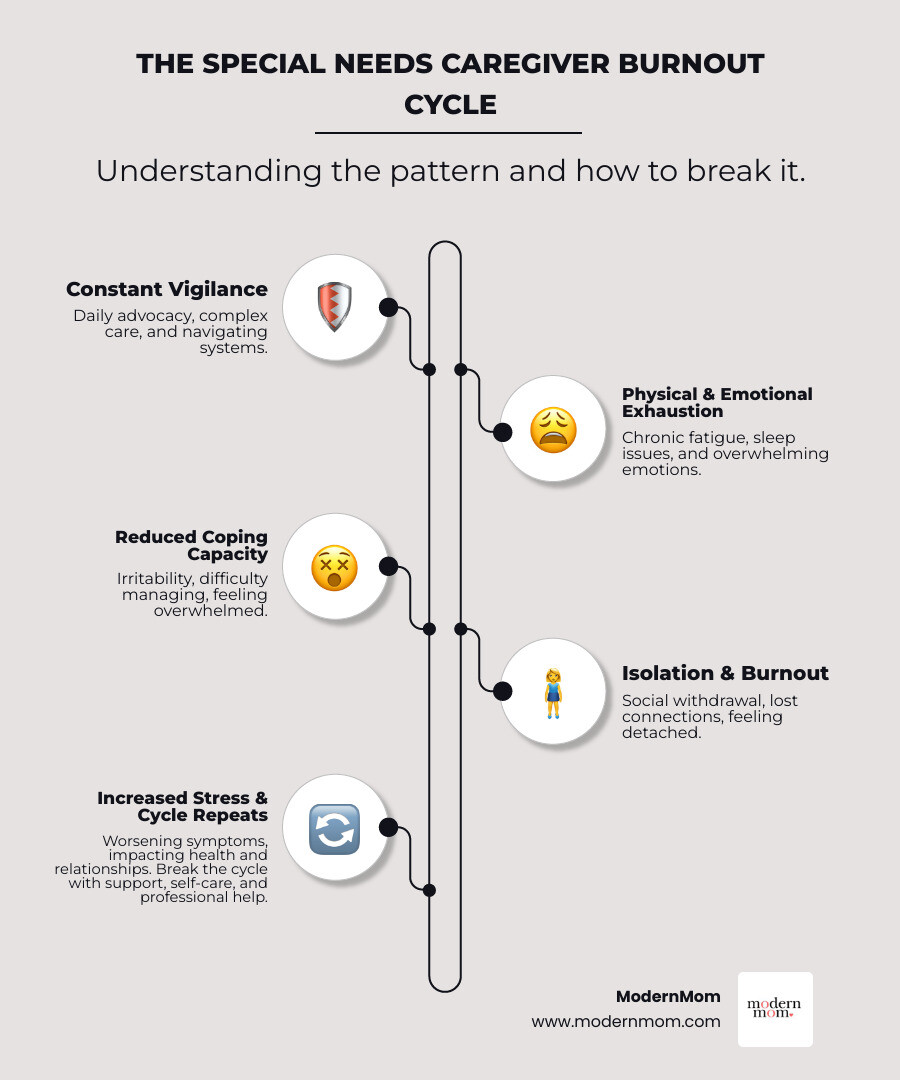
Special needs mom stress can quietly escalate into full-blown burnout. The difference is real: burnout is more than just being tired. It’s a state of chronic physical and emotional depletion from the never-ending demands of caregiving.
Burnout results from months or years of constant vigilance and advocacy without enough recovery time. Your body and mind are trying to tell you something important—and it’s time to listen.

Physical Signs Your Body is Overloaded
Your body sends clear signals when it’s overwhelmed. Chronic fatigue that sleep doesn’t fix and frequent colds or infections are major warning signs. Other physical red flags include persistent headaches, sleep problems (whether you can’t fall asleep or can’t stay asleep), and changes in appetite.
According to one British study, chronic stress puts these parents at risk for medical issues as well. The research found parents of children with autism or ADHD had liftd levels of cortisol (the stress hormone) and CRP, a biomarker for serious health conditions like heart disease and diabetes. Your body is keeping score.
Emotional and Behavioral Symptoms of Special Needs Mom Stress
Emotional signs are just as telling. You might feel unusually irritable or quick to anger, snapping over small things because your emotional reserves are empty. Other symptoms include feeling detached or numb, a persistent overwhelming sadness, or increased anxiety and even panic attacks.
Withdrawing from friends and activities you once enjoyed is another major sign. It can feel easier to isolate yourself than to explain your struggle or feel misunderstood. If you’ve had one of It’s One of Those ‘I Suck’ Days where you question everything, know that when those feelings become frequent, your heart is asking for help.
The Long-Term Impact: Why You Can’t Ignore Burnout
Ignoring burnout won’t make it disappear; it gets worse. It can damage your physical health and strain family relationships, creating tension with your partner and other children.
Untreated burnout also reduces your ability to provide consistent, loving care. With less patience and emotional bandwidth, it’s harder to handle daily challenges. This isn’t a character flaw; it’s a predictable outcome of chronic stress.
Left unchecked, caregiver burnout can lead to clinical depression and anxiety disorders, creating a vicious cycle that’s hard to break. As we explore in Sleepless Nights: A Mother’s Survival Guide, neglecting your own well-being creates a domino effect. Recognizing these red flags is the first step to getting the support you need.
Your Self-Care Toolkit: Practical Strategies to Manage Stress
Let’s talk about self-care. We know it can sound laughable when you’re overwhelmed, but it isn’t selfish or a luxury. For a special needs mom, it’s a survival strategy.
You can’t pour from an empty cup. Self-care is about ensuring you’re strong enough to handle your responsibilities. The good news is that it doesn’t require a spa day. It’s about finding small, practical strategies that fit into your chaotic life.

Start Small: Finding “Me Time” in a Packed Schedule
When your calendar is packed, finding “me time” feels impossible. But even five minutes can make a huge difference in managing special needs mom stress.
- Take five-minute mindfulness breaks. Before an appointment, take three deep breaths. Notice your surroundings. This simple act can reset your nervous system.
- Schedule 15 minutes of quiet time. Put it on the calendar and protect it. Listen to a podcast, enjoy hot coffee, or just sit in silence.
- A walk around the block works wonders. Fresh air and movement reduce stress hormones. Even a short walk counts.
- Learn to say no without guilt. Protecting your energy is necessary, not mean. For more ideas, check out Gaming 101 for Me Time.
Condition-Specific Tips for Reducing Special Needs Mom Stress
Tailoring strategies to your child’s needs can significantly reduce your stress. When their routines work better, your life gets easier.
- For children with autism, structure is key. Use visual schedules, create a calm sensory space, and be mindful of triggers like lights or loud noises to prevent meltdowns. For more insights, explore When Autism Looks Like OCD.
- For children with ADHD, focus on consistency. Use clear boundaries, structured schedules, and visual reminders. Positive reinforcement is more effective than constant correction and saves your energy.
- For children with chronic illness, empower them with age-appropriate knowledge about their condition. Build a strong healthcare team, be flexible yet consistent with routines, and encourage them to express their feelings.
Balancing the Family Act: Nurturing Siblings and Your Partnership
Special needs mom stress affects the whole family. Acknowledging this is the first step to addressing it.
- Your other children need you, too. Carve out one-on-one time and create a safe space for them to share all their feelings—frustration, jealousy, and love—without judgment. How to Nip Sibling Battles in the Bud offers helpful approaches.
- Nurture your partnership. The strain can pull you apart or bind you closer. Schedule “date nights in,” talk about things other than therapies, and communicate openly to prevent resentment. You’re a team.
Building Your Village: How to Find and Use Support
You’ve heard “it takes a village,” and for a special needs parent, that village is essential for survival. Yet we often try to do it all alone, feeling that asking for help is a sign of failure.
The truth is, you weren’t meant to do this alone. Learning to ask for and accept help is a powerful skill. The right support network is the difference between surviving and thriving. Support comes in formal (respite care, therapy) and informal (other parents) forms. Both are vital for easing the weight of special needs mom stress.

Finding Your People: Support Groups and Respite Care
Talking to someone who just gets it is deeply comforting. Online communities and local parent support groups provide a safe space to share fears, celebrate wins, and ask questions without judgment. Parent-to-parent programs can match you with a seasoned parent who’s been there, offering practical advice that becomes a lifeline.
Sometimes, what you need most is a break. That’s where respite care comes in. It provides temporary relief for caregivers, giving you time to rest and recharge. Don’t feel guilty for using it; it’s a key tool for preventing burnout. Organizations like Access to Respite Care and Help (ARCH) can help you find local options. Even a few hours away can restore your patience.
When to Seek Professional Help: The Role of Therapy
While parent support is invaluable, sometimes you need more. If anxiety, sadness, or being constantly on edge feels overwhelming, consider professional help. Therapy isn’t for being “broken”; it’s for gaining tools to cope with an incredibly difficult situation.
A therapist offers a safe space to be honest about your feelings and learn coping skills for the anxiety and depression that often accompany chronic caregiving stress. Online therapy options make getting support easier than ever. Think of it as building your internal resources to better handle everything on your plate.
Seeking help isn’t giving up. It’s being smart enough to know that even superheroes need support. Just like learning How to Network and Increase Your Social Capital can benefit you, therapy strengthens your emotional resilience.
Frequently Asked Questions about Special Needs Mom Stress
You have questions about the guilt, isolation, and financial pressure of special needs mom stress. You’re not alone. Here are some honest, practical answers.
How do I deal with guilt when I take time for myself?
The guilt is real. But try to reframe self-care as essential for your child. A rested, regulated mom is a better mom—more patient, present, and capable. Start with small, five-minute breaks. You’re modeling healthy behavior, teaching your children that everyone needs to care for themselves.
What if my family and friends don’t understand or offer help?
It’s lonely when family and friends don’t “get it.” Find your people in parent support groups. These connections are lifelines, offering understanding and practical advice. With family and friends, be direct. Instead of a vague offer, make specific requests like, “Could you bring dinner on Tuesday?” People often want to help but don’t know how. Focus your energy on supportive relationships—quality matters more than quantity.
How can I manage the financial stress of raising a child with special needs?
The financial burden is significant, and research links it directly to higher stress levels. This pressure is a real, documented challenge. Start by researching local and state assistance programs, as you may qualify for help you’re unaware of. Connect with social workers or case managers at your child’s school or hospital; they are experts on available resources. Advocacy groups can also help you find grants or waivers for services. Don’t hesitate to ask for this help—these resources exist to support families like yours.
You’ve Got This, Mama
Acknowledging that special needs mom stress is real and that you deserve support is a courageous first step. You are resilient. You prove it every day in therapy sessions, IEP meetings, and sleepless nights. Your strength is extraordinary, even when you don’t feel it.
Remember: taking care of yourself is taking care of your family. When you pause to breathe, ask for help, or take a short walk, you’re not being selfish—you’re being smart and modeling self-care for your children.
Every small step counts. Maybe today is just recognizing burnout. Tomorrow might be reaching out to a support group. Progress isn’t linear, and that’s okay.
This journey is filled with profound love and real challenges. You’re allowed to feel exhausted and grateful, frustrated and loving, all at once. It doesn’t make you a bad mom; it makes you human.
ModernMom is here to support you. Whether you’re just recognizing burnout or actively building your village, you’re moving in the right direction. Your well-being matters—not just for your child, but for you.
Find more resources for a healthy, balanced life as you continue this journey. You’ve got this, mama. One day, one moment, one small act of self-care at a time.
The post Beyond the Diagnosis: Support for Special Needs Moms appeared first on ModernMom.