


From Chaos to Calm: Reclaiming Your Linen Closet
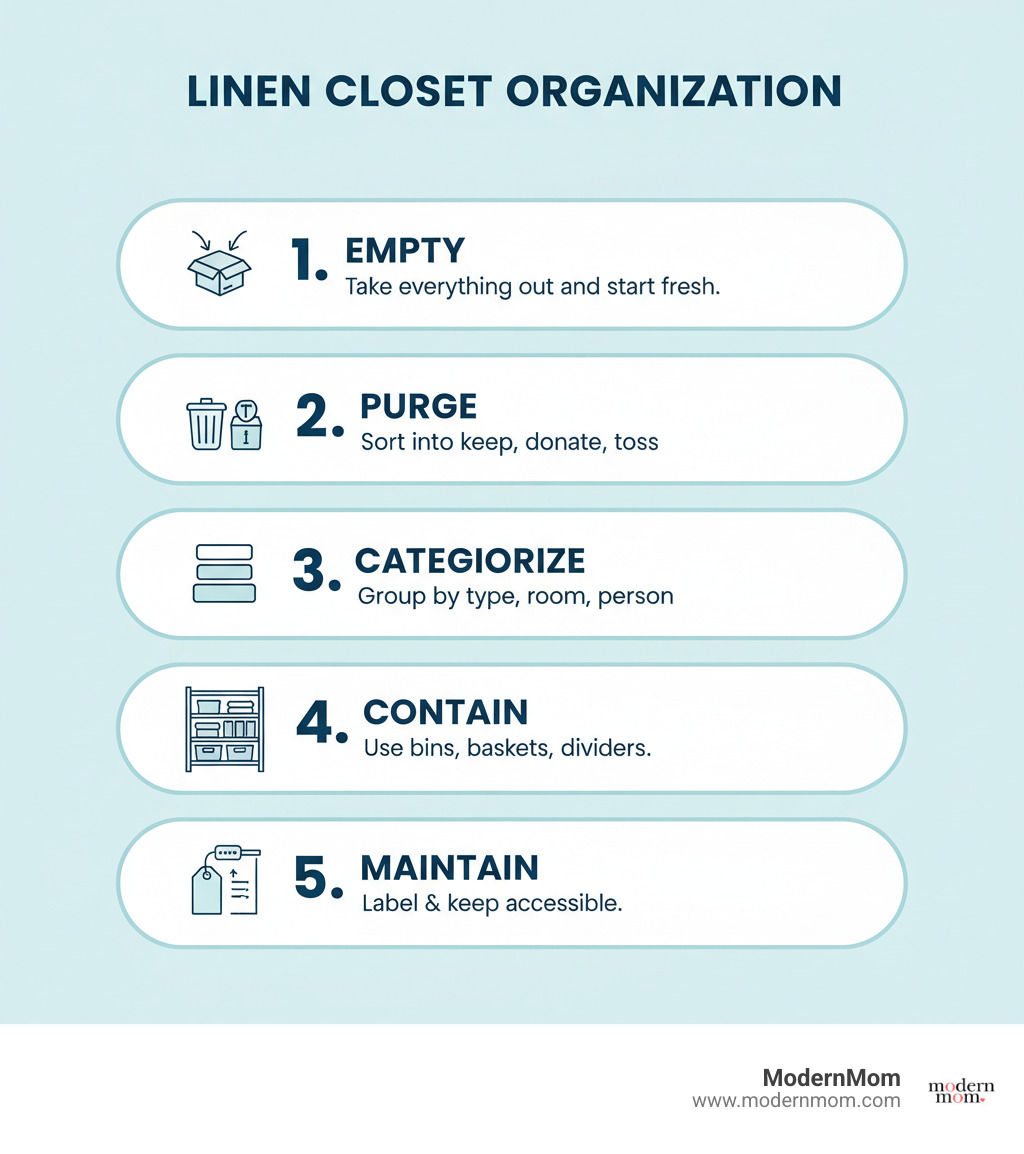
Linen closet organization is one of those household tasks that can transform your daily routine—but it often gets pushed to the bottom of the to-do list. Here’s the quick answer: Start by emptying the entire closet and purging old or unused items. Then categorize your linens by type and room, use bins and dividers to create zones, and label everything so your family can help maintain the system.
Quick Steps to an Organized Linen Closet:
- Empty and Purge – Remove everything and sort into keep, donate, and toss piles
- Categorize – Group items by type (towels, sheets, blankets) or by room/person
- Contain – Use bins, baskets, and shelf dividers to create designated spaces
- Label – Mark shelves and containers so everyone knows where things go
- Maintain – Place frequently used items at eye level and adopt a one-in-one-out rule
Sound familiar? You open the linen closet door and a tower of mismatched towels threatens to topple. You dig through piles trying to find a matching sheet set while your guest waits awkwardly. Or you find that “mystery pillowcase” that lost its partner three moves ago.
A neglected linen closet is more than just an untidy eyesore—it’s a daily source of stress when you’re already juggling a million things as a busy mom.
The good news? You don’t need a Pinterest-perfect closet with color-coordinated everything to make your life easier. You just need a practical system that works for your real family and your real life.
This guide will walk you through changing your linen closet from chaotic catch-all to calm, functional space. We’re talking about solutions that actually stick—even when the kids are “helping” put laundry away.
Step 1: The Great Linen Purge
Here’s the truth about linen closet organization: you can’t organize clutter. Before you even think about buying cute bins or printing labels, you need to face what’s actually hiding behind that closet door.
The first step sounds intimidating, but it’s absolutely necessary—empty everything out. And we mean everything. Every mismatched pillowcase, every beach towel from 2009, every mystery item shoved in the back corner. Pull it all out and pile it somewhere you can see it clearly.
Why go through all this trouble? Because you need a fresh start and a reality check. Once the closet is empty, you’ll finally see the actual space you’re working with. Plus, it’s the perfect time to give those shelves a good wipe-down. Vacuum the floor, dust the corners, and get rid of any cobwebs that have made themselves at home.
Now comes the part where you get honest with yourself. Sort everything into three piles: Keep, Donate, and Toss. This is where you need to channel your inner Marie Kondo—but with a practical mom twist. Does it serve your family right now? Is it in decent condition? Would you actually be sad if it disappeared tomorrow?
Threadbare towels that feel like sandpaper? Out. Stained sheets that no amount of bleach can save? Gone. Linens you haven’t touched in over a year? Time to let them find a new home. Here’s a helpful tip: those old towels that are too ratty for your family can often be donated to animal shelters, where they’ll get plenty of use.
Don’t forget to check for non-linen intruders. Expired toiletries, half-empty bottles of who-knows-what, and random cleaning supplies that somehow migrated here all need to go. For ideas on organizing bathroom products properly, check out our guide on Ways to Keep Your Child’s Bathroom Clean and Green.
The goal isn’t perfection—it’s function. You want to keep only what your family actually uses, in the quantities you actually need.
What to Keep vs. What to Let Go
This is where many moms get stuck. You’re standing there holding a towel set from your wedding registry, wondering if you should keep it “just in case.” Or that sheet set for the twin bed you donated three years ago—maybe you’ll need it someday?
Let’s make this easier with some practical guidelines that actually work for real families.
For sheets, stick to 2-3 sets per bed. One goes on the bed, one’s in the wash, and one sits clean and ready for emergencies. Any more than that and you’re just creating clutter. Organizing experts consistently recommend this ratio because it covers all your bases without overwhelming your storage space.
For towels, aim for about 3 towel sets per person. That’s three bath towels and enough washcloths to get through the week. Kids might need a few extra washcloths since they tend to go through them faster (or turn them into superhero capes—no judgment here).
If you regularly host guests, keep a dedicated set for them: a sheet set, a couple of shams, a duvet and cover, a blanket, and a few fresh towels. Nothing fancy required—just clean, comfortable basics that make visitors feel welcome.
Seasonal blankets and quilts earn their keep if they’re in good shape and actually get used. That cozy quilt Grandma made? Absolutely keep it. The scratchy blanket from college that’s been balled up in the corner for five years? Not so much.
Now for what needs to go: stained or torn linens that are past their prime, anything you haven’t used in over a year, and those mystery pillowcases that lost their matching sets somewhere between three moves and a dozen laundry cycles ago. If you’re holding onto sheets for a bed size you no longer own, pass them along to someone who can use them.
A well-organized linen closet isn’t about achieving some Pinterest-perfect color-coordinated display. It’s about having what your family needs, when you need it, without the avalanche of mismatched chaos.
Step 2: A Place for Everything with Smart Storage
Once your closet is clean and you’ve pared down your inventory, it’s time for the fun part: giving everything a proper home. This is where your linen closet organization comes to life, turning a closet into a functional space for your family.
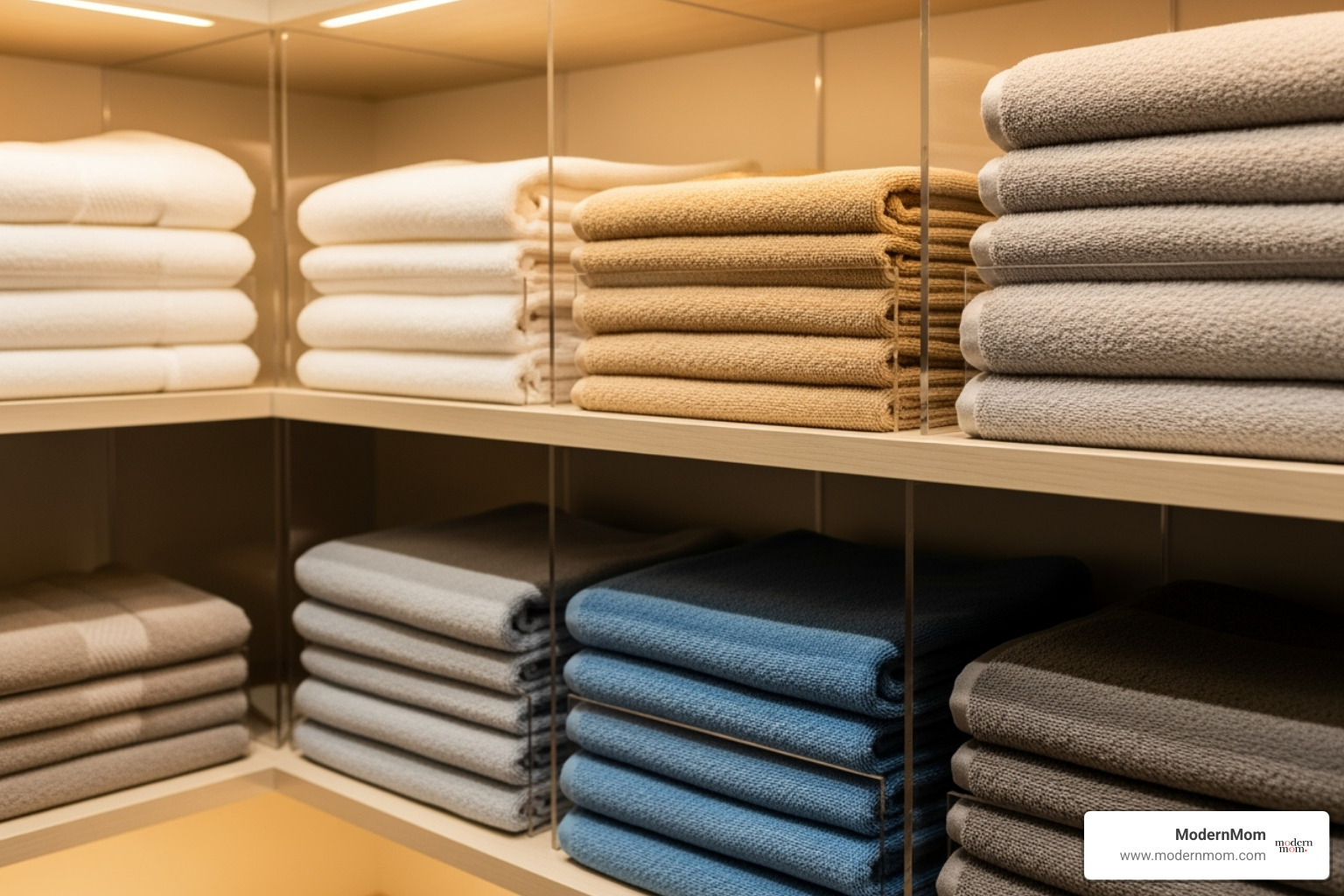
The secret to lasting organization is to categorize items logically and contain them properly. Start by grouping similar items—all bath towels in one area, hand towels in another, and sheet sets for the master bedroom together. You can organize by type (towels, sheets), by room (master, kids’), or by person.
Some families swear by color-coding, especially with kids. Assign each family member their own color—white towels for Mom, navy for the boys. This simple system makes it easy for everyone to put things away in the right spot. When your eight-year-old can help maintain the system, that’s a win.
Now for storage solutions. Bins, baskets, and shelf dividers are game-changers. Shelf dividers keep stacks of linens neat and prevent the domino effect when you pull out one towel. As professional organizer Alisha Firestone-White notes, clear categories and designated spots are the foundation of a system that sticks.
The beauty of proper containment is that it works with your family’s habits. Even if your partner’s idea of “folding” is more like “crumpling,” having designated bins means things still end up in the right general area.
Folding Techniques for a Tidy Look
How you fold your linens matters. Uniform stacks save space and make it easier to grab what you need without creating an avalanche.
Let’s tackle fitted sheets. Mastering the fold is life-changing for your closet, and many video tutorials can help. Here’s a genius tip: store your entire sheet set (fitted, flat, and pillowcases) inside one of the pillowcases. This keeps everything in one tidy bundle, ending the search for matching pieces at bedtime.
The great rolling versus folding debate for towels comes down to your space. Rolling towels saves inches and creates a spa-like look, especially in baskets. It’s also easier for those who struggle with neat folding. On the other hand, folding towels with the folded edge facing forward creates a clean, uniform look on open shelves.
Whatever method you choose, aim for short, manageable stacks of four or five items to avoid a Jenga-like topple.
An organized closet also makes hosting guests smoother. You can easily find fresh towels and blankets without a panic, similar to the prep that helps when you’re Hosting Your First Big Game Party.
Best Bins and Baskets for Linen Closet Organization
Choosing the right containers makes all the difference. The goal is to contain items, keep them dust-free, and make them easy to access.
Wicker baskets add warmth and are perfect for extra blankets or guest towels. You can find natural wicker or even black wicker baskets for a modern look. Pro tip: choose bins with straight edges to maximize space.
Wire baskets are excellent for seeing contents at a glance. They work beautifully for hand towels or washcloths and allow air circulation to keep linens fresh.
Clear plastic bins are invaluable for items you need to identify quickly, like toiletries or first-aid supplies. Clear plastic bins or plastic woven bins can contain potential spills. For tiny items like Q-tips or cotton balls, a clear drawer organizer keeps them visible.
Fabric bins like fabric storage boxes offer a softer look and are collapsible when not in use, great for extra pillowcases or seasonal bedding.
You don’t need to buy everything new. Look around your home for unused baskets or boxes. The key is finding containers that fit your space and serve your family’s needs.
When organizing first-aid supplies, store them safely out of reach of little hands. An organized home means knowing where these items are when you need them, which is why our guide on How to Treat a Grease Burn on Your Hand is a helpful resource.
Step 3: Maximize Every Inch
Even the smallest linen closet can work hard for your family when you know how to use every inch wisely. The secret? Think vertical, get creative with overlooked spaces, and don’t be afraid to make it pretty while you’re at it.
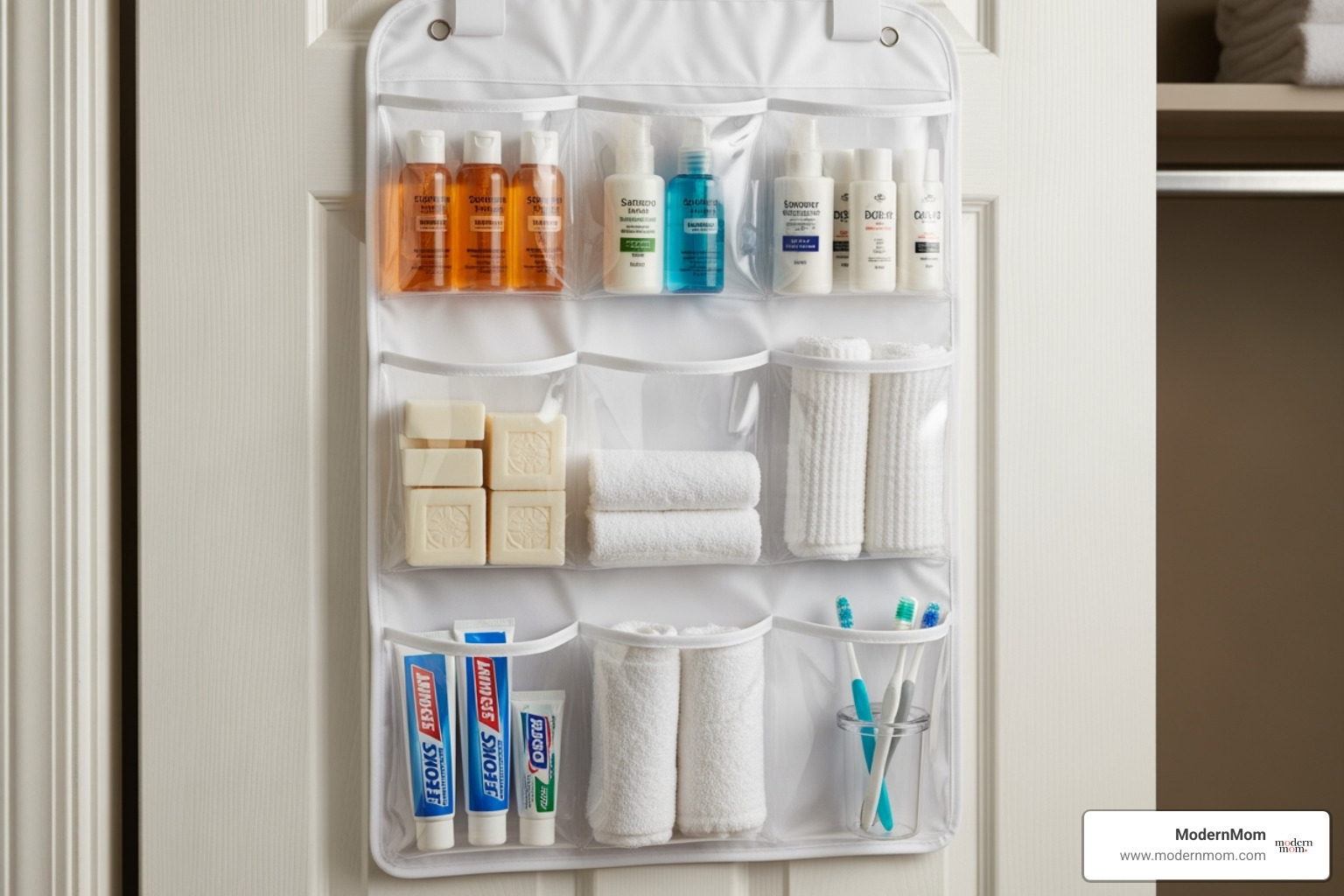
Let’s start with the back of your closet door—it’s like finding bonus storage you didn’t know you had! An over-the-door organizer can hold toiletries, washcloths, extra toilet paper, or those small items that tend to get lost on shelves. This simple addition frees up precious shelf space for your bulkier towels and bedding. Some organizing systems, like the Elfa system, even let you customize door storage with baskets and hooks that fit your exact needs.
Next, take a hard look at your shelving. Are your shelves fixed too far apart, leaving wasted vertical space between them? Adjustable shelving is a game-changer here. If you can’t adjust your existing shelves, stackable bins create extra layers, and under-shelf baskets hook right onto existing shelves to give you bonus storage cubbies.
Here’s something many moms don’t think about: making your linen closet actually pleasant to look at. When a space feels good, you’re way more motivated to keep it organized. A fresh coat of light-colored paint or some removable wallpaper on the back wall can transform the whole vibe. If you have wire shelves, consider covering them with shelf liner paper wrapped around foam core board—it looks cleaner and prevents small items from slipping through the gaps.
Smart Solutions for Small or Narrow Linen Closet Organization
Working with a narrow or shallow closet? You’re not alone, and you can absolutely make it work beautifully. The first step is to measure your space before buying anything. Grab a tape measure and write down the exact depth, width, and height of each shelf. Take these measurements with you when shopping—trust us, it saves so much hassle.
For narrow shelves, rectangular containers with straight edges are your best bet. Rounded bins waste precious inches you can’t afford to lose. Shallow bins are often easier to manage than deep ones, especially when you need to pull them out to grab something from the back.
Storing items vertically is a total game-changer for small spaces. Instead of stacking towels in tall, wobbly piles, roll them tightly and stand them upright in bins or directly on the shelf. You can see everything at once, and pulling one out doesn’t cause an avalanche. The same trick works for sheets and lightweight blankets.
When folding towels for narrow shelves, try this method: fold the towel in half lengthwise, then in half the short way, and finally trifold it to create a compact shape about 9 inches wide. This keeps stacks neat and maximizes your limited shelf depth.
For tiny items like extra toothbrushes or Q-tips, clear drawer organizers can slide into narrow spaces and keep everything visible and contained. Every single inch counts when you’re working with limited space—just like packing efficiently for a trip with our Travel Must-Haves, organizing a compact linen closet means being thoughtful about what you keep and how you store it.
Step 4: Maintain the Order
You’ve done the hard work—your linen closet is now a beautiful, organized oasis. But here’s the truth: the real magic happens when you create a system that actually stays organized. And that’s exactly what this step is all about.
The secret? Labels and strategic placement. These two elements transform your closet from a temporary win into a lasting solution that works for your entire family.
Labels are your accountability partners. When your husband can’t find the beach towels, or your kids shove clean sheets onto the wrong shelf, labels eliminate the guesswork. Everyone knows exactly where things belong, which means they’re far more likely to put them back correctly. (No more “I didn’t know where it went!” excuses at 10 PM on laundry night.)
You have options here. Shelf labels work beautifully for marking different zones. Bin clips attach directly to baskets and can be flipped or changed easily. Chalkboard labels are perfect if your needs shift seasonally—just grab some chalkboard tape and a chalkboard marker, and you can update them whenever you want. If you prefer something more polished, a label maker creates that clean, uniform look. For a truly stylish touch, consider investing in a set of labels designed specifically for home organization.
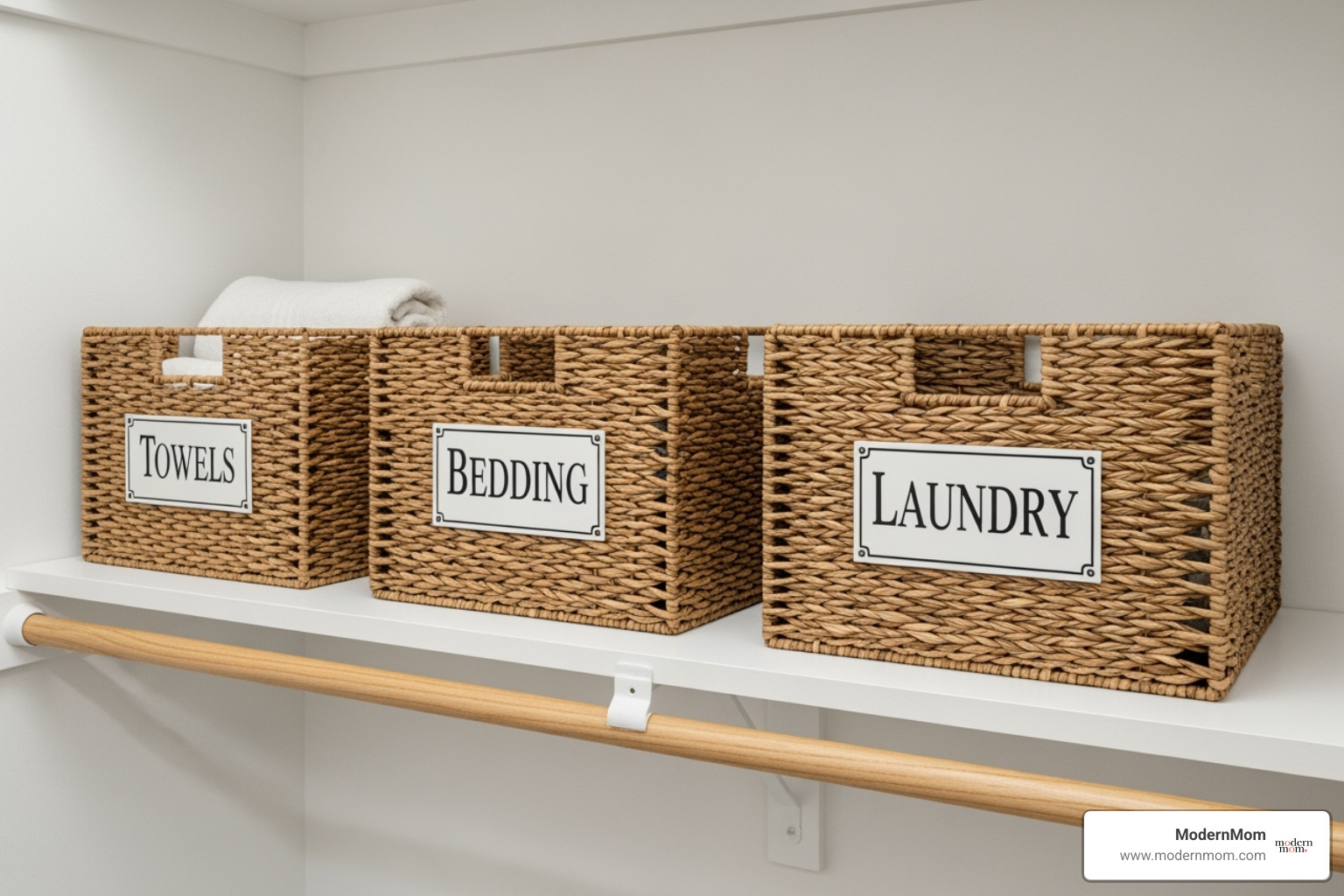
Creating zones is the other half of the equation. Think about how your family actually uses the closet. Your daily bath towels shouldn’t be on the top shelf while holiday linens sit at eye level. That’s just setting yourself up for frustration.
Place frequently used items at eye level or on the most accessible shelves. The everyday towels, your most-used sheet sets, and regular toiletries deserve prime real estate. You shouldn’t need a step stool for things you grab multiple times a week.
Seasonal items belong up high. Those heavy winter blankets, extra quilts, or beach towels you only pull out in summer can live on the top shelf. Same goes for guest linens—keep them together, perhaps in their own labeled bin, ready to grab when company arrives but out of the way during regular family life.
Here’s one more habit that’ll keep your closet from sliding back into chaos: the one-in-one-out rule. When you buy a new set of towels, ask yourself if an old, threadbare set needs to retire. This simple practice prevents the slow creep of clutter that happens when we just keep adding without ever subtracting.
The beauty of this system is that it works with your busy life, not against it. You’re not asking your family to remember complicated rules or maintain Pinterest-level perfection. You’re simply giving everything a labeled home and placing items where they make the most sense for daily life. That’s the kind of linen closet organization that actually lasts.
Frequently Asked Questions about Linen Closet Organization
You’ve tackled the big steps, but we know real life brings unique challenges. Here are answers to questions that come up again and again when moms dig into their linen closet organization projects.
How do you maximize a deep linen closet?
Deep shelves can feel like black holes where towels disappear, never to be seen again. The trick is creating ways to pull everything forward without having to excavate the entire shelf.
Pull-out drawers or bins are your secret weapon. If you can install actual pull-out drawer systems, do it—they’re worth every penny. If that’s not in the budget, large sturdy bins that you can pull out like drawers work beautifully. Just make sure they have handles or cutouts so you can grip them easily.
Clear containers let you see what’s hiding in the back. There’s nothing more frustrating than wondering if you have extra hand towels when you can’t see past the front row. Clear plastic bins solve this instantly.
Think about how you arrange items, too. Store your back-stock items—extra toilet paper, bulk toiletries, rarely used linens—in the very back. Keep everyday items within easy reach at the front. For smaller items like cleaning supplies or travel-sized toiletries, a turntable is genius. One spin and you can see and grab everything without the gymnastics.
If your deep closet has fixed shelving that’s too far apart, consider adding adjustable shelves. This lets you customize the space to fit your actual bins and stacks, so you’re not wasting all that vertical room.
How far apart should shelves be in a linen closet?
This is one of those details that makes a huge difference. Experts generally recommend spacing shelves between 10 to 18 inches apart, but the sweet spot depends on what you’re storing.
For most everyday linens—towels, sheets, and lighter blankets—10 to 12 inches works perfectly. This gives you enough room for neat stacks without creating towering piles that topple over. It also allows air to circulate between items, which helps prevent that musty closet smell.
If you’re storing bulkier items like thick comforters, pillows, or larger storage bins, you’ll want 15 to 18 inches of clearance. Otherwise you’ll be cramming and squishing things in, which defeats the purpose of getting organized in the first place.
Here’s the real game-changer: adjustable shelves. If you can install adjustable shelving, you’ll have the flexibility to change spacing as your needs evolve. Measure your tallest bins or thickest stacks, then adjust accordingly. You’ll use every inch efficiently without wasting precious vertical space.
How should I store seasonal linens or rarely used items?
Seasonal linens and rarely used items deserve special attention so they stay fresh and protected until you need them again. The key is keeping them accessible but out of the way of your daily routine.
The top shelf is your friend. This is prime real estate for items you only pull out a few times a year—heavy winter blankets, holiday guest towels, or that beautiful quilt your grandmother made. They’re safely stored but still reachable when the season changes.
Vacuum-sealed bags are absolute space-savers for bulky items like extra duvets or out-of-season quilts. They compress everything down to a fraction of the original size. Once compressed, tuck them into labeled bins so you know exactly what’s inside without having to unseal them.
Speaking of bins, use sealed storage containers to protect these special items from dust, moisture, and unwanted visitors like moths. Clear labels are essential here—six months from now, you won’t remember which bin has the flannel sheets versus the summer quilts.
Cedar blocks or cedar lining naturally repel pests while absorbing excess humidity and adding a pleasant scent. This is especially smart for protecting delicate or antique linens. If you have truly precious or vintage pieces, wrap them in acid-free tissue paper before sealing them away.
By giving seasonal items their own designated space, you free up everyday storage and keep special linens in beautiful condition. It’s similar to how preparing your home for different seasons requires thoughtful planning—our guide to Must-Haves for the Holiday Season can help you think through what you actually need versus what just takes up space.
Your Beautifully Organized Closet Awaits
You did it! You’ve tackled the chaos and transformed your linen closet from a source of daily frustration into a functional, peaceful space. And here’s the beautiful truth: linen closet organization isn’t about achieving some impossible Pinterest standard. It’s about making your real life easier.
Think about what you’ve gained. No more avalanches of towels when you’re rushing to get ready in the morning. No more frantic searches for matching sheet sets when you’re already exhausted at bedtime. No more stress when unexpected guests arrive and you need fresh linens quickly. You’ve created a system that actually works for your family—and that’s worth celebrating.
The steps we’ve walked through together—the great purge, smart storage solutions, maximizing your space, and maintaining order with labels and zones—aren’t just organizing tactics. They’re tools for reclaiming a little bit of calm in your busy life. Every time you open that closet door and easily find what you need, you’re saving time and mental energy for the things that truly matter.
The goal was never perfection. It was creating a space that serves you and your family, making daily tasks smoother and less chaotic. Some days the folding might not be quite as neat. Some weeks you might notice a little creep of clutter. That’s life, and that’s completely okay. The foundation you’ve built makes it easy to reset and maintain.
You’ve got this, mama. This is just one more way you’re creating a home that supports your family and makes life a little easier. If you’re feeling inspired to tackle other areas where clutter might be overwhelming, our article on Autism and Too Much Stuff offers helpful insights into creating calm, functional spaces throughout your home.
Your beautifully organized closet is waiting—and so is the extra peace of mind that comes with it.
The post The Linen Closet Glow-Up: Tips for Tidy Towels and More appeared first on ModernMom.